
Anthurium schlechtendalii
Anthurium schlechtendalii
Description
Growing requirements
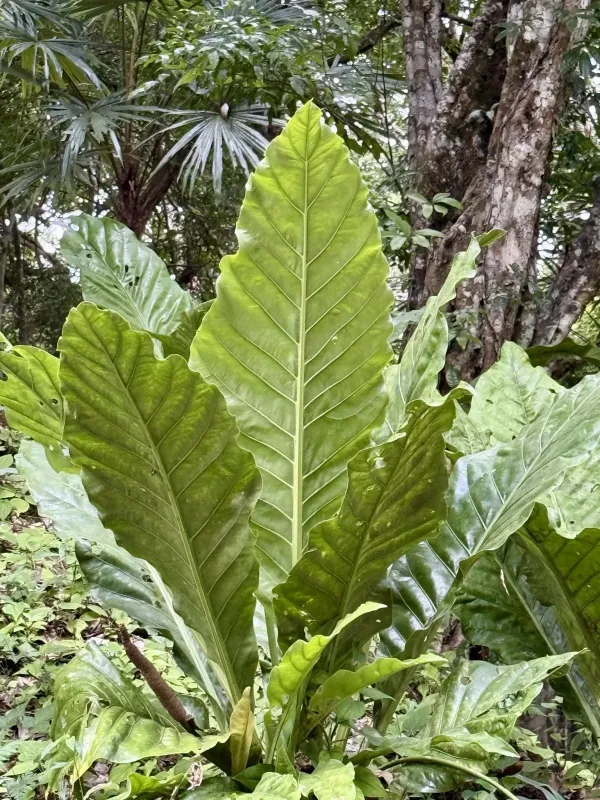
Anthurium schlechtendalii is a striking species within the Araceae family, native to the tropical forests of Mexico and the Caribbean. This plant is primarily an epiphyte, often found growing on trees, which dictates its specific structural requirements for cultivation.
The plant features large, leathery, strap-shaped leaves arranged in a rosette. To thrive, it requires bright, indirect light; direct tropical sun can cause severe leaf scorch, while too little light will inhibit the development of its signature foliage.
Humidity is paramount for this species. Ideally, it should be kept in an environment with at least 60-70% humidity. If indoor conditions are dry, the use of a humidifier or pebble trays is recommended to prevent the leaf tips from drying out.
The substrate must be extremely well-draining, similar to an orchid mix. A combination of coarse bark, perlite, and high-quality sphagnum moss is ideal to allow for adequate gas exchange around the roots and to prevent compaction.
Proper care also involves a balanced fertilizer schedule. During the growing season, a dilute, balanced liquid fertilizer should be applied monthly to support its robust leaf growth and root development.
Main diseases and pests
Root rot is the most common and destructive threat to Anthurium schlechtendalii. It is usually caused by overwatering or the use of heavy, non-porous soil media that holds too much moisture around the roots for extended periods.
Spider mites are the primary pest concern, particularly in heated indoor environments with low humidity. These microscopic pests feed on the underside of the leaves, causing stippling and eventual leaf drop if left unchecked.
Scale insects can also be a significant issue. They appear as small brown or tan bumps on the stems and leaf veins. Regular inspection is crucial, as they can quickly spread to other indoor plants if not isolated and treated.
Fungal leaf spots can manifest under conditions of poor airflow. If the foliage remains wet for too long after misting or cleaning, it creates a breeding ground for pathogens that degrade the aesthetic quality of the leaves.
Maintaining a hygienic growing space is the best defense. This includes regular cleaning of leaves with a soft damp cloth to remove dust, ensuring good air circulation, and promptly removing any dead or decaying organic material from the potting mix.