
Alsophila glaucifolia
Alsophila glaucifolia
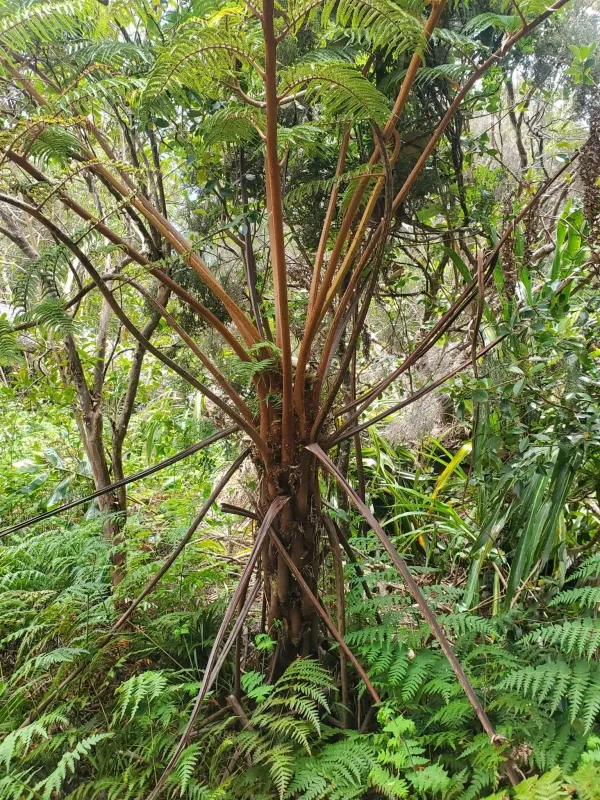
Description
Growing requirements
Alsophila glaucifolia belongs to the Cyatheaceae family, a group of primitive but visually striking tree ferns native to tropical regions.
The plant requires high humidity levels to flourish, ideally staying above 70%. It is best suited for greenhouses or conservatories where environmental parameters are strictly controlled.
Soil requirements are specific: the medium must be acidic, loose, and rich in organic matter, such as peat-based mixes combined with perlite or orchid bark for drainage.
Temperature management is crucial, as this fern does not tolerate frost. It thrives in ambient temperatures between 18 and 25 degrees Celsius, away from direct thermal stress.
Proper cultivation involves consistent watering with soft, room-temperature water. Providing indirect, filtered light prevents leaf scorching and maintains the health of its fronds.
Main diseases and pests
Spider mites are the most common pest, especially in dry indoor environments. They congregate under the fronds, causing discoloration and eventual tissue damage.
Scale insects can also attach to the stems and fronds, feeding on sap. Manual removal and systemic insecticides are effective measures against these pests.
Fungal infections, such as leaf spot, are often induced by poor air circulation combined with excessively wet foliage in humid conditions.
Root rot remains the most significant threat to the plant's longevity, typically caused by waterlogged soil and inadequate drainage systems.
Maintaining a clean, well-ventilated growing space is essential for preventing outbreaks of common diseases and keeping the plant in optimal condition.