
Aloe vera
Aloe vera (L.) Burm. f.
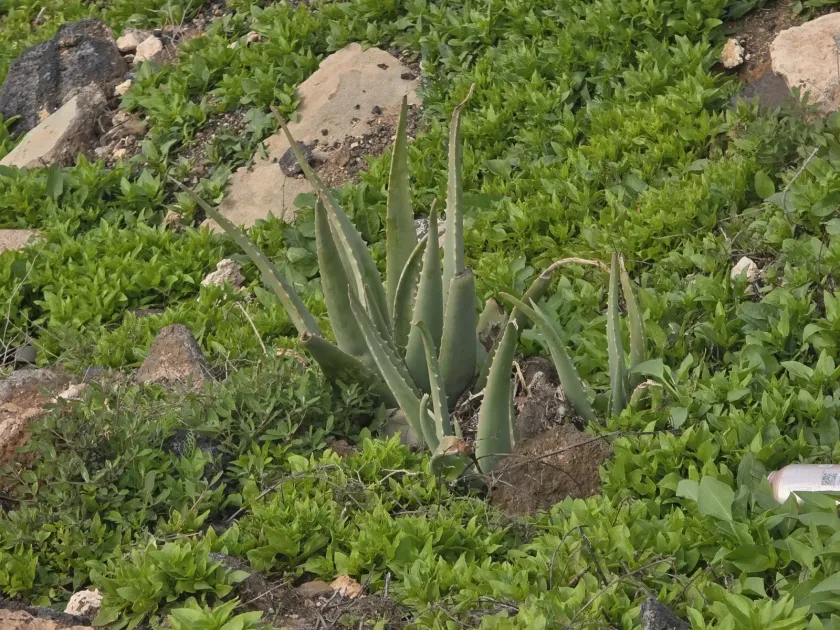
Description
Growing requirements
Aloe vera (Aloe vera (L.) Burm. f.) is a succulent plant species of the family Asphodelaceae. It is a perennial plant known for its thick, fleshy leaves containing a translucent gel widely used in various industries.
The plant originates from arid regions of Africa and thrives in tropical and subtropical climates. It is highly heat-tolerant but is sensitive to cold, requiring frost-free conditions for survival.
For cultivation, well-draining soil is essential. Sandy or loamy soils with a slightly acidic to neutral pH are ideal to prevent waterlogging, which is the primary cause of root failure.
Abundant sunlight is necessary for the plant to accumulate its secondary metabolites. Insufficient light leads to etiolation and a significant decrease in the quality of the harvested gel.
Water management is critical; drought is better tolerated than waterlogging. Irrigation should be performed using drip systems to ensure consistent moisture without wetting the foliage.
Main diseases and pests
Fungal diseases such as leaf spot and basal rot represent the most significant threat to Aloe vera plantations, especially in high humidity environments.
Common insect pests include mealybugs, aphids, and scale insects that feed on the leaf sap, leading to wilting and stunted growth of the plant.
Root-knot nematodes can cause severe damage in sandy soils, necessitating crop rotation or soil solarization techniques to maintain plant health.
Effective management involves regular field monitoring, proper spacing to ensure airflow, and the use of integrated pest management (IPM) practices.
If chemical interventions are necessary, care must be taken to comply with safety standards, especially for products intended for pharmaceutical or food use.
Harvesting
Commercial harvesting of Aloe vera leaves typically begins when the plant is 2 to 3 years old, ensuring the leaves have reached their full medicinal potential.
The harvest process involves selecting the mature outer leaves near the base of the plant. These leaves possess the highest concentration of gel and are the most valuable.
Manual harvesting is the preferred method to ensure that the central growth point remains intact, allowing the plant to continue producing new leaves over time.
Post-harvest handling is time-sensitive. Leaves must be processed rapidly to prevent the degradation of bioactive components due to oxidation and microbial activity.
Sustainable harvesting cycles are essential for maintaining the yield over the lifespan of the plantation, which can last for several years under proper conditions.