
Aloe rauhii
Aloe rauhii Reynolds
Description
Growing requirements
Aloe rauhii is a succulent species within the Asphodelaceae family, endemic to the rocky terrain of Madagascar. This slow-growing plant is highly valued for its intricate leaf patterns and aesthetic appeal in xeriscaping.
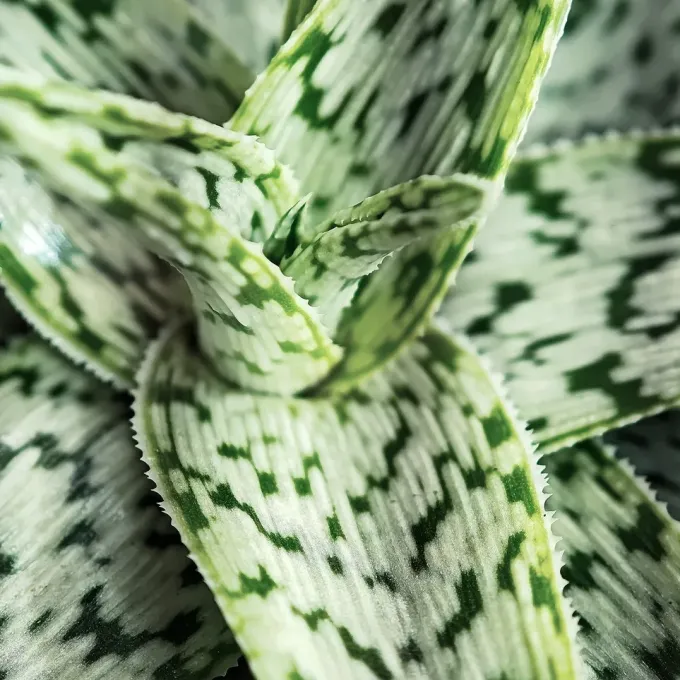
The plant grows in dense rosettes, with leaves that are silver-green with darker spots and small white teeth along the margins. The unique coloration makes it a popular choice for hobbyists and collectors of exotic flora.
Optimal growth requires bright light; however, it should be protected from intense afternoon sun in extremely hot climates to avoid leaf scorch. High light intensity ensures the plant maintains its compact form and distinct markings.
The soil requirement is strict: it must be a well-draining mineral-based mix. Potting soil formulated for cacti and succulents is ideal, often supplemented with coarse sand or pumice to prevent moisture retention.
Watering practices should follow the soak-and-dry method: water thoroughly until it drains out, then allow the soil to become completely dry before the next irrigation. During winter, watering should be minimal to simulate the plant's natural dormancy.
Main diseases and pests
Root rot is the most common and devastating issue for Aloe rauhii, almost always caused by waterlogging or soil that lacks adequate aeration and drainage.
Mealybugs are frequent pests that congregate in the crevices of the leaves. They can be difficult to eradicate once an infestation is established, requiring systemic insecticides or manual removal with alcohol.
Scale insects can attach themselves to the foliage, leaving a waxy substance that promotes the growth of sooty mold. This disrupts photosynthesis and weakens the plant significantly.
Fungal leaf spot can occur if the plant is kept in an environment with high humidity and poor ventilation. Keeping the plant in a dry, airy place is the best prevention strategy.
- Monitor for signs of soft, translucent leaf tissue.
- Ensure containers have sufficient drainage holes.
- Isolate new plants to prevent pest transmission.