
Aloe marlothii
Aloe marlothii A. Berger
Description
Growing requirements
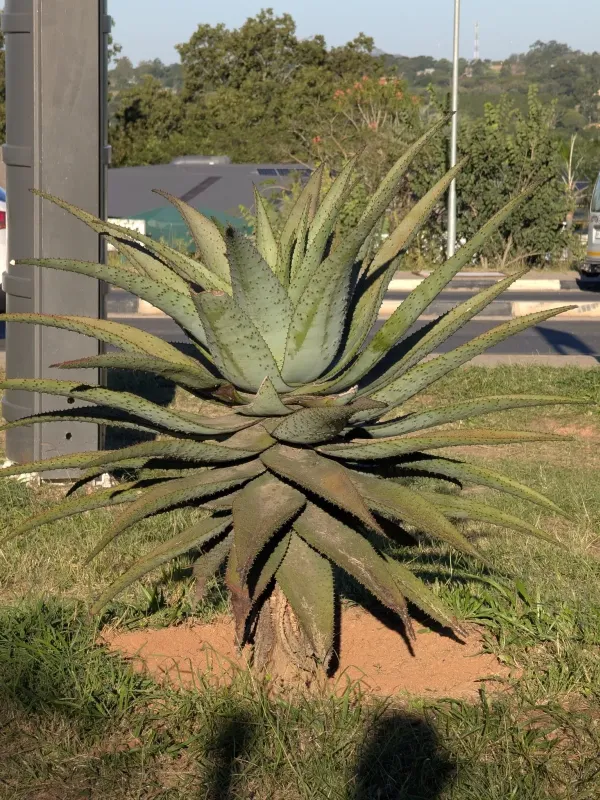
Aloe marlothii is a massive, tree-like succulent belonging to the Asphodelaceae family. Known commonly as the Mountain Aloe, it can grow up to 6 meters in height in its native habitat.
The plant originates from Southern Africa, typically found on rocky slopes and in open, dry savanna woodlands. It is well-adapted to high-temperature environments with irregular rainfall.
For successful cultivation, this species requires full sun exposure. It is highly photophilous and performs poorly in shaded areas, which can cause the plant to etiolate and lose its structural integrity.
The ideal soil substrate for Aloe marlothii must be extremely porous and well-draining. A mix of sand, grit, and loam is recommended to ensure that water does not stagnate around the roots.
Maintenance involves a drought-tolerant irrigation strategy. During the growing season, allow the soil to dry out completely before deep watering to simulate the natural desert climate.
Main diseases and pests
The primary threats to Aloe marlothii are fungal infections and root rot, which are almost always caused by improper drainage or excessive humidity around the root zone.
Insect pests such as mealybugs, aphids, and scale insects frequently attack the leaves, especially if the plant is stressed by poor environmental conditions.
Fungal leaf spot may occur if the foliage is kept wet for long periods. Proper air circulation is essential to keep the leaves dry and prevent spores from germinating.
Root system health should be inspected periodically. Signs of distress include yellowing leaves and softening at the base of the stem, often indicating that the drainage needs improvement.
Effective management strategies include the use of preventive bio-fungicides and integrated pest management to keep the specimen healthy and resilient against seasonal outbreaks.