
Aloe humilis
Aloe humilis (L.) Mill.
Description
Sowing dates
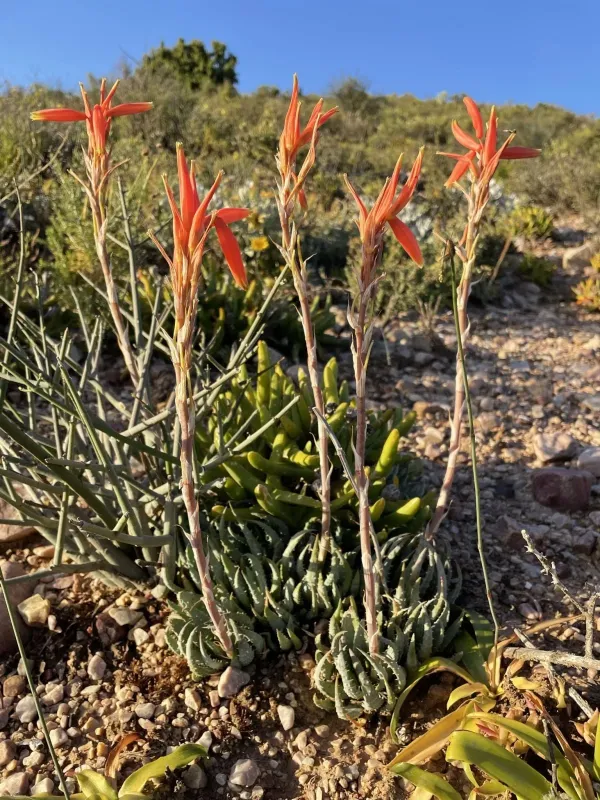
Aloe humilis, commonly known as the hedgehog aloe, is a compact succulent species belonging to the Asphodelaceae family. In agricultural practices, it is primarily propagated through seeds or the separation of offshoots from the main cluster.
Sowing should take place in spring in a well-draining, sandy-based medium. Seeds require a consistent temperature of around 22 degrees Celsius and high brightness to germinate successfully.
Vegetative propagation is the most efficient method for maintaining consistent plant quality. Offshoots are carefully detached from the mother plant and allowed to callus for several days before being planted in a dry, sterile substrate.
This species is native to the Eastern and Western Cape provinces of South Africa. Understanding its habitat helps in replicating the required conditions for healthy plant development in a controlled environment.
The plant forms dense rosettes that rarely exceed 15 centimeters in height. Its compact growth habit makes it highly suitable for greenhouse production and commercial distribution as an ornamental crop.
Growing requirements
Aloe humilis requires bright, direct sunlight to maintain its characteristic blue-green foliage and dense rosette structure. Insufficient light results in elongated growth and loss of the plant's natural form.
The soil must be highly porous and possess excellent drainage properties. A professional mix for this crop typically consists of coarse sand, pumice, and loam, ensuring that the roots are never left in standing water.
The crop thrives in temperate climates. During the active growth phase, temperatures between 20 and 28 degrees Celsius are ideal. A winter rest period with reduced temperatures is essential for future vigor.
Watering frequency should be determined by the moisture level of the substrate. It is standard agricultural practice to allow the soil to dry out completely between waterings to prevent root system collapse.
Low atmospheric humidity is preferred for this species. Poor air circulation in closed greenhouses can lead to excessive moisture accumulation, necessitating the use of active ventilation systems.
Main diseases and pests
The most prevalent disease affecting this culture is root rot, caused by overwatering or soil that lacks adequate aeration. Affected plants typically show drooping, discolored leaves and a softened stem base.
Mealybugs are the primary pests encountered during cultivation. They colonize the leaf axils, extracting plant sap and potentially transmitting viral infections that weaken the overall crop.
Spider mites can also be problematic, especially in low-humidity environments. They cause stippling and yellowing on the leaf surface, which can lead to significant aesthetic and physiological damage if left untreated.
Integrated pest management strategies are crucial for maintaining the health of the crop. This includes regular scouting for pests and the judicious use of horticultural oils or systemic insecticides when necessary.
Sanitation is key to disease prevention. Removing dead leaves and maintaining a clean growing space minimizes the risk of fungal infections and provides a better environment for plant growth.