
Aloe haworthioides
Aloe haworthioides Baker
Description
Growing requirements
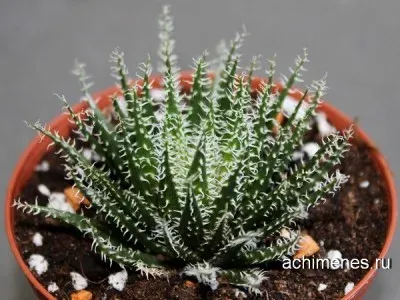
Aloe haworthioides, belonging to the Asphodelaceae family, is a distinct, miniature succulent native to the island of Madagascar. It is characterized by its compact, dense rosette form and leaves densely covered with white, hair-like protuberances, which provide a unique, hairy texture.
This species requires high light levels to maintain its characteristic rosette shape. In a cultivation environment, it thrives best in bright, indirect light or filtered sun. Insufficient light levels will cause the plant to etiolate, losing its compact structural integrity.
The substrate must be extremely well-draining, mirroring its natural rocky habitat. A mixture consisting of 50% inorganic material, such as coarse sand, pumice, or perlite, and 50% high-quality potting soil is recommended for optimal root aeration.
Watering frequency should be strictly regulated. It is essential to allow the growing medium to dry out completely between irrigation sessions. During the winter dormancy period, watering should be significantly reduced to prevent physiological stress.
The plant prefers a well-ventilated environment with moderate temperatures. While it can tolerate short periods of heat, it is sensitive to high humidity combined with cold temperatures, which can lead to rapid tissue decay.
Main diseases and pests
Root rot is the most common pathological threat, typically induced by overwatering or poorly draining soil. If the roots remain in a damp environment for too long, the plant’s base begins to rot, often becoming irreversible.
Mealybugs are frequent pests that infest the leaf axils of Aloe haworthioides. Their presence is marked by a cottony white substance; left unchecked, they can significantly sap the plant's vitality.
Spider mites may also appear in dry, stagnant air conditions. Their damage manifests as tiny, bleached spots on the foliage, which can eventually lead to leaf drop and stunted growth of the rosette.
Fungal infections can occur if water remains trapped in the center of the rosette. To mitigate this risk, it is advised to apply water directly to the soil rather than overhead, and to ensure good airflow.
Effective pest and disease control includes regular inspections and the application of appropriate systemic insecticides or fungicides when signs of infection appear. Keeping the plant dry and bright remains the best preventive measure.