
Glaucous aloe
Aloe glauca Mill.
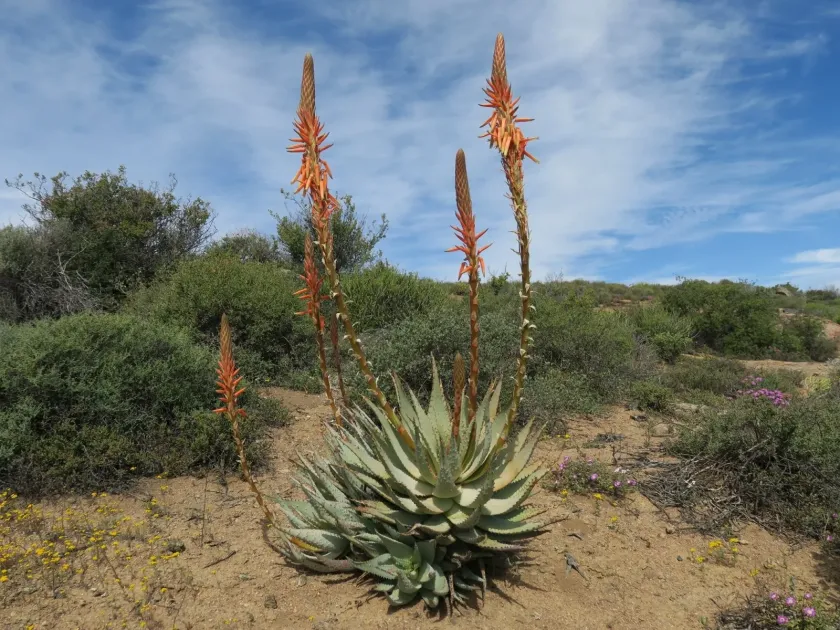
Description
Growing requirements
Aloe glauca, commonly known as the Glaucous aloe, is a perennial succulent species belonging to the Asphodelaceae family. It is native to the Western Cape province of South Africa, typically found on rocky, well-drained slopes.
The plant is highly valued for its distinct glaucous, blue-green foliage covered with a waxy bloom, which helps the plant conserve water in its natural arid habitat. It forms compact rosettes that thrive in full sun exposure.
Cultivation requirements include a mineral-rich, porous soil mix that ensures rapid drainage. Because of its sensitivity to moisture, growers must provide ample airflow and avoid dense, water-retaining peat substrates.
In terms of temperature, the species requires warm environments and is not frost-tolerant. During the winter dormancy period, the plant should be kept dry to prevent internal physiological stress and tissue damage.
Propagation is typically achieved through seeds or by separating offsets that develop around the parent plant's base. Successful growth depends on mimicking the dry, high-light conditions of its native African habitat.
Main diseases and pests
The primary threat to Aloe glauca is root rot caused by stagnant water in the root zone. This condition is often fatal and stems from poor drainage or over-watering, particularly during cooler months.
Pests such as mealybugs and spider mites are frequent visitors in indoor settings. They thrive in dry air, hiding in the leaf axils where they pierce the plant tissues to feed on cell sap.
Chemical control involving systemic insecticides is effective against severe infestations. However, physical removal with an alcohol-soaked swab is often sufficient if the infestation is caught in its early stages.
To prevent disease spread, it is crucial to avoid splashing water onto the leaves, as trapped moisture creates a breeding ground for fungal pathogens and bacterial rots.
Overall, maintaining a consistent balance of light and controlled watering is the most effective defense strategy against the majority of common horticultural threats facing this succulent.