
Aloe descoingsii x A. haworthioides
Aloe descoingsii Reynolds x A. haworthioides Baker
Description
Growing requirements
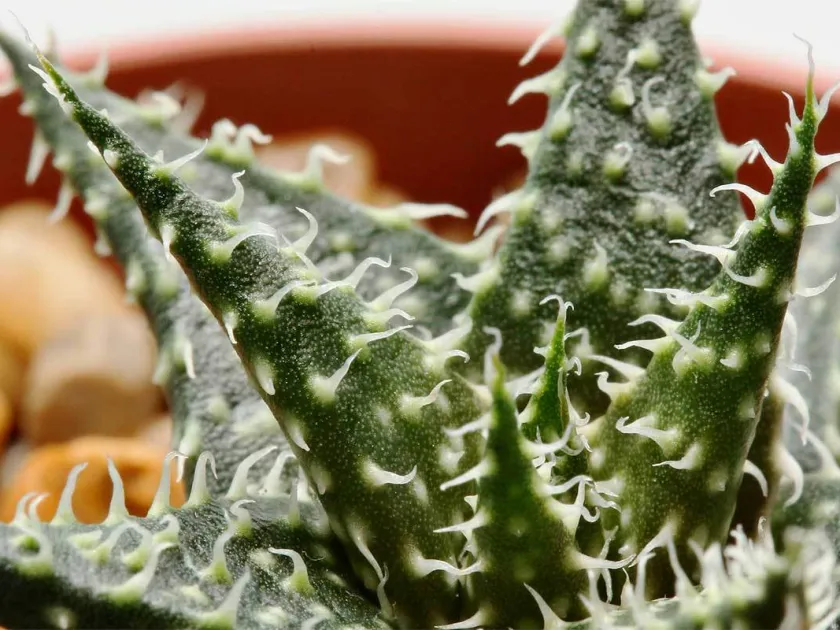
Aloe descoingsii x A. haworthioides is a charming interspecific succulent hybrid belonging to the Asphodelaceae family. It is a highly sought-after plant among collectors due to its small, compact size and the unique appearance of its leaves, which feature delicate fringes inherited from its parent species.
The origins of this hybrid lie in selective breeding, as it does not occur naturally in the wild. Its parents originate from the rocky terrains of Madagascar, a heritage that dictates its preference for well-drained, sandy environments and an ability to thrive with relatively low water availability.
Cultivation requirements focus heavily on soil structure. The plant thrives in a fast-draining potting mix specifically designed for succulents, consisting of pumice, perlite, and coarse sand. It is essential to ensure that the potting container has adequate drainage holes to prevent the accumulation of excess moisture around the root zone.
Light intensity plays a crucial role in maintaining the structural integrity of the plant. It prefers bright, filtered sunlight. While it can tolerate some morning sun, intense midday heat might scorch the leaves if the plant is not properly acclimated. Proper lighting helps maintain the compact, dense growth form that characterizes this hybrid.
In terms of usage, this plant is strictly ornamental. Its architectural form and small footprint make it an ideal choice for windowsill gardens, terrariums, or as a focal point in specialized succulent dish gardens. It is a slow-growing plant, which adds to its value for indoor ornamental plant enthusiasts.
Main diseases and pests
The primary threat to this species is overwatering, which predisposes the plant to fungal infections and root rot. Because the leaves form a tight cluster, water trapped in the center of the rosette can also cause crown rot, which is often fatal if not caught in the early stages of the disease.
Pests such as mealybugs are the most common issue for this hybrid. They tend to hide deep within the crevices of the leaves where they are difficult to reach. Using a systemic insecticide or manual cleaning with isopropyl alcohol on a cotton swab is often necessary to eliminate these persistent insects.
Spider mites can also become an issue, particularly in environments with poor air circulation and low humidity. Signs of infestation include leaf discoloration and the appearance of fine webbing between the lower leaves. Increasing humidity slightly or applying miticides will help manage these outbreaks effectively.
Disease prevention is primarily achieved through rigorous watering discipline. Allow the soil to dry out completely between waterings, especially during the dormant winter period. Additionally, ensuring that the plant receives adequate airflow around its foliage helps keep fungal pathogens at bay and promotes overall plant health.
- Root rot (caused by waterlogged soil)
- Mealybugs (white, cottony masses)
- Spider mites (tiny, sap-sucking pests)
- Crown rot (softening of the plant center)