
Alchornea latifolia
Alchornea latifolia
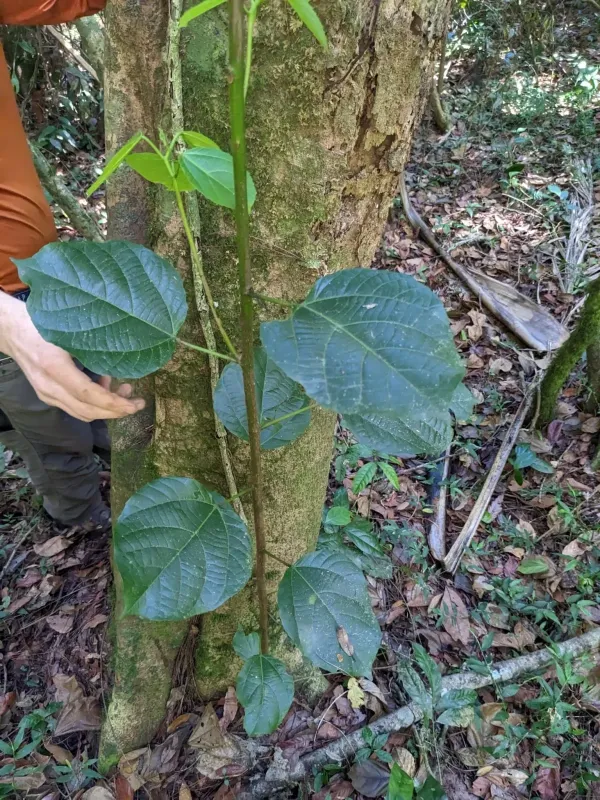
Description
Growing requirements
Alchornea latifolia is an evergreen tree belonging to the Euphorbiaceae family. In its natural habitat, the plant can reach heights of 15–20 meters and possesses a wide, dense canopy.
This crop grows primarily in the tropical forests of Central and South America, as well as the Caribbean islands. It prefers moist, well-drained soils with high organic content, characteristic of secondary forest growth.
The plant exhibits high adaptability to various light conditions, though optimal development occurs under sufficient sunlight, which is typical for open forest clearings.
In agroforestry, Alchornea latifolia is valued for its ability to rapidly improve soil structure and provide shade for more sensitive crops within multi-tiered agricultural systems.
The culture requires a stable temperature regime characteristic of the tropical belt and is sensitive to prolonged dry periods, which can negatively affect photosynthetic activity.
Yield
Economic use of Alchornea latifolia focuses not on fruit production, but on the harvesting of biomass and plant materials. The timber is utilized in local construction and cabinet making.
The bark and leaves of the plant are traditionally used in folk medicine across many Latin American countries due to the presence of specific alkaloids and tannins.
The efficiency of raw material harvesting depends on the age of the stand: full utilization is recommended only 5–7 years after planting when the biomass reaches sufficient volume.
When used as a ground cover or shade crop, it contributes to nitrogen accumulation, indirectly enhancing the productivity of adjacent agricultural fields.
On an industrial scale, the potential for this crop remains limited, so its cultivation is typically localized to satisfy the needs of small-scale farming operations.
Main diseases and pests
In its native environment, Alchornea latifolia is considered a resilient species, yet under monoculture conditions, it may suffer from infestations of leaf-eating insects and fungal pathogens.
Root rot represents the greatest danger, occurring due to poor drainage and waterlogging in the soil, which leads to the wilting of young shoots.
Pests such as mealybugs and aphids may colonize young foliage, slowing tree growth and lowering the quality of raw material harvested for medicinal purposes.
Improper pruning also creates a risk of pathogen entry into the wood through open wounds, necessitating strict sanitary protocols during agrotechnical activities.
Monitoring the health of the plantation is mandatory, as the rapid spread of infections in tropical climates can lead to the loss of a significant portion of the crop.