
Alchornea hirtella
Alchornea hirtella
Description
Growing requirements
Alchornea hirtella is an evergreen shrub belonging to the Euphorbiaceae family, native to the tropical regions of Africa. This plant typically thrives in humid forest habitats, often occupying forest edges where it receives filtered sunlight and benefits from high humidity levels.
The climatic requirements for this species are strictly tropical, necessitating warm temperatures throughout the year. It does not tolerate frost or cold stress, making it suitable for cultivation primarily in regions where the thermal regime remains stable between 20 and 30 degrees Celsius.
Soil conditions for Alchornea hirtella must be well-drained and nutrient-rich. While the plant can adapt to various soil textures, it prefers organic-rich loam that retains moderate moisture without becoming waterlogged, as the root system is sensitive to prolonged anaerobic conditions.
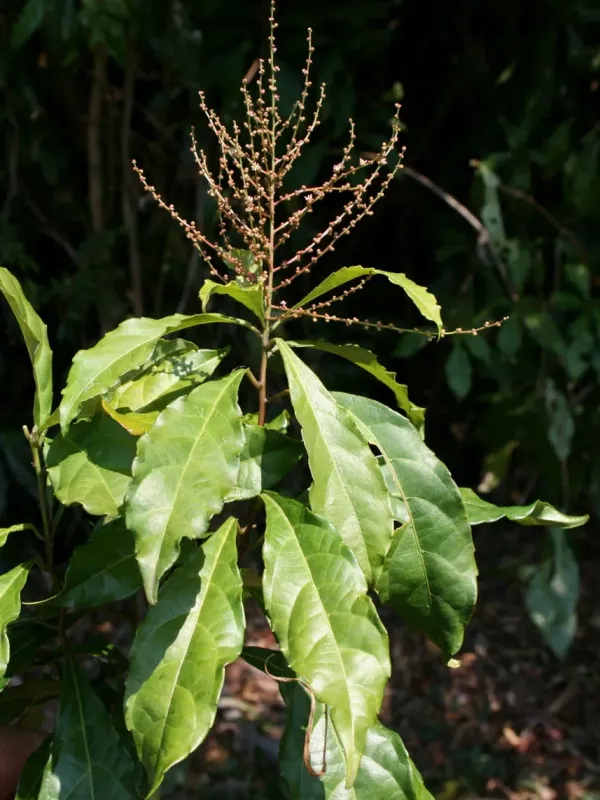
Botanically, the species is identified by its alternate leaves and distinctive hairiness, which serves as a key diagnostic feature. The inflorescences are usually axillary, and the plant maintains a shrubby habit, branching frequently to develop a dense canopy in optimal lighting conditions.
Economically, the plant is primarily utilized in ethnobotany and traditional medicine. Scientific interest centers on its secondary metabolites, particularly in extracts obtained from the bark and leaves, which are studied for their potential antimicrobial and anti-inflammatory properties.