
Alchornea cordifolia
Alchornea cordifolia
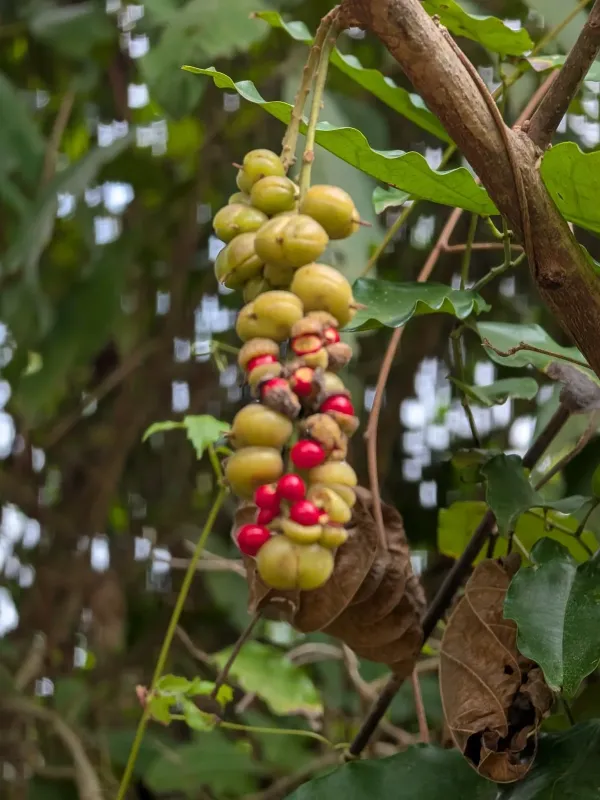
Description
Sowing dates
Alchornea cordifolia is an evergreen shrub or small tree belonging to the Euphorbiaceae family. In its natural habitat, propagation occurs primarily through seeds, which require high humidity and stable temperatures to germinate effectively.
The seeds are characterized by high viability, though the seed coat may require scarification to accelerate the germination process. In agricultural practice, seeds are sown in prepared nursery substrates before being transplanted to their final growing sites.
The sowing period in tropical regions is generally aligned with the onset of the rainy season, which provides the young seedlings with the necessary conditions for rooting without the need for additional artificial irrigation. The plant also propagates successfully through stem cuttings, allowing for the preservation of desirable varietal traits.
When cultivating, it is essential to ensure adequate spacing between plants, as Alchornea is known for its vigorous growth of lateral branches. The optimal planting scheme involves at least 2–3 meters between individual bushes to facilitate full development of the root system.
Cultivation requires careful monitoring of soil moisture during the early stages of growth. Once the plant reaches a height of 50–70 cm, it becomes significantly more resilient to fluctuating environmental conditions.
Growing requirements
Alchornea cordifolia thrives in a hot and humid tropical climate, requiring an annual rainfall of at least 1500–2000 mm. The crop is extremely sensitive to frost, making cultivation possible only within equatorial and sub-equatorial latitudes.
Soil requirements include well-drained, fertile loams or sandy soils that are rich in organic matter. The plant does not tolerate waterlogging, so on plots with heavy clay soils, the organization of a proper drainage system is mandatory.
The soil pH should ideally remain within a slightly acidic to neutral range, between 5.5 and 7.0. Increased soil acidity can lead to stunted growth and leaf chlorosis, which negatively impacts the overall biomass quality.
The plant is light-demanding; however, slight shading is permissible during the early developmental stages, mimicking natural conditions under the forest canopy. Mature specimens require full sun exposure to maintain high rates of photosynthesis.
Protection from strong winds is an important factor, as the fragile shoots of young plants can easily be damaged. It is recommended to position plantations in sheltered locations or establish natural windbreaks to protect the crops.
Yield
The primary economic products of Alchornea are its leaves, bark, and roots, all of which possess strong antiseptic and anti-inflammatory properties. The yield of green biomass depends directly on the frequency of pruning and the density of the planting.
The harvesting of leaves for pharmaceutical purposes can occur several times a year, beginning in the third year of the plant's life. With proper maintenance, the yield of marketable leaf mass can reach several tons per hectare when calculated as dry weight.
The roots of Alchornea cordifolia also hold high economic value due to their content of specific alkaloids and flavonoids. Harvesting the roots is usually carried out at the end of the site's production cycle, which involves the total removal of the plants.
The plant's productivity also includes the use of its bark, which is highly prized in traditional medicine for its astringent properties. Standardizing the collection process ensures consistent quality for the phytopharmaceutical industry.
To enhance yields, it is recommended to apply moderate doses of organic fertilizers, as excessive nitrogen can lead to a decrease in the concentration of active medicinal compounds within the plant tissues.
Main diseases and pests
Alchornea cordifolia is relatively resistant to most pathogens; however, in monoculture growing conditions, outbreaks of fungal leaf diseases can occur. The primary symptom is the appearance of necrotic spots, often triggered by excessive humidity.
Pests such as aphids and various types of caterpillars can damage young shoots by feeding on tender foliage. To control insect populations, it is recommended to use biological pest control methods, including the attraction of beneficial entomophages.
Root rot is the most serious threat, arising from poor drainage or over-irrigation. Affected specimens must be removed from the site immediately to prevent the spread of the infection to healthy plants.
Weed infestation presents a significant challenge during the seedling establishment stage. Regular weeding and mulching around the base of the plants are essential agronomic practices during the first two years of growth.
Disease prevention relies on maintaining optimal planting density, which ensures proper air circulation throughout the canopy. Timely sanitary pruning of damaged or diseased branches helps maintain the overall health and vigor of the plantation.
Harvesting
The harvesting of leaves is conducted manually during the early morning hours, after the dew has evaporated but before the intense midday heat. This minimizes the loss of essential oils and other volatile compounds.
Following harvest, the plant material must be dried immediately in a shaded area with good air circulation. Direct sunlight exposure during drying is strongly discouraged as it leads to the degradation of biologically active compounds.
Bark is harvested by carefully stripping portions from the branches, avoiding circular girdling, which can kill the plant. Damaged areas of the trunk should be treated with pruning sealant to protect against infections.
Storage of the dried material should be carried out in a dry, dark, and well-ventilated space using breathable natural material bags. This prevents mold growth and the degradation of the therapeutic properties of the raw material.
The root harvest stage requires preliminary soil preparation, which should be sufficiently loose to facilitate the extraction of the root system. Thorough cleaning of the roots is a critical step to ensure high market quality and product purity.