
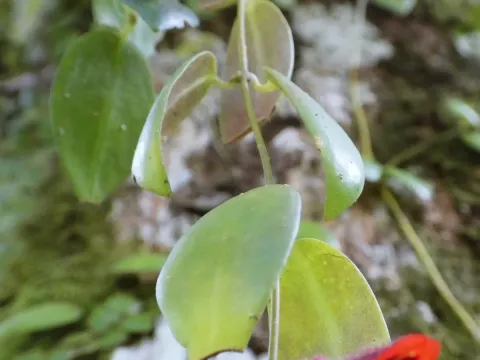
Aeschynanthus
Aeschynanthus
Aeschynanthus is a genus of tropical plants belonging to the Gesneriaceae family. Originating from the humid regions of Southern and Southeastern Asia, these plants are primarily epiphytes that grow naturally in the canopies of rainforests.
What the section contains
 Aeschynanthus
 hybrids
Aeschynanthus
Aeschynanthus hybrids
 Aeschynanthus acuminatus
Aeschynanthus acuminatus
Aeschynanthus acuminatus
 Aeschynanthus albidus
Aeschynanthus albidus
Aeschynanthus albidus
 Aeschynanthus ellipticus
Aeschynanthus ellipticus
Aeschynanthus ellipticus
 Aeschynanthus fulgens
Aeschynanthus fulgens
Aeschynanthus fulgens
 Aeschynanthus marmoratus
Aeschynanthus marmoratus
Aeschynanthus marmoratus
 Aeschynanthus parviflorus
Aeschynanthus parviflorus
Aeschynanthus parviflorus
 Aeschynanthus pulcher
Aeschynanthus pulcher
Aeschynanthus pulcher
 Aeschynanthus superbus
Aeschynanthus superbus
Aeschynanthus superbus
 Aeschynanthus wallichii
Aeschynanthus wallichii
Aeschynanthus wallichii
Aeschynanthus
The morphological characteristics of Aeschynanthus include trailing or drooping stems and succulent, waxy leaves. The inflorescences are distinct, often vibrant red or orange, emerging from dark, tubular calyces, which is why the genus is commonly known as the lipstick plant.
For commercial and residential cultivation, the species requires bright, filtered light. Exposure to direct intense sunlight is detrimental to the foliage, causing leaf burn, whereas insufficient light levels significantly restrict floral development.
Temperature management is crucial, as the plant thrives in warm, stable conditions. It is essential to protect the specimens from cold air currents and sudden temperature drops, which are major physiological stressors for this tropical crop.
The ideal growing medium for Aeschynanthus should be highly porous and well-draining, mimicking an epiphytic environment. A mix containing bark, peat moss, and perlite provides the necessary structure to support root health and prevent oxygen starvation in the rhizosphere.
Common pests associated with Aeschynanthus include spider mites and mealybugs. These organisms thrive in dry environments and can quickly infest the succulent foliage, leading to leaf chlorosis and inhibited growth if left untreated.
Pathogenic threats primarily stem from improper irrigation, leading to crown and root rot caused by pathogens such as Pythium or Phytophthora. Maintaining balanced humidity and excellent drainage is the primary defense strategy against these destructive fungal diseases.