
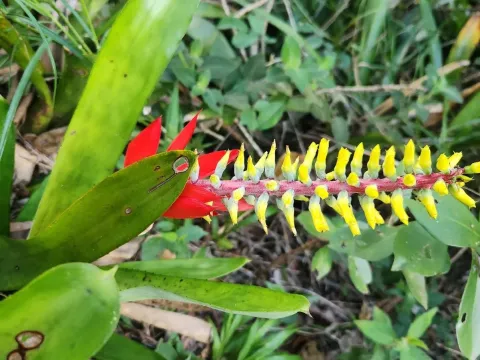
Aechmea
Aechmea
Aechmea is a genus of flowering plants belonging to the Bromeliaceae family, native to the tropical regions of the Americas. These plants are widely recognized for their rosette-forming structure and long-lasting, striking inflorescences.
What the section contains
 Aechmea apocalyptica
Aechmea apocalyptica
Aechmea apocalyptica
 Aechmea blumenavii
Aechmea caesia
Aechmea caesia
Aechmea blumenavii
Aechmea blumenavii
Aechmea caesia
Aechmea caesia
 Aechmea candida
Aechmea candida
Aechmea candida
 Aechmea comata
Aechmea comata
Aechmea comata
 Aechmea fasciata
Aechmea zebrina
Aechmea fasciata
Aechmea zebrina
 Aechmea gamosepala
Aechmea gamosepala
Aechmea gamosepala
 Aechmea hybrids
Aechmea hybrids
Aechmea hybrids
 Aechmea luedemanniana
Aechmea luedemanniana
Aechmea luedemanniana
 Aechmea mariae-reginae
Aechmea mariae-reginae
Aechmea mariae-reginae
 Aechmea mexicana
Aechmea mexicana
Aechmea mexicana
 Aechmea miniata
Aechmea miniata
Aechmea miniata
 Aechmea pineliana
Aechmea pineliana
Aechmea pineliana
 Aechmea servitensis
Aechmea servitensis
Aechmea servitensis
 Aechmea tayoensis
Aechmea tayoensis
Aechmea tayoensis
 Aechmea vallerandii
Aechmea vallerandii
Aechmea vallerandii
 Aechmea victoriana
Aechmea victoriana
Aechmea victoriana
 Aechmea weilbachii
Aechmea weilbachii
Aechmea weilbachii
 Aechmea woronowii
Aechmea woronowii
Aechmea woronowii
Aechmea
Regarding environmental conditions, Aechmea prefers bright, indirect light. Direct exposure to intense sunlight must be avoided as it causes foliar burning, while insufficient light hinders the plant's ability to produce its characteristic vibrant flowers.
The growing medium for Aechmea must be exceptionally well-draining. A suitable substrate often consists of a mix of peat, pine bark, coarse sand, and sphagnum moss. This composition mimics the natural epiphytic habitat and prevents root suffocation.
The agricultural technique of watering Aechmea is unique compared to traditional crops. Water is poured into the central cup formed by the foliage, which acts as a storage tank. This allows the plant to absorb moisture and nutrients directly through its leaves.
Temperature management is critical for the developmental cycle of the plant. A temperature range between 20°C and 25°C is ideal for growth, while a slight drop in temperature during winter can encourage the plant to initiate its reproductive phase and produce a flower spike.
The most common pests affecting Aechmea are mealybugs and scale insects. These organisms cluster in the leaf axils, depleting the plant of essential nutrients and potentially causing the leaves to yellow or deform over time.
Spider mites represent another significant threat, particularly in environments with low humidity. They typically manifest as tiny webs on the underside of the leaves, causing stippling damage and reducing the overall vigor of the plant.
Root rot is the most devastating disease for Aechmea, primarily triggered by waterlogging the substrate. Since the root system of these plants is relatively small and sensitive, poor drainage quickly leads to the decay of the basal tissues.
Fungal leaf spot diseases may appear if the foliage remains wet for extended periods in environments with poor air circulation. Regular ventilation is essential to manage humidity and discourage the growth of pathogenic fungi.
Integrated pest management strategies involve regular monitoring, manual removal of early-stage infestations, and the application of appropriate pesticides or fungicides when necessary to maintain the plant's structural integrity.