
Adenophora stricta
Adenophora stricta
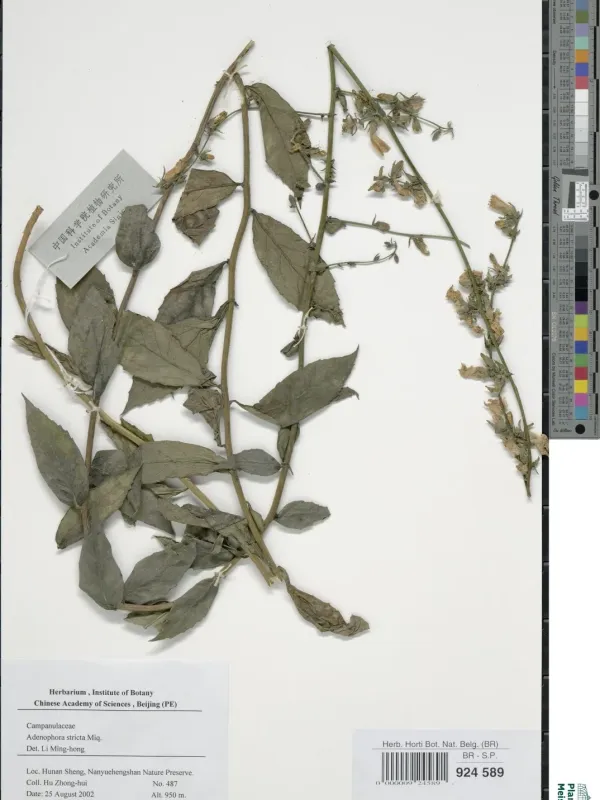
Description
Sowing dates
Adenophora stricta is propagated primarily through seeds or by root division. Sowing seeds in open ground is carried out before winter or in early spring following a stratification period, which significantly increases the germination percentage.
When using a seedling method, seeds are sown in containers during February or March. Seedlings emerge slowly, requiring a stable temperature of about 20 degrees Celsius and moderate substrate moisture without waterlogging.
Pricking out seedlings is conducted at the two-leaf stage. Transplanting to a permanent location is performed after the danger of late spring frosts has passed, following a planting scheme that ensures optimal space for each plant's nutrition.
The choice of plot for sowing must account for the plant's perennial nature. An optimal distance between plants is 30–40 centimeters, which helps prevent crowding as the crop grows over the coming seasons.
For direct sowing, it is crucial to cover the seeds with only a thin layer of soil due to their small size. First-year growth is generally slow, focusing on the development of a basal leaf rosette.
Growing requirements
Adenophora stricta, a member of the Campanulaceae family, prefers well-drained, fertile soils with a neutral to slightly acidic pH. The crop is extremely sensitive to moisture stagnation, making drainage systems essential on heavy clay soils.
The plant has specific lighting requirements, performing best in open sunny locations or light partial shade. In regions with hot climates, afternoon shading contributes to maintaining the plant's ornamental value and overall productivity.
The crop is frost-hardy and well-adapted to temperate climate conditions. A key factor in successful cultivation is regular soil loosening, which ensures oxygen access to the vigorous root system.
Irrigation should be regular but moderate, especially during active shoot growth and flowering. Excess moisture often leads to root rot, which is the most dangerous condition for this species in intensive farming.
The plant responds positively to organic fertilizers like humus or compost applied during field preparation. During the growing season, applying a balanced mineral complex is recommended to support robust development.
Yield
The economic value of Adenophora lies primarily in its fleshy roots, which contain biologically active compounds. Yield depends directly on soil fertility, plant density, and the age of the plantation.
Maximum commercial root mass is achieved between the 3rd and 4th years of growth. During this period, the rhizomes reach optimal size and accumulate the required concentration of saponins and other valuable constituents.
Commercial production requires strict control over the development of the aerial part of the plant. Although seed production is high, limiting flowering is often preferred to promote the growth of the underground organs intended for medicinal use.
Average productivity per hectare varies significantly depending on management techniques; however, when agricultural standards are maintained, the crop shows stable dry matter yields.
Crop quality is assessed by the root system's development, color, and freedom from mechanical impurities. After drying, the roots retain their medicinal properties if stored under dry, climate-controlled conditions.
Main diseases and pests
Adenophora stricta is susceptible to pests typical of the Campanulaceae family, including aphids, which damage young leaves and flower stalks. Timely insecticide treatments allow for the containment of infestations at early stages.
In high humidity conditions, the plant is frequently affected by fungal diseases such as powdery mildew and various leaf spots. Fungicides with a broad spectrum of action are effective in preventing the spread of these infections.
Root rot is the most serious threat when growing on waterlogged soil. Disease management relies on strictly following irrigation schedules and using healthy, disease-free planting material.
Slugs and snails can cause noticeable damage to young shoots in the spring. Implementing mulch barriers or using specific molluscicides is an effective way to protect the plantation.
Adhering to crop rotation practices and removing plant debris in autumn significantly reduces the infection pressure in the field. Agronomists should conduct regular field monitoring for prompt protective action.
Harvesting
Harvesting the roots of Adenophora is performed in autumn, as the aerial part of the plant begins to wither. During this period, the concentration of active substances in the rhizomes is at its peak, making the harvest most efficient.
The roots are carefully lifted using plows or cultivators to avoid damaging the main body of the crop. Once harvested, the rhizomes are cleaned of soil, washed in running water, and small side roots are removed.
The drying process requires specific conditions: the material is spread in thin layers in well-ventilated rooms or specialized dryers at temperatures not exceeding 50 degrees to prevent the degradation of active components.
High-quality raw material must be hard, dry, and free from dark mold spots. After drying, the roots are sorted by size and fraction for processing or sale in the pharmaceutical industry.
Dried product storage should take place in paper or fabric bags in a dark, dry place with good ventilation. Properly harvested and stored material remains shelf-stable for several years without significant loss of biological activity.