
Stuckenia vaginata
Stuckenia vaginata
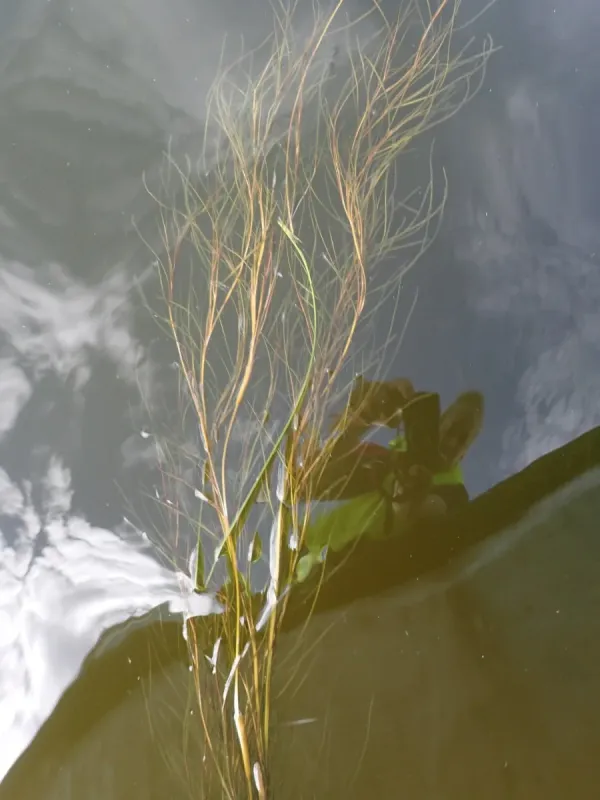
Description
How to tell it apart
Stuckenia vaginata is an aquatic perennial plant belonging to the Potamogetonaceae family. It is often identified by its slender, elongated stems that grow vertically in the water column.
The most distinctive diagnostic feature of this species is its strongly sheathed leaves. The leaf sheaths are inflated and wrap tightly around the stem, which serves as a primary marker for identification.
The plant develops an extensive system of rhizomes that creep along the substrate. These allow the plant to spread rapidly and anchor itself firmly even in areas with moderate water current.
Its leaves are narrow, linear, and arranged in an alternate pattern along the stem. The flowers develop on spikes that emerge above the water surface during the reproductive phase.
As a hydrophyte, it is well-adapted to life in the water, showing high phenotypic plasticity depending on water depth, light availability, and nutrient levels in the aquatic environment.
Where it grows
Stuckenia vaginata is commonly found in freshwater habitats, including rivers, lakes, and, most notably, managed irrigation and drainage canals. It thrives in silt or sandy bottom conditions.
The species prefers sunlit shallow to moderately deep waters. It is capable of forming dense underwater meadows that occupy the entire depth of the water, significantly altering the habitat.
The plant has a broad distribution across temperate and northern regions of the Northern Hemisphere. It becomes particularly invasive in regions with heavy reliance on artificial water delivery systems.
It can tolerate a range of salinity levels, allowing it to grow in brackish waters near river deltas as well as in inland drainage systems that may contain high salt concentrations.
Once established, the plant rapidly colonizes vacant areas, utilizing both seed dispersal and vegetative fragmentation, which makes it a persistent presence in hydraulic infrastructures.
Harm it causes
The primary economic impact of Stuckenia vaginata is its ability to clog irrigation canals. The dense vegetation drastically reduces flow rates, leading to siltation and restricted water delivery to fields.
Restricted water flow causes significant inefficiencies in agricultural irrigation, leading to potential crop losses during dry spells when water delivery to crops is delayed or reduced.
Massive accumulation of plant biomass causes oxygen depletion in the water column as it decays. This creates dead zones that are detrimental to fish populations and aquatic biodiversity.
In addition, the weed causes operational hazards for pumping stations and irrigation equipment. The plant debris often clogs intake screens and damages mechanical parts of water management facilities.
Increased evapotranspiration from the surface of these dense weed beds leads to unnecessary water loss, a critical factor in regions facing water scarcity.
How to control
Mechanical control involves the use of aquatic weed harvesters or mowers to cut back the vegetation. This is an immediate, though temporary, solution to clear water pathways in canals.
Agrotechnical strategies include winter drawdown, where water is drained from channels to expose the rhizomes to freezing temperatures, effectively killing the plants before the next season.
Chemical control is applied via registered aquatic herbicides. These must be used with caution, ensuring that environmental regulations are followed to protect non-target aquatic organisms.
Biological control methods, such as introducing herbivorous fish like grass carp, are effective in long-term suppression of the weed population in controlled irrigation systems.
- Mechanical harvesting and mowing.
- Winter drainage for frost exposure.
- Targeted aquatic herbicide application.
- Biological control using grass carp.
Taxonomy
- Latin name
- Stuckenia vaginata
- Family
- Рдестовые
- EPPO code
- PTMVA