
Pondweed
Potamogeton
Description
How to tell it apart
Pondweed (Potamogeton) is a member of the Potamogetonaceae family. It is a perennial aquatic plant that thrives primarily submerged or with floating leaves.
The stems are elongated and highly branched, often growing several meters long depending on the depth and water flow of the habitat.
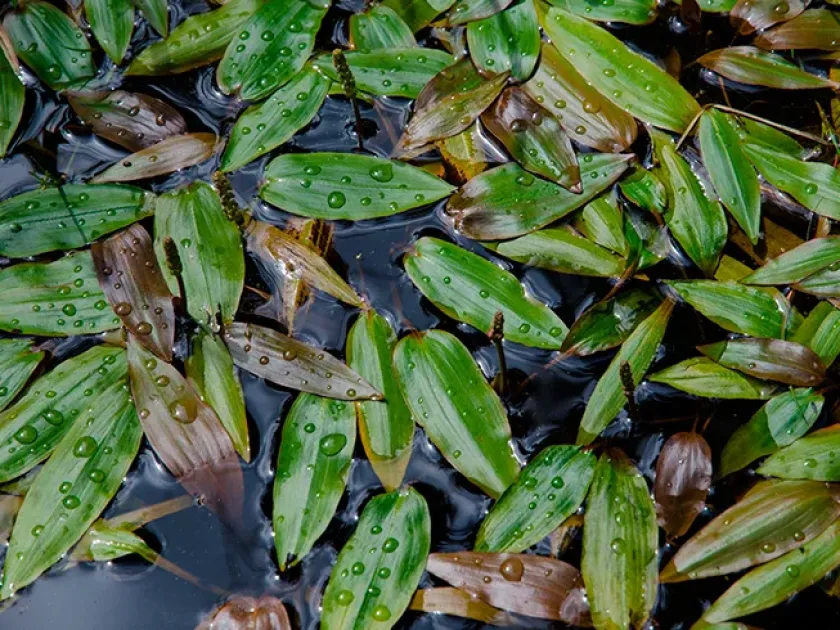
The foliage displays a wide variety of shapes, ranging from narrow, linear leaves to broad, leathery blades, typically arranged alternately along the stem.
Reproduction is primarily vegetative, occurring through rhizome fragments and specialized winter buds known as turions, which persist in the sediment.
Identifying features include the presence of stipules at the base of the leaves, which are a characteristic morphological trait of the Potamogeton genus.
Where it grows
Pondweed is found in diverse aquatic ecosystems, including lakes, ponds, slow-moving rivers, and man-made reservoirs throughout the world.
In an agricultural context, it is a significant nuisance in irrigation ditches, canals, and flooded fields, such as rice paddies, where it intercepts water flow.
The plant prefers nutrient-rich substrates, such as silt or organic mud, which support its extensive creeping root systems in calm or slow-moving waters.
Its ability to colonize shallow water bodies rapidly makes it a persistent issue in irrigated lands, where it competes aggressively with crops for light and space.
The species is highly resilient, capable of surviving seasonal drought and low-light conditions by retreating into its dormant rhizome and winter bud stages.
Harm it causes
The primary damage caused by pondweed is the obstruction of irrigation canals, which significantly reduces water delivery efficiency and promotes sediment buildup.
In rice cultivation, pondweed creates dense mats that block sunlight, inhibit the growth of rice seedlings, and compete for essential mineral nutrients.
Mechanical damage to irrigation infrastructure occurs when vegetation is sucked into pumps and filters, leading to costly equipment downtime and maintenance.
Excessive growth of the plant can lead to the deterioration of water quality due to high biological oxygen demand, negatively impacting aquatic life.
It creates significant challenges for farm operations that rely on clear water access for irrigation, pest management, and environmental monitoring.
How to control
Mechanical control involves the regular dredging or cutting of aquatic vegetation, ideally performed before the plants produce seeds or spread turions.
Hydrological management, such as draining canals for short periods during the off-season, can effectively kill rhizomes through desiccation or freezing.
Chemical control utilizing aquatic-approved herbicides is an option, though it requires precise application to minimize impact on the surrounding environment.
Biological control, such as introducing white amur or other herbivorous fish, provides a sustainable solution for keeping canal systems free of dense growth.
- Mechanical removal (dredging and cutting).
- Draining irrigation systems periodically.
- Targeted application of aquatic herbicides.
- Stocking canals with herbivorous fish.
Taxonomy
- Latin name
- Potamogeton
- Family
- Рдестовые
- EPPO code
- PTMSS