
Opposite-leaved pondweed
Groenlandia densa
Description
How to tell it apart
Opposite-leaved pondweed (lat. Groenlandia densa) is a submerged aquatic plant belonging to the Potamogetonaceae family. It is a perennial species known for its dense growth pattern.
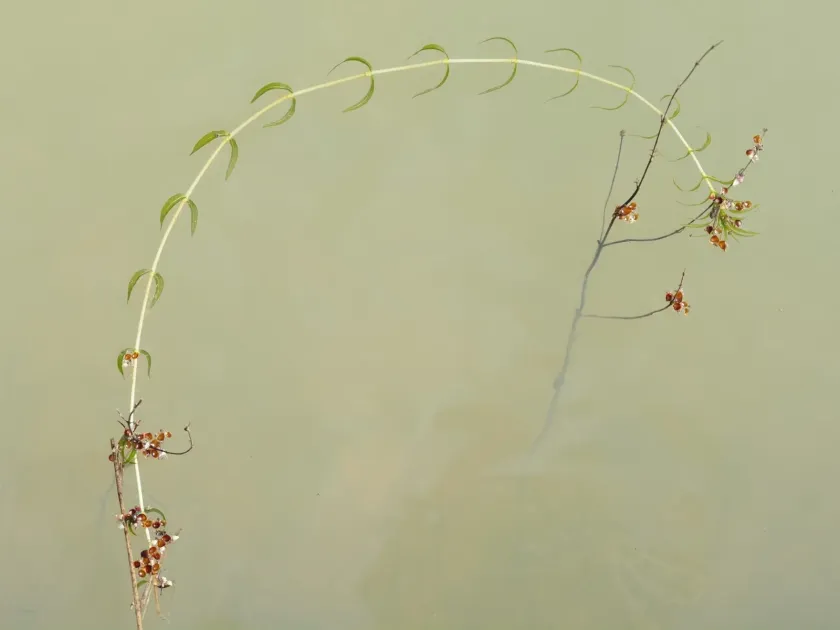
The stems are thin, branched, and can grow up to 50–70 cm in length. The leaves are opposite, broadly ovate, and sessile, clinging tightly to the stem, which is a key characteristic for identification.
It features a fine root system that anchors the plant firmly in the substrate of water bodies, including silt-rich bottoms of irrigation ditches.
The flowers are small and arranged in short spikes. The plant relies on underwater pollination, which makes it highly effective at spreading within closed aquatic systems.
Vegetative reproduction is very common; stem fragments can easily re-root and colonize new areas, making it a persistent species in managed water environments.
Where it grows
This plant thrives in slow-moving or stagnant waters, including streams, rivers, lakes, and artificial irrigation channels with lime-rich conditions.
It is widely distributed across Europe, North Africa, and parts of Asia. In agricultural landscapes, it is primarily regarded as a nuisance species in irrigation networks.
The plant prefers areas with high nutrient availability, particularly where silting provides a stable base for root development in drainage and irrigation systems.
It is highly adaptable to changing water levels, allowing it to survive in seasonal irrigation ditches that are periodically drained and refilled.
Optimal growth occurs in clear, alkaline waters where light penetration is sufficient for photosynthesis throughout the submerged stem.
Harm it causes
The primary concern is the significant reduction in water flow capacity within irrigation channels caused by the development of dense underwater vegetation mats.
Increased sedimentation occurs as the plants trap suspended solids, eventually leading to the narrowing and silting up of critical irrigation infrastructure.
The weed interferes with the operation of pumps and filters, causing mechanical strain on equipment and requiring frequent manual or mechanical cleaning of trash racks.
In stagnant or slow-moving water, massive growth can lead to significant fluctuations in oxygen levels, which may harm local aquatic ecosystems and degrade irrigation water quality.
Poor water management due to weed obstruction increases the risk of canal bank overflow, leading to local flooding and potential damage to adjacent crop fields.
How to control
Mechanical control involves the use of specialized aquatic weed cutters or excavators to clear the channels during the dormant season or before irrigation peak demand.
Cultural methods include regular drainage of irrigation canals, as the plant is sensitive to desiccation and cannot survive extended periods without water.
Chemical control via aquatic-approved herbicides is a viable option, provided that application rates and waiting periods for downstream water usage are strictly followed.
Shading the water surface by planting dense riparian vegetation can significantly suppress the growth of this submerged species by reducing light penetration.
Integrated management is essential: regular monitoring and early intervention prevent the formation of massive, difficult-to-manage colonies in larger drainage systems.
Taxonomy
- Latin name
- Groenlandia densa
- Family
- Рдестовые
- EPPO code
- PTMDE