
Large-leaved pondweed
Potamogeton amplifolius
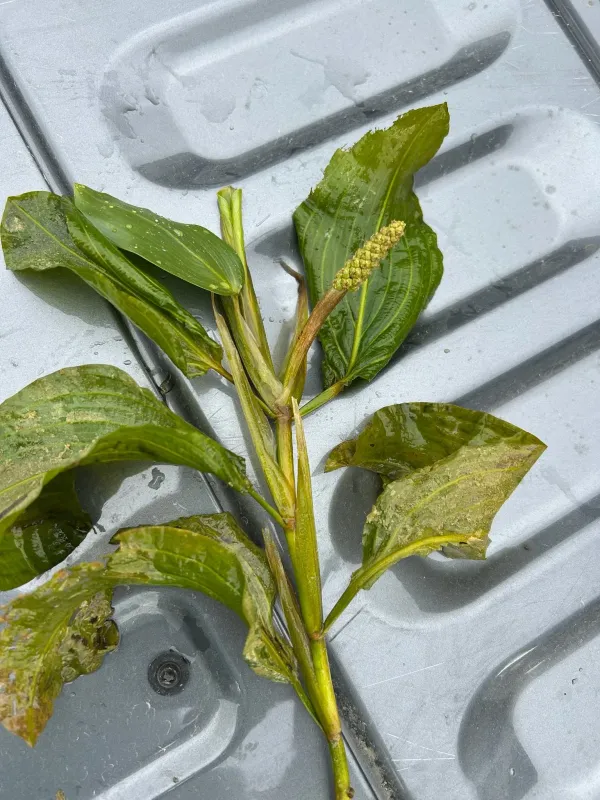
Description
How to tell it apart
Large-leaved pondweed, known botanically as Potamogeton amplifolius, belongs to the Potamogetonaceae family. It is a perennial aquatic plant easily recognized by its distinctive broad, elliptical floating leaves.
Submerged leaves are typically wavy and elongated, significantly different in appearance from the floating ones. The stems are robust and branched, allowing the plant to form dense colonies beneath the water surface.
The root system consists of creeping rhizomes that firmly anchor the plant to the lake or canal bottom. This adaptation makes the plant highly resilient against water flow and mechanical removal attempts.
Reproduction is primarily vegetative through rhizome fragmentation, but it also produces spike-like inflorescences that rise above the water level for seed dispersal by water and waterfowl.
Identification in the field often relies on the contrast between the large floating leaves and the dense submerged foliage, which sets it apart from other similar pondweed species.
Where it grows
This species thrives in still or slow-moving freshwater environments such as lakes, ponds, and man-made irrigation canals. In agricultural settings, it is a significant nuisance in water supply infrastructures.
The plant grows well in waters with high nutrient levels, often exacerbated by fertilizer runoff from nearby agricultural fields. This nutrient enrichment promotes aggressive growth and rapid colonization.
It prefers water depths ranging from 0.5 to 3 meters with soft, silty substrates. It can adapt to various water temperatures, making it a persistent weed in regions with intensive irrigation systems.
Large-leaved pondweed is frequently found in managed waterways where the hydrologic regime provides the stability required for its root systems to establish and thrive over several seasons.
Its presence is often a indicator of stagnant water conditions or inadequate maintenance of irrigation channels, providing the perfect niche for its expansion.
Harm it causes
The primary harm caused by Potamogeton amplifolius is the severe obstruction of irrigation channels. Its dense mats significantly reduce water flow capacity, hindering the timely delivery of irrigation water.
By impeding water movement, the plant increases water loss through evaporation and seepage, reducing the overall irrigation efficiency and increasing operational costs for farmers.
Accumulated plant biomass can trigger sedimentation, leading to the rapid silting of channels. This requires more frequent and costly dredging operations to maintain the irrigation infrastructure.
In addition to blocking flows, the mats can clog intake pumps and filters at pumping stations, leading to equipment downtime, mechanical failures, and delayed irrigation schedules.
The decomposition of large amounts of organic material from the weed can also degrade water quality, potentially harboring pests or diseases that may affect nearby crops if contaminated water is used.
How to control
Controlling Large-leaved pondweed requires a multifaceted approach involving mechanical, chemical, and preventive strategies to maintain the integrity of water delivery systems.
Mechanical removal is the most common method, involving the use of aquatic weed harvesters or excavators to clear channels of both the biomass and the underlying rhizomes.
Chemical control with approved aquatic herbicides is effective when applied during the early growth stages. It is crucial to use products that are safe for the specific water use and surrounding ecosystem.
Preventive maintenance, such as installing debris traps at water intakes and maintaining proper water velocity through the channel, can significantly discourage the establishment of new colonies.
Ongoing monitoring of irrigation networks is essential for early detection. Removing small patches before they spread into massive infestations saves significant resources and ensures uninterrupted water supply to fields.
Taxonomy
- Latin name
- Potamogeton amplifolius
- Family
- Рдестовые
- EPPO code
- PTMAM