
Fen pondweed
Potamogeton coloratus
Description
How to tell it apart
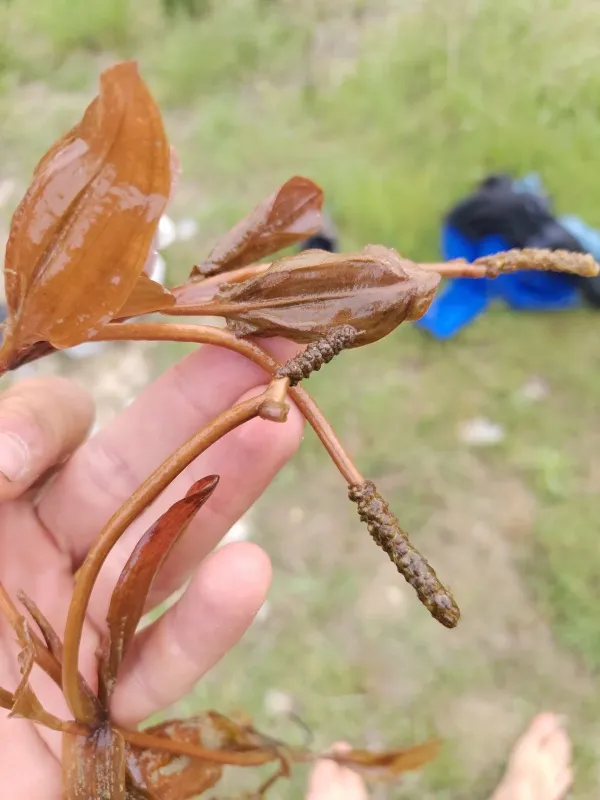
Fen pondweed (Potamogeton coloratus) is a perennial aquatic plant belonging to the Potamogetonaceae family. It is characterized by thin, translucent leaves that often display a distinctive reddish or brownish hue.
The plant forms dense submerged colonies with leaves that may float on the surface or be slightly raised. It features a creeping rhizome system that anchors the plant firmly in muddy or silty bottom sediments.
Flowering occurs mid-summer with inconspicuous spike-like inflorescences appearing above the water surface. It is biologically adapted to thrive in shallow, slow-moving or stagnant waters, where it rapidly increases its biomass.
Reproduction is both vegetative, via rhizome fragments, and generative, through seeds that remain viable in the soil for extended periods, contributing to the persistent nature of the weed.
For agricultural specialists, identification relies on the unique leaf coloration under sunlight, which helps distinguish it from other pondweed species during routine water system inspections.
Where it grows
This species prefers shallow aquatic habitats, including irrigation canals, drainage ditches, and small agricultural ponds. It is particularly prevalent in water bodies with a high carbonate content.
In fields adjacent to wetlands or irrigation channels, Fen pondweed poses a significant challenge by encroaching into the water supply infrastructure used for crop irrigation.
It thrives in silty and clay-rich substrates containing organic matter. The presence of this plant often serves as an indicator of siltation and poor water flow in irrigation systems.
In areas with extensive drainage networks, it can develop into massive colonies, reducing the hydraulic capacity of the water management system to depths of up to one meter.
Dispersal is facilitated by water currents, which transport seed and rhizome fragments downstream, leading to rapid colonization of previously unaffected areas of the irrigation network.
Harm it causes
The primary harm caused by Fen pondweed is the reduction of hydraulic capacity in irrigation channels. Dense mats of the plant obstruct water flow, hindering the efficient irrigation of agricultural land.
Reduced flow rates lead to increased sedimentation and siltation, which necessitates frequent and expensive mechanical dredging or cleaning operations of the hydraulic structures.
In stagnant zones dominated by this pondweed, conditions become favorable for the proliferation of waterborne pests and pathogens, which can then be transferred to crops during the irrigation process.
Excessive growth depletes dissolved oxygen levels in the water, potentially compromising the water quality required for specific sensitive agricultural irrigation needs.
The plant causes mechanical interference with sluice gates and pumps, as plant fragments tangle in the moving parts, leading to increased wear, maintenance costs, and operational downtime.
How to control
Mechanical control involves the regular removal of plant biomass using aquatic mowers or specialized machinery. It is essential to remove the rhizomes to prevent rapid regrowth of the colony.
Hydrological management, such as draining channels during the winter, exposes rhizomes to freezing temperatures, which is an effective method for reducing population density and vitality.
Chemical control requires the use of approved aquatic herbicides. Applications must be strictly monitored to comply with environmental regulations and prevent impact on downstream irrigation use.
Biological control methods, such as stocking irrigation reservoirs with herbivorous fish, can effectively suppress weed growth in an environmentally sustainable manner.
- Regular mechanical canal clearing.
- Winter draining and freezing of canal beds.
- Application of approved aquatic herbicides.
- Biological control using fish species.
Taxonomy
- Latin name
- Potamogeton coloratus
- Family
- Рдестовые
- EPPO code
- PTMCO