
Reddish pondweed
Potamogeton alpinus
Description
How to tell it apart
Reddish pondweed, or Potamogeton alpinus, is a perennial aquatic plant belonging to the Potamogetonaceae family. It is distinguished by its long, slender stems that thrive submerged in various water bodies.
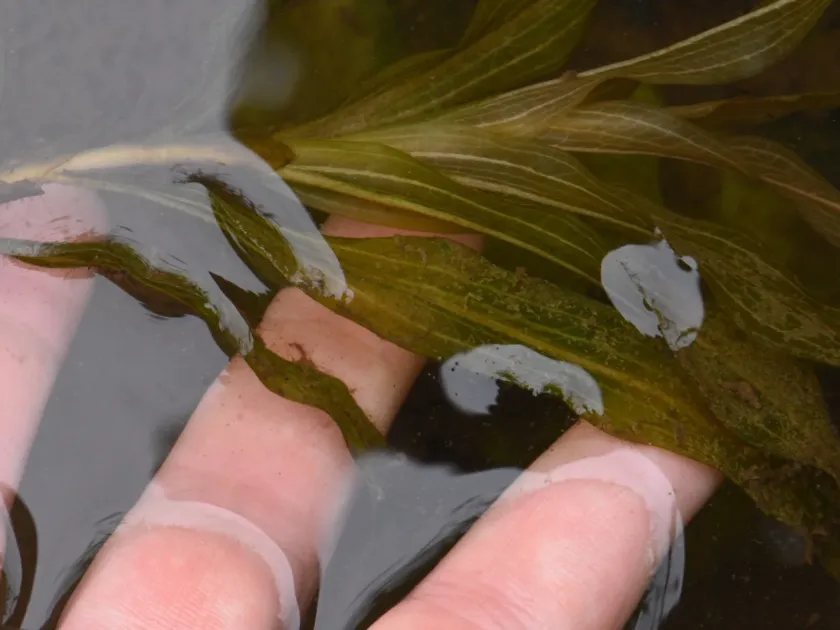
The plant features two distinct types of leaves: submerged leaves that are oblong-lanceolate and often thin, and floating leaves that appear during the flowering stage and are typically broader and leathery.
A notable characteristic is the plant's coloration, which ranges from bright green to a distinct reddish or brownish hue, providing a clear visual identifier when submerged in clear water.
Flowering occurs throughout the summer. The small, brownish-green flowers are arranged in spike-like inflorescences that rise above the water surface to facilitate wind pollination.
The root system consists of creeping rhizomes that firmly anchor the plant into the substrate. These rhizomes allow for extensive clonal growth, enabling the plant to colonize large areas effectively.
Where it grows
Reddish pondweed thrives in still or slow-flowing waters, such as ponds, lakes, and rivers. It prefers nutrient-rich substrates, often colonizing muddy or sandy bottoms where organic content is high.
In agricultural settings, it is commonly found in irrigation canals and drainage ditches. The plant favors stable water levels but can tolerate seasonal fluctuations, making it a persistent resident in water management infrastructure.
It is widely distributed across the temperate regions of the Northern Hemisphere. Its presence is often an indicator of slow water velocity, which allows for nutrient accumulation.
The species requires good light penetration to flourish. In turbid waters, its growth may be limited, but it remains highly adaptable to various ecological conditions.
Colonization often begins in shallow waters before spreading into deeper sections, where the plant can form dense mats that cover significant portions of the water surface.
Harm it causes
The primary economic impact of this weed is the restriction of water flow in irrigation and drainage channels. Dense growth creates friction and physical barriers, significantly reducing water delivery capacity.
Excessive vegetation accelerates the deposition of silt and organic debris on the canal bed. This process requires more frequent mechanical dredging to maintain the necessary flow depth for irrigation.
In submerged cropping systems, such as rice paddies, the presence of pondweed competes with the main crop for essential nutrients, light, and root space, leading to reduced agricultural yields.
Decomposing biomass from the plant contributes to lower dissolved oxygen levels in the water, which can negatively affect water quality and harm aquatic fauna within the irrigation system.
Dense populations of Reddish pondweed can also harbor various pests and disease vectors, potentially increasing the risk of infestations on adjacent terrestrial crops.
How to control
Mechanical control is the most direct approach. Using aquatic weed cutters or rakes to harvest the plant biomass helps restore water flow, although it usually requires repeated efforts throughout the season.
Agrotechnical strategies involve the seasonal drying of canals. Exposing the bottom to frost and desiccation during the winter months effectively weakens the rhizomes and reduces the following year's growth.
Chemical control involves the application of aquatic-approved herbicides. It is essential to utilize selective products that minimize impact on non-target organisms and follow all environmental safety regulations.
Prevention is key; monitoring canals for the initial appearance of the weed allows for spot treatments, which are much more cost-effective than managing fully established populations.
- Mechanical removal with aquatic mowing equipment.
- Winter drainage and desiccation of canal beds.
- Application of systemic aquatic herbicides.
- Regular inspection and maintenance of waterway infrastructure.
Taxonomy
- Latin name
- Potamogeton alpinus
- Family
- Рдестовые
- EPPO code
- PTMAL