
Flat-stalked pondweed
Potamogeton compressus
Description
How to tell it apart
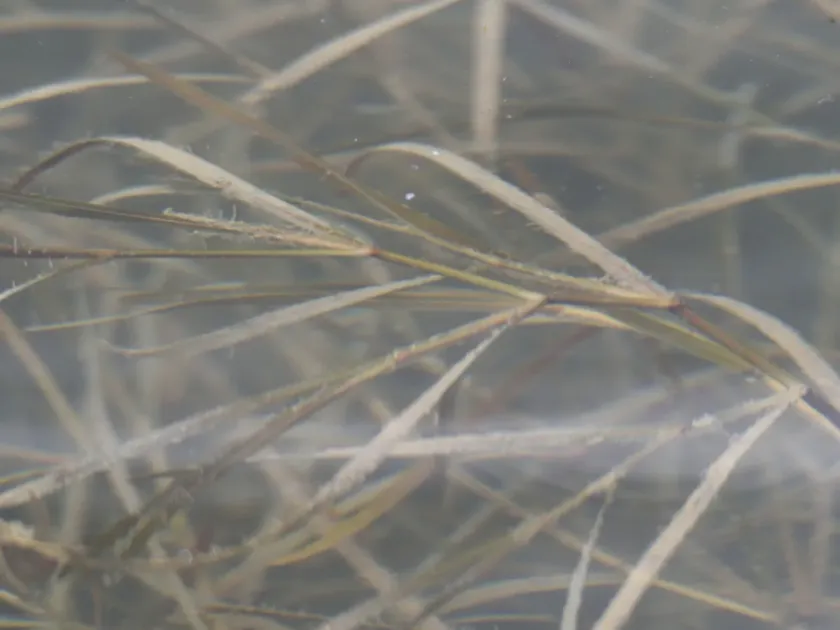
Flat-stalked pondweed (Potamogeton compressus) is a member of the Potamogetonaceae family. It is a perennial aquatic plant easily identified by its notably flattened, nearly winged stems.
The leaves are linear, narrow, and measure 10–20 cm in length. They have a characteristic sharp tip and a distinctive vein structure that helps distinguish them from other pondweed species.
The plant possesses a creeping, branched rhizome system. This structure allows the plant to overwinter on the bottom of water bodies and facilitates rapid vegetative spread.
Flowering occurs in mid-summer, producing spike-like inflorescences that emerge above the water surface to facilitate pollination by wind.
As a submerged macrophyte, its entire life cycle is dependent on aquatic conditions, requiring relatively clear water and a stable substrate for root development.
Where it grows
This species is commonly found in stagnant or slow-moving waters, such as ponds, lakes, ditches, and irrigation channels in agricultural regions.
It prefers areas with soft, silty, or clayey substrates where it can easily anchor its rhizomes. It thrives in nutrient-rich water bodies.
In regions with extensive irrigation infrastructure, it often becomes an invasive species, colonizing the entire length of delivery channels.
Dispersal is primarily vegetative, through fragmentation of stems and rhizomes moved by water currents during seasonal flows or irrigation activities.
It is capable of adapting to varying depths, though it prefers shallow to moderately deep water where light penetration to the bottom is sufficient.
Harm it causes
The primary concern is the significant reduction of flow capacity in irrigation canals due to the rapid growth of dense pondweed mats.
Heavy infestations lead to increased siltation as the plants trap suspended sediments, which narrows the channels and leads to overflow risks.
In paddy fields, flat-stalked pondweed competes for nutrients and light with crops, hindering normal growth and reducing final agricultural yields.
Large biomass accumulation creates stagnant water pockets, which are ideal breeding grounds for mosquitoes and other pests harmful to human and animal health.
When the plant material dies and decomposes in large quantities, it consumes dissolved oxygen, potentially harming fish and other aquatic organisms.
How to control
Mechanical control involves the regular dredging and clearing of irrigation channels, which is the most common method for immediate removal.
Drying out irrigation canals by temporarily stopping water flow during hot weather helps desiccate the rhizomes and reduce future growth.
Chemical control can be achieved through the application of aquatic herbicides, though this requires careful management to protect downstream water quality.
Biological control methods, such as the introduction of herbivorous fish like the grass carp, are highly effective in managing pondweed populations.
Integrated water management, including the use of filters and screens in canals, can help prevent the spread of plant fragments to new areas.
Taxonomy
- Latin name
- Potamogeton compressus
- Family
- Рдестовые
- EPPO code
- PTMCM