
Sago pondweed
Stuckenia pectinata
Description
How to tell it apart
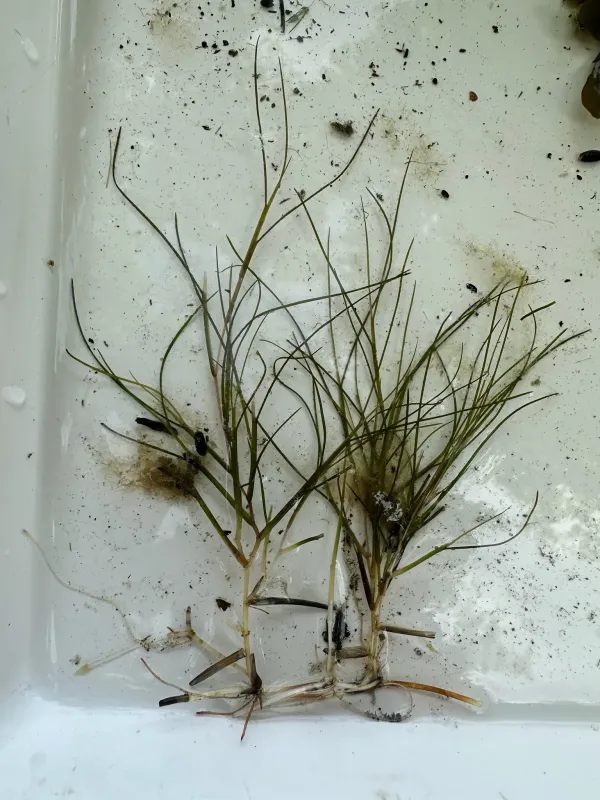
Sago pondweed (Stuckenia pectinata) is a widespread perennial aquatic plant belonging to the Potamogetonaceae family, known for its ability to form dense submerged beds.
The plant features slender, thread-like leaves and highly branched stems that can reach several meters in length, filling the entire water column in shallow areas.
A key biological trait is the production of small, starchy tubers on the rhizomes, which allow the plant to survive winters and regrow rapidly in the spring.
It exhibits high ecological plasticity, thriving in a range of water conditions, including slightly saline environments, which makes it a persistent nuisance in managed water bodies.
Reproduction is both sexual, via seeds, and asexual, through the fragmentation of rhizomes and stems, which are easily dispersed by water movement throughout irrigation networks.
Where it grows
Sago pondweed is commonly found in lakes, ponds, slow-moving rivers, and is particularly troublesome in artificial irrigation canals, drainage ditches, and water reservoirs worldwide.
Harm it causes
The primary economic impact is the obstruction of water flow in irrigation canals, which significantly reduces delivery efficiency and causes water levels to rise and overflow.
Dense mats of this plant trap sediments, accelerating the siltation of water channels and increasing the frequency and cost of maintenance and dredging operations.
The rapid biomass accumulation creates major issues for pump intakes and hydroelectric equipment, causing mechanical blockages and equipment failures.
In aquaculture, excessive growth leads to oxygen depletion at night and creates conditions that hinder fish harvesting, negatively impacting overall farm productivity.
How to control
Mechanical control is widely used and involves harvesting, dragging, or dredging the plant biomass from canals using specialized equipment during the growth season.
Chemical control focuses on applying approved aquatic herbicides, such as endothall or fluridone, which are targeted to kill the plant without harming the broader ecosystem.
Biological control methods include stocking herbivorous fish like grass carp, which can significantly reduce pondweed density when population levels are managed correctly.
Long-term management strategies rely on optimizing water flow velocity and implementing regular inspections to remove small infestations before they expand into larger, unmanageable beds.
- Mechanical harvesting and dredging.
- Selective use of aquatic herbicides.
- Biological control using grass carp.
- Preventive maintenance of water delivery structures.
Taxonomy
- Latin name
- Stuckenia pectinata
- Family
- Рдестовые
- EPPO code
- PTMPE