
Thread-leaf pondweed
Stuckenia filiformis
Description
How to tell it apart
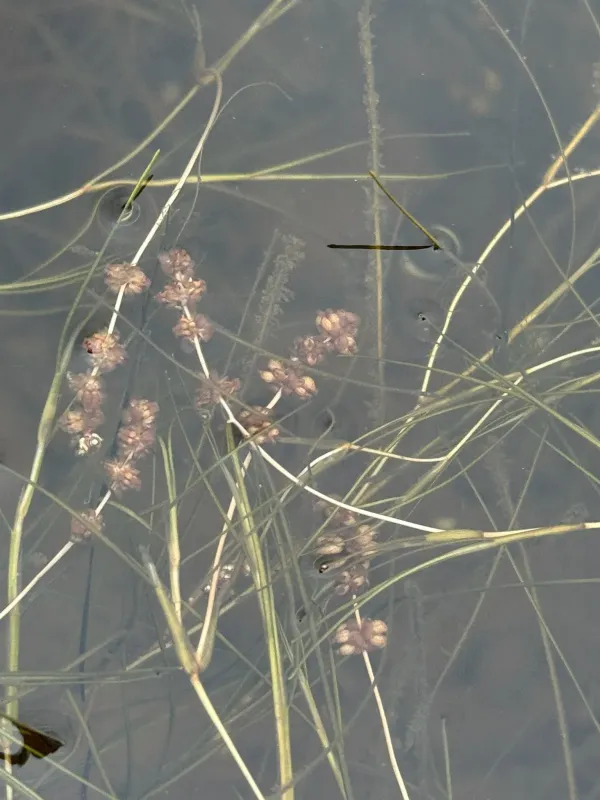
Thread-leaf pondweed (Stuckenia filiformis) belongs to the Potamogetonaceae family. It is a perennial aquatic plant characterized by thin, thread-like stems that can grow between 20 and 80 centimeters in length.
The leaves are narrow, linear, and alternate, often rolled into a tube, which gives the plant a distinct filamentous appearance under the water surface.
Its root system consists of creeping branched rhizomes, which develop small tubers that serve as the primary means of vegetative reproduction and overwintering in bottom sediments.
During the flowering stage, the plant produces spike-like inflorescences that emerge above the water, serving as a key diagnostic feature for species identification.
Unlike many other pondweeds, this species forms exceptionally dense underwater mats that can completely fill the water column, significantly altering the aquatic environment.
Where it grows
Thread-leaf pondweed typically inhabits shallow areas of rivers, lakes, ponds, and reservoirs where the water depth is less than two meters.
In an agricultural context, this weed frequently infests irrigation canals, drainage ditches, and flooded fields, such as rice paddies, causing major operational challenges.
The plant thrives in standing or slow-moving water bodies that are rich in nutrients, making it a persistent nuisance in managed irrigation networks.
It is highly adaptable and widespread in temperate to northern climates, surviving both deep freezing and occasional drying of its habitat, which allows it to recolonize quickly.
In irrigation networks, fragments of the plant are easily transported by water flow, leading to rapid colonization of downstream sections and previously unaffected areas.
Harm it causes
The primary economic impact of thread-leaf pondweed is the reduction of water flow capacity in irrigation canals, often leading to siltation and potential overflow of embankments.
Dense weed growth impedes the timely delivery of water to crops, leading to increased water loss through infiltration and reduced efficiency of the irrigation infrastructure.
In rice cultivation, the pondweed competes with the crop for sunlight, nutrients, and space, significantly hindering the development of young rice seedlings during the early stages.
The massive decay of biomass at the end of the growing season negatively affects water quality, leading to oxygen depletion and potential issues for aquatic life.
Persistent infestations increase maintenance costs, as specialized mechanical equipment is required to clear the canals and keep the water flowing to agricultural land.
How to control
Mechanical control involves the use of specialized aquatic weed harvesters or draglines to remove the plant material and its rhizomes from the canal bed.
Winter drawdown, which involves draining canals during the cold season, can be an effective way to control the population by exposing the tubers to freezing temperatures.
Chemical control can be achieved through the application of aquatic-approved herbicides, provided that all safety guidelines and environmental regulations are strictly followed.
Biological control methods include the introduction of herbivorous fish species, such as the grass carp, which can effectively graze down the weed population in controlled water bodies.
Implementing mesh screens or filters at intake points of irrigation systems is a proactive measure to prevent the migration of plant fragments into sensitive agricultural zones.
Taxonomy
- Latin name
- Stuckenia filiformis
- Family
- Рдестовые
- EPPO code
- PTMFI