
Broadleaf buttonweed
Spermacoce latifolia
Description
How to tell it apart
Broadleaf buttonweed (Spermacoce latifolia) is a perennial herbaceous plant belonging to the Rubiaceae family. It is characterized by a sprawling growth habit that allows it to rapidly cover large areas of ground.
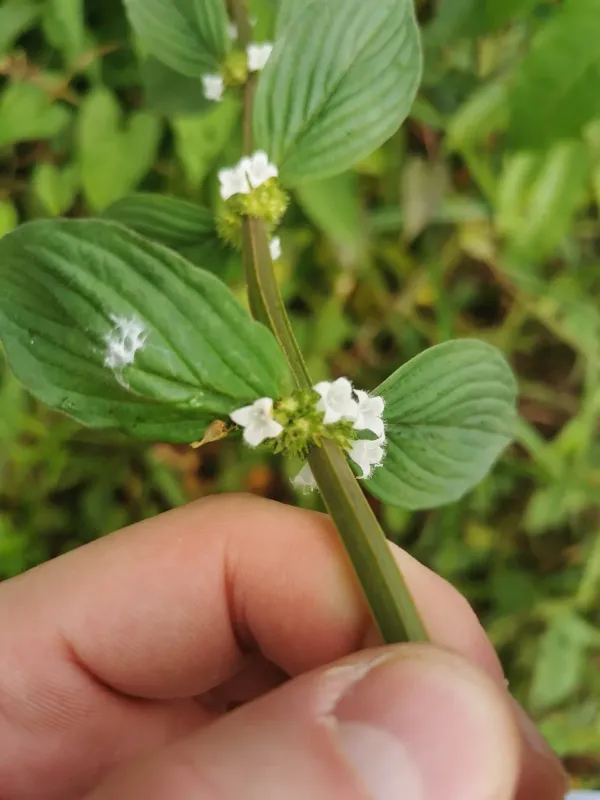
The stems of this plant are typically quadrangular in shape, supporting opposite leaves that are broad and elliptical. The leaves often exhibit distinct venation and may have a fine, hairy texture that helps the plant endure dry conditions.
Its flowers are small and arranged in dense, globular clusters within the leaf axils or at the tips of the branches. The color of the blossoms ranges from white to pale lilac, creating a notable contrast against the green foliage.
The fruit develops into small, dry capsules containing numerous seeds, which are easily dispersed by various environmental factors. This reproductive strategy ensures the plant's survival and dominance in diverse ecosystems.
A key diagnostic feature is the presence of stipules that fuse into a sheath, edged with fine, hair-like appendages. This structure is essential for distinguishing Spermacoce latifolia from other related weed species.
Where it grows
Broadleaf buttonweed is widely recognized as a problematic weed in tropical and subtropical regions. It is native to the Americas but has successfully invaded parts of Africa and Southeast Asia.
The species thrives in well-lit, humid environments but remains highly adaptable to various soil types, ranging from fertile agricultural land to nutrient-poor, disturbed soils.
It is particularly invasive in permanent crop plantations, such as cocoa, coffee, rubber, and citrus orchards. Within these systems, the weed competes aggressively for space and light, especially near the base of the trees.
This weed is frequently observed along roadsides, on abandoned pastures, and in areas where the soil has been disturbed by human activity. It is easily spread via contaminated machinery, irrigation water, and the movement of livestock.
In industrial agricultural settings, the plant quickly colonizes open spaces between rows of crops, making it a significant obstacle for farmers who rely on clean field management to ensure optimal yields.
Harm it causes
The primary damage caused by broadleaf buttonweed is its intense competition with young crops for sunlight and space. Its dense mats can physically smother small plants, significantly hindering their development.
The weed's root system is highly efficient at absorbing water and nutrients from the soil, creating a resource deficit for the intended crops. This nutritional deprivation often leads to reduced plant vigor and lower harvest yields.
Broadleaf buttonweed acts as an alternative host for various pests and viral pathogens. By harboring these threats, it increases the risk of disease transmission to economically valuable agricultural plants.
The presence of thick mats creates physical barriers that complicate essential farming operations. Machinery, such as cultivators and harvesters, often suffers from clogging and increased wear when maneuvering through infested fields.
Furthermore, the high biomass and moisture retention caused by these mats create a microclimate favorable to fungal rot, which can threaten the health of the entire crop plantation during rainy seasons.
How to control
Effective management of broadleaf buttonweed requires an integrated approach that combines mechanical control, careful soil management, and the judicious use of chemical herbicides.
Mechanical control measures, such as frequent shallow tilling and manual weeding, are highly effective in the early stages of infestation. These methods prevent the plant from establishing deep, woody root systems.
Chemical control is generally considered the most reliable method for large-scale infestations. Systemic herbicides, particularly those containing glyphosate, are often utilized to target the plant during its active growth phase.
In selective crop environments, it is crucial to use targeted, post-emergence herbicides that eliminate the weed while sparing the primary crop. Farmers must follow label directions closely to ensure efficacy and environmental safety.
Preventative strategies, including the sanitation of farming equipment and the use of certified weed-free planting material, are essential to stop the spread of broadleaf buttonweed into clean fields.
Taxonomy
- Latin name
- Spermacoce latifolia
- Family
- Мареновые
- EPPO code
- BOILF