
Diodia
Diodia
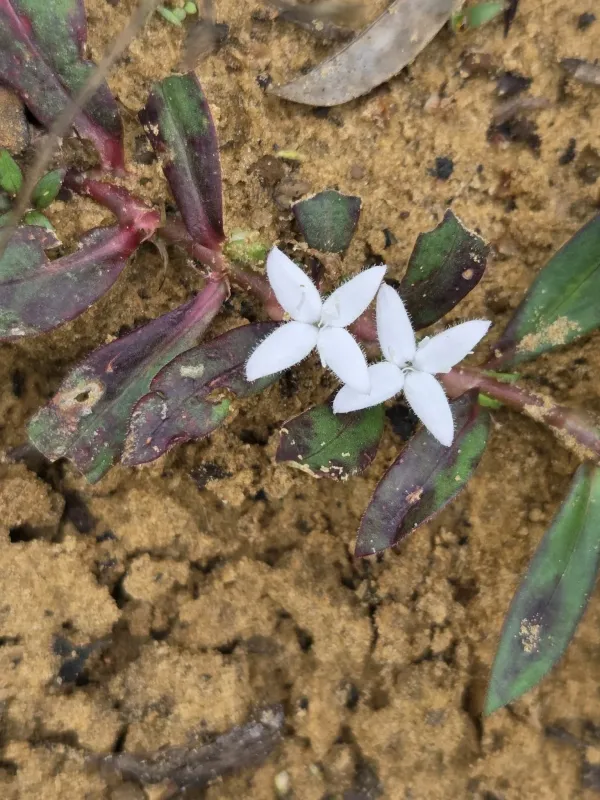
Description
How to tell it apart
Diodia is a genus belonging to the Rubiaceae family. These plants are typically characterized by four-angled stems and opposite leaves, which provide a distinctive appearance during the vegetative stage.
The flowers are usually small, white to pale pink, and are clustered in the leaf axils. The plant produces seeds that are highly adaptable and capable of spreading through various environmental factors.
Its root system is well-developed, allowing it to compete effectively for water and nutrients in diverse soil conditions, ranging from sandy to clay-rich environments.
Diodia exhibits high phenotypic plasticity, meaning it can alter its growth habit depending on light intensity, soil moisture, and the presence of competing vegetation.
The seedling emergence usually occurs in late spring and continues throughout the summer, making it a persistent weed that requires ongoing monitoring in agricultural fields.
Where it grows
Diodia is frequently found in row crops such as soybeans, corn, and cotton. It thrives in well-watered fields and is often seen in irrigated areas or fields with high soil moisture retention.
It colonizes drainage ditches, field margins, and fallow land, from which seeds are transported into crop production areas via water runoff or machinery movement.
In no-till or reduced-tillage systems, Diodia seeds tend to remain near the soil surface, resulting in higher germination rates and more significant infestations compared to conventional tillage.
The weed prefers sunny locations where it can spread horizontally, creating a dense canopy that shades out smaller crop seedlings during their early developmental stages.
It is particularly problematic in tropical and warm-temperate regions, where the growing season is long enough for the plant to produce multiple generations of seeds.
Harm it causes
Diodia acts as a strong competitor for essential nutrients and moisture, directly suppressing the growth and development of crops, which leads to substantial yield losses.
The dense vegetative mats formed by this weed create intense shade, which restricts the amount of sunlight reaching crop foliage and slows down essential photosynthetic processes.
It serves as an alternative host for various plant pathogens and insect pests, facilitating the spread of diseases and increasing the need for additional pesticide applications.
Harvesting challenges are common when fields are infested with Diodia, as the biomass increases the moisture content of the harvested crop and interferes with equipment performance.
Due to its high seed production and longevity in the soil seed bank, Diodia poses a persistent management challenge that can increase total farm input costs over time.
How to control
Effective management begins with mechanical control, such as timely cultivation between crop rows to disrupt the root systems and prevent the plant from reaching the seed-set stage.
Crop rotation with competitive species can help suppress Diodia by creating unfavorable conditions for its establishment and limiting its access to sunlight and soil nutrients.
Chemical control involves the application of selective herbicides during the active growth phase of the weed, ensuring that the target plants are hit at their most vulnerable stages.
Integrated weed management (IWM) strategies, including the use of pre-emergence and post-emergence herbicides, are recommended to maintain control throughout the entire season.
- Deep plowing to bury weed seeds.
- Regular cleaning of farm equipment to prevent seed dispersal.
- Use of certified weed-free seed for planting.
- Strategic application of systemic herbicides.
Taxonomy
- Latin name
- Diodia
- Family
- Мареновые
- EPPO code
- DIQSS