
Flatstem pondweed
Potamogeton zosteriformis
Description
How to tell it apart
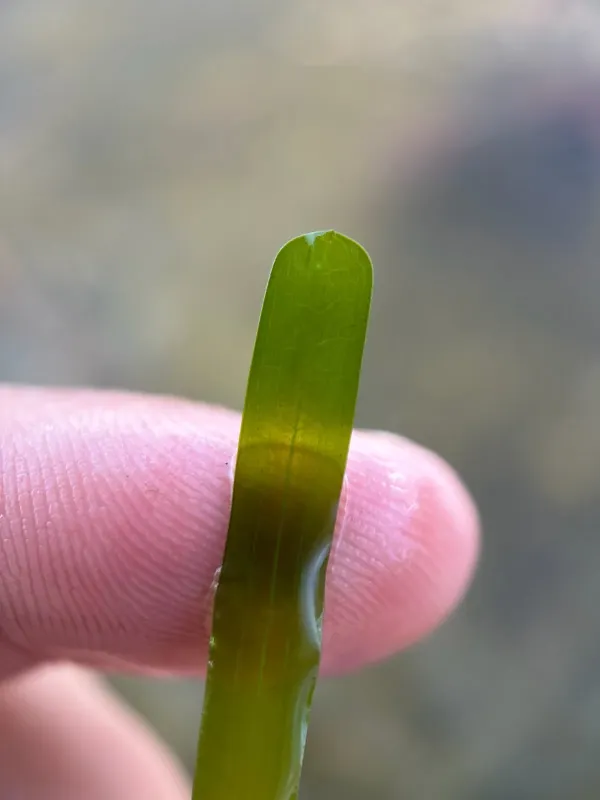
Flatstem pondweed (Potamogeton zosteriformis) belongs to the Potamogetonaceae family. It is a perennial submerged aquatic plant characterized by its distinct, flattened, and wing-edged stems.
The leaves of this species are linear, narrow, and elongated, resembling the blades of grass. They feature a prominent midrib and parallel veins, which give the foliage a specific structural appearance.
During the summer season, the plant produces flower spikes that emerge above the water surface. These spikes facilitate wind-pollination, leading to the production of seeds that can disperse through aquatic systems.
The plant possesses a robust, creeping rhizome system that anchors it firmly into the substrate. This root structure allows the plant to persist in the same location for many years, even if the above-ground parts die back in winter.
The vegetative propagation of the flatstem pondweed is highly efficient, as small fragments of the stem or rhizome can sprout and establish new colonies if they land on suitable sediment.
Where it grows
Flatstem pondweed typically inhabits calm or slow-moving freshwater environments such as lakes, ponds, and slow-flowing streams. It thrives in nutrient-rich sediments that provide stable conditions for growth.
In the agricultural sector, it is considered a problematic aquatic weed in irrigation canals and drainage ditches, where it can obstruct flow if left unmanaged for extended periods.
The species prefers shallow to moderately deep water where light can penetrate to the bottom, promoting photosynthetic activity and rapid biomass accumulation throughout the growing season.
It is commonly found in areas where irrigation infrastructure is integrated into wetland systems, as the stagnant nature of these channels provides an ideal habitat for expansion.
The ability of the plant to adapt to various water depths and current speeds makes it a resilient inhabitant of man-made irrigation networks across many regions.
Harm it causes
The primary agricultural impact of flatstem pondweed is the reduction of water flow in irrigation channels. Dense mats of the weed increase friction, leading to siltation and potential flooding of nearby fields.
Accumulated biomass from the weed can accelerate the process of water stagnation, leading to oxygen depletion which negatively impacts the aquatic life and quality of water intended for crop irrigation.
Intertwining stems frequently clog intake screens and pump machinery, resulting in mechanical failures, increased maintenance costs, and operational downtime for irrigation systems.
Large colonies can interfere with the chemical balance of the water, sequestering nutrients and creating micro-environments that may harbor pests or pathogens detrimental to crops.
The invasive nature of the pondweed often leads to the displacement of beneficial aquatic plants, causing an ecological imbalance within the irrigation infrastructure that is difficult to restore.
How to control
Mechanical control is the most common management practice, involving the use of aquatic weed harvesters or dredgers to physically remove the biomass from the canals during the growth season.
Dewatering channels during the off-season is highly effective. Exposing the bottom sediment and plant roots to freezing temperatures or desiccation helps to drastically reduce the population for the following year.
Chemical control can be implemented using aquatic-approved herbicides that target submerged species. This method requires precise timing and adherence to regulations to protect downstream water quality.
- Biological control: Introducing herbivorous fish, particularly grass carp, which can feed on the pondweed and suppress its growth effectively in enclosed water systems.
- Water velocity management: Increasing the flow rate in canals to physically prevent the establishment of new pondweed colonies and encourage natural clearing.
A comprehensive integrated management plan, combining regular monitoring with mechanical removal and biological control, is essential for maintaining the functionality of irrigation water systems.
Taxonomy
- Latin name
- Potamogeton zosteriformis
- Family
- Рдестовые
- EPPO code
- PTMZO