
Hairlike pondweed
Potamogeton trichoides
Description
How to tell it apart
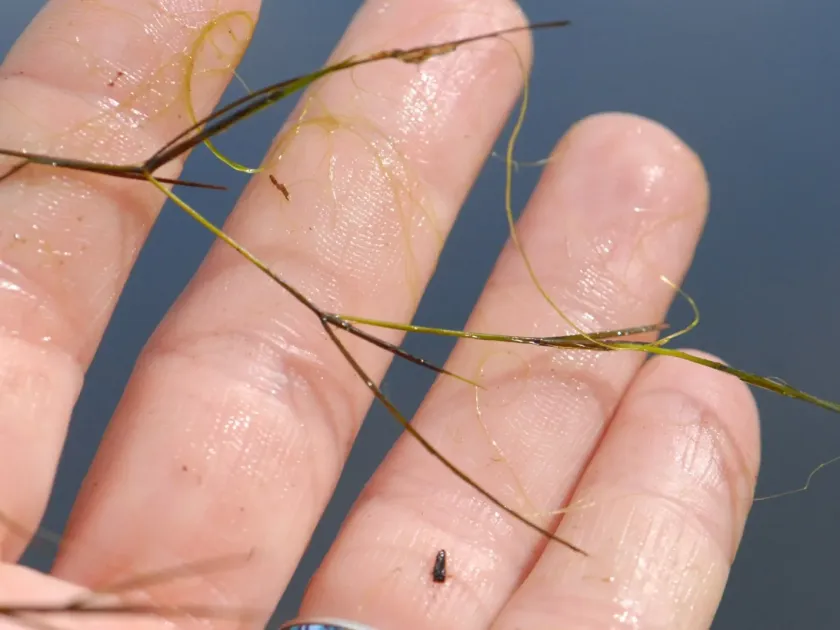
Potamogeton trichoides, commonly known as hairlike pondweed, is an aquatic plant belonging to the Potamogetonaceae family. It is characterized by its extremely thin, thread-like stems that are fully submerged in water.
The leaves are narrow, linear, and alternate, often appearing delicate or hair-like, which gives the plant its common name. The absence of broad leaf blades distinguishes it from many other pondweed species.
The plant produces small, inconspicuous spikes of flowers that may rise slightly above the water surface during the pollination period before returning to the submerged state.
It reproduces effectively through both seed production and vegetative fragmentation, where small stem cuttings can establish new colonies in suitable environments.
Identification often requires close observation as the plant blends into the underwater landscape and can easily be overlooked in turbid or deep water.
Where it grows
This species is typically found in stagnant or slow-moving freshwater bodies, such as ponds, ditches, and irrigation channels, where it favors nutrient-rich silty bottoms.
In an agricultural context, it is a significant weed in rice paddies and within the irrigation networks that supply water to agricultural fields across various regions.
The plant is highly adaptive and thrives in managed hydraulic systems, often colonizing the areas around water control structures where flow rates are reduced.
Dispersal is primarily facilitated by the transport of stem fragments through moving water, which allows the species to quickly spread throughout connected irrigation networks.
Optimal growth conditions involve moderate water depth, adequate sunlight penetration, and sufficient concentrations of dissolved minerals in the substrate.
Harm it causes
The primary agricultural impact of Potamogeton trichoides is the restriction of water flow in irrigation canals, which can lead to flooding and inefficient irrigation of crops.
In rice cultivation, the weed competes directly with the crop for space and sunlight, often smothering young seedlings and reducing the overall stand density.
Dense mats of this pondweed promote siltation by trapping sediments, which necessitates frequent and expensive mechanical dredging of the irrigation infrastructure.
The decomposition of large amounts of biomass after the growing season can deplete dissolved oxygen levels, degrading water quality for both crops and aquatic life.
Its presence also complicates the maintenance of hydraulic equipment, as the plant debris can clog intake screens and pumps, leading to mechanical failures.
How to control
Mechanical control involves the regular removal of weeds from canals using specialized rakes or dredging equipment to ensure optimal hydraulic capacity.
Water management strategies, such as periodic dewatering of irrigation channels, can be effective in desiccating the weed and inhibiting its regrowth during the season.
Chemical control must be handled with extreme caution, utilizing herbicides that are specifically labeled and approved for use in or near aquatic environments to avoid ecological damage.
Installing physical filters or barriers at the start of water intake systems helps to prevent the introduction and spread of plant fragments to unaffected paddies.
An integrated weed management plan should focus on early detection and physical removal of the weed to prevent it from establishing large-scale, difficult-to-manage colonies.
Taxonomy
- Latin name
- Potamogeton trichoides
- Family
- Рдестовые
- EPPO code
- PTMTR