
Potamogeton tricarinatus
Potamogeton tricarinatus
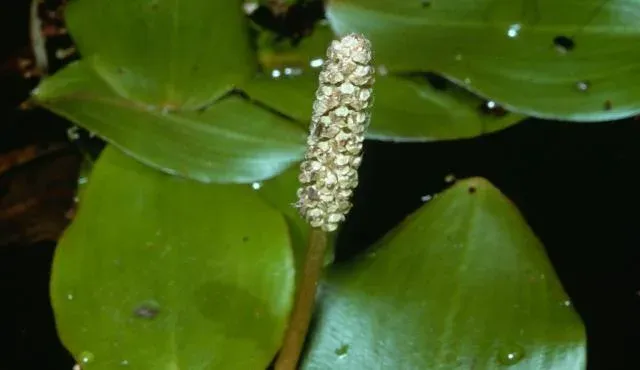
Description
How to tell it apart
Potamogeton tricarinatus belongs to the Potamogetonaceae family. It is a perennial aquatic plant that thrives primarily in flooded conditions.
The plant is characterized by long floating stems and a specific leaf structure. As the name suggests, a key identification feature is the presence of three keels on the fruit or stipules, distinguishing it from other pondweed species.
Its root system is well-developed, capable of penetrating deep into bottom sediments, which ensures long-term survival even if the water body temporarily dries out.
Propagation occurs both through seeds and vegetatively via rhizome fragments or stems, which are easily dispersed by currents or irrigation water.
The plant grows densely within the water column, creating thick mats that interfere with the development of crops in flooded zones.
Where it grows
The primary habitat includes still or slow-moving waters such as irrigation canals, drainage ditches, and rice paddies.
The plant poses the most significant threat to rice farming, where it establishes itself as a difficult-to-control weed due to constant water availability.
It prefers silty and clay-rich soils high in organic matter, making rice paddies an ideal environment for rapid colonization and expansion.
Naturally found in tropical and subtropical regions, it has successfully adapted to managed irrigation systems across various global agricultural zones.
It frequently occurs along the edges of large reservoirs, slowly spreading into internal irrigation networks through water movement.
Harm it causes
The main economic damage stems from the suppression of rice crops: the weed competes for space, light, and nutrients, significantly reducing overall yield.
Dense mats of stems obstruct the flow of irrigation water in canals, leading to sedimentation and decreased efficiency of irrigation infrastructure.
The presence of this weed complicates mechanized field operations and creates significant obstacles during the rice harvesting process.
The plant acts as a reservoir for various pathogens and pests, which can migrate to healthy crops, thereby increasing the overall phytosanitary burden.
The excessive biomass of the weed exerts mechanical strain on hydraulic structures, necessitating frequent cleaning and increasing maintenance costs.
How to control
Agrotechnical management includes systematic cleaning of irrigation canals and temporary draining of rice paddies during critical plant growth stages to induce weed mortality.
Implementing crop rotation, specifically alternating rice with dryland crops, is an effective strategy for suppressing perennial aquatic weed populations.
Chemical control relies on the application of systemic herbicides specifically registered for use in flooded rice environments.
Timing is critical for chemical efficacy; application must coincide with the vulnerable growth stages of the plant and appropriate water management strategies.
- Regular mechanical clearing of drainage and supply channels.
- Water level management in paddies to inhibit weed growth.
- Use of targeted herbicides based on bentazon or sulfonylureas.
Taxonomy
- Latin name
- Potamogeton tricarinatus
- Family
- Рдестовые
- EPPO code
- PTMTC