
Thunberg's pondweed
Potamogeton thunbergii
Description
How to tell it apart
Thunberg's pondweed (Potamogeton thunbergii) belongs to the Potamogetonaceae family. It is a perennial aquatic plant characterized by a well-developed root system that penetrates deep into bottom sediments.
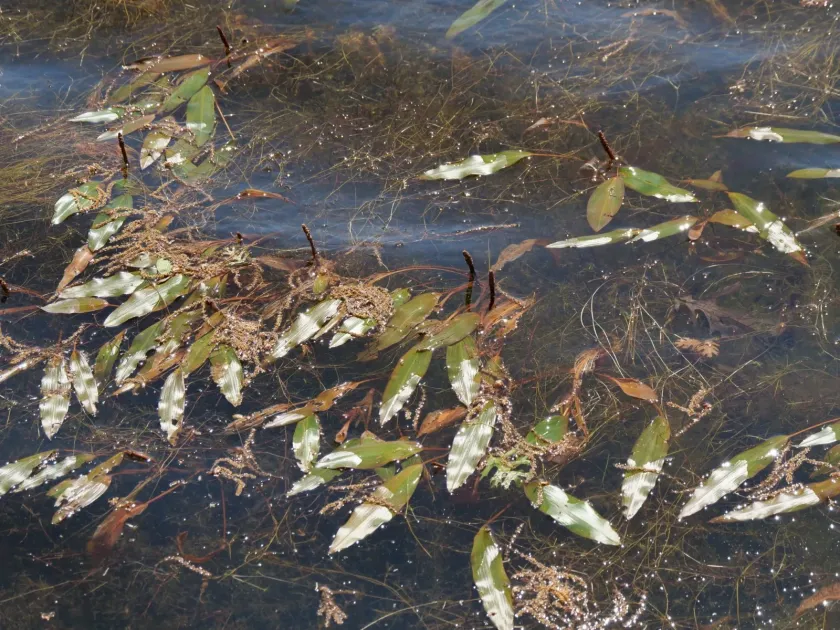
The plant features long, floating stems and leathery, lanceolate leaves. The leaf color ranges from bright green to olive, occasionally displaying a reddish tint under intense sunlight.
Biologically, the species is adapted to both submerged and surface life. Its reproductive organs consist of spike-like inflorescences that emerge above the water surface for cross-pollination.
Vegetative propagation occurs via fragmentation of rhizomes and stems. Even small plant parts carried by water currents can root in new locations, contributing to rapid colonization of water bodies.
Thunberg's pondweed acts as a dominant macrophyte capable of forming dense underwater mats that effectively displace other aquatic flora in its habitat.
Where it grows
This species is primarily found in stagnant or slow-moving water bodies. It frequently infests lakes, ponds, drainage channels, and large-scale irrigation systems that require constant maintenance.
The plant poses a significant threat to rice cultivation areas. By invading rice paddies and irrigation canals, it creates physical barriers that impede the flow of water essential for crop development.
It prefers silty and sandy-silty substrates rich in organic matter. Eutrophication of water bodies, often caused by fertilizer runoff, serves as a catalyst for the plant's aggressive expansion.
Geographically, the species is widespread in warm climates where the absence of deep freezing allows rhizomes to survive the winter and resume rapid vegetative growth in the spring.
In artificial canals, the pondweed colonizes zones with low turbulence, forming dense carpets that reduce flow velocity and accelerate the accumulation of sediment in the channel bed.
Harm it causes
The primary harm caused by Thunberg's pondweed is a substantial reduction in the carrying capacity of irrigation and drainage networks, leading to disruptions in agricultural water scheduling.
Dense mats facilitate the rapid buildup of sediments and debris, which results in the gradual silting of channels and significantly increases the costs of mechanical dredging and cleaning.
In aquaculture environments, excessive growth of this weed can lead to nocturnal oxygen depletion, potentially causing fish kills and reducing overall productivity of the fishery.
In rice fields, the plant competes directly with the crop for light, space, and mineral nutrients, which ultimately results in significant losses in grain yield.
The presence of the weed hinders the operation of agricultural machinery and water-based pumps, increasing the risk of damage to impellers, filtration screens, and intake valves.
How to control
Mechanical control methods include regular cleaning of channels using specialized mowing equipment or draglines. Operations must be completed before the onset of flowering to prevent seed dispersal.
Lowering water levels in irrigation systems during the winter exposes rhizomes to freezing temperatures, which can partially limit their recovery and growth in the following spring season.
Chemical control involves the application of aquatic-approved herbicides that target underwater vegetation. It is critical to strictly adhere to label rates and safety protocols to protect the ecosystem.
Biological control methods often utilize herbivorous fish, such as grass carp, which are highly effective at consuming soft aquatic vegetation and keeping pondweed populations in check.
Preventative measures include managing water quality to reduce nutrient runoff, and maintaining shading along canal banks to limit the photosynthetic capacity of the weed.
Taxonomy
- Latin name
- Potamogeton thunbergii
- Family
- Рдестовые
- EPPO code
- PTMTH