
Straight-leaf pondweed
Potamogeton strictifolius
Description
How to tell it apart
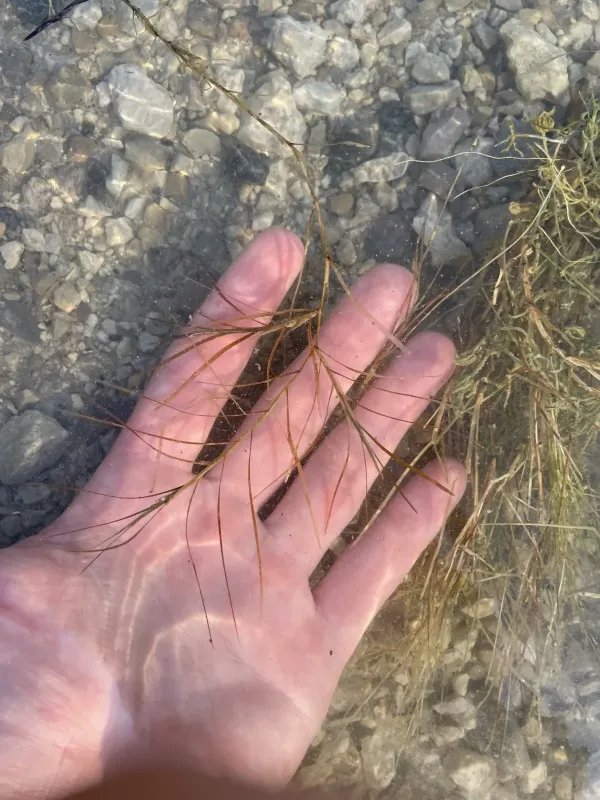
Straight-leaf pondweed (Potamogeton strictifolius) is an aquatic perennial plant belonging to the Potamogetonaceae family, known for its submerged growth pattern.
It is distinguished by its narrow, linear, almost thread-like leaves arranged alternately or in whorls along a very slender, flexible stem.
The plant possesses a robust rhizome system that anchors it securely into the substrate, allowing it to withstand water currents effectively.
During the flowering stage, the plant produces spikes that rise slightly above the water surface, displaying tiny, inconspicuous flowers characteristic of the genus.
Reproduction is both sexual via seeds and asexual through stem fragments, which can easily drift and establish new colonies in suitable habitats.
Where it grows
This species is commonly found in calm, slow-moving water bodies including ponds, shallow lakes, and irrigation or drainage channels.
In agricultural environments, it thrives in irrigation systems where reduced water velocity allows it to colonize the bottom sediments rapidly.
The plant is adapted to temperate climates and successfully survives winter dormancy as rhizomes or specialized wintering buds buried in the silt.
It favors habitats with high organic nutrient availability, often proliferating near agricultural runoffs that are rich in nitrogen and phosphorus.
High light penetration in shallow channels facilitates its rapid expansion, often leading to total coverage of the water surface.
Harm it causes
The primary concern with this weed is its ability to impede water flow in irrigation canals, which can disrupt the supply to critical crop fields.
Massive proliferation leads to siltation, as the dense vegetation traps sediments, significantly reducing the efficiency and capacity of drainage networks.
Stagnant water caused by dense pondweed mats often promotes the growth of harmful algae and potential breeding grounds for agricultural water-borne pests.
The clogging of intake structures and filters in pump stations is a major maintenance issue caused by floating fragments of this plant.
Degradation of water quality in irrigation systems can impact crop health, necessitating costly management interventions to clear the water pathways.
How to control
Mechanical control involves the use of specialized aquatic mowers, rakes, or dredgers to remove the biomass from channels before it flowers and sets seeds.
Preventive management focuses on reducing nutrient runoff from fields to limit the availability of fertilizers that support excessive pondweed growth.
Chemical control is performed using approved aquatic herbicides, which must be applied carefully to target the weed while minimizing the impact on non-target organisms.
Biological control strategies, such as shading or managing water flow velocities, can create unfavorable conditions for the establishment of the species.
- Frequent canal inspections during the growing season.
- Prompt removal of vegetation to prevent water blockages.
- Application of selective aquatic herbicides.
- Nutrient load reduction in irrigation runoff.
Taxonomy
- Latin name
- Potamogeton strictifolius
- Family
- Рдестовые
- EPPO code
- PTMST