
Robbins' pondweed
Potamogeton robbinsii
Description
How to tell it apart
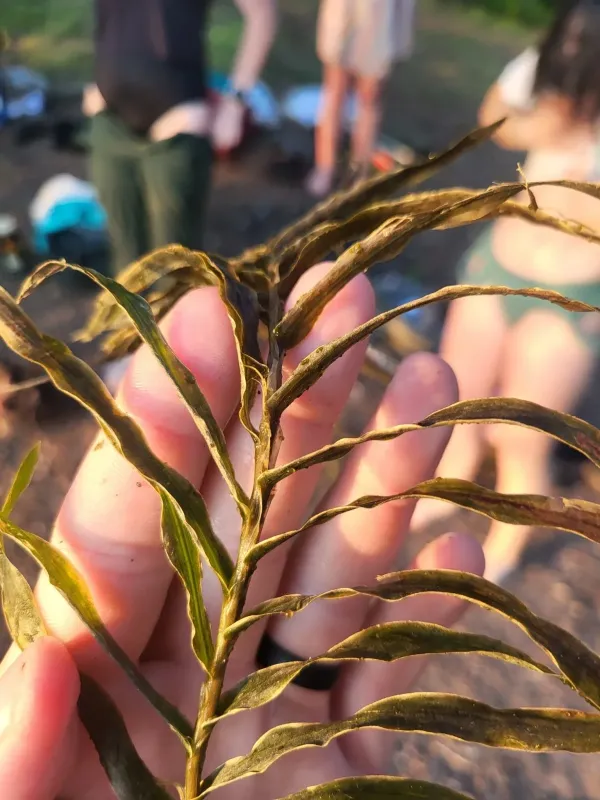
Robbins' pondweed (Potamogeton robbinsii) is a submerged perennial aquatic plant belonging to the Potamogetonaceae family, known for its distinct dense, fan-like appearance.
The leaves are firm, linear, and finely serrated along the edges, arranged in a stiff, distichous (two-ranked) pattern that gives the plant a fern-like or horsetail-like look.
Unlike many other pondweeds, this species grows primarily in deep, bottom-hugging mats and rarely reaches the water surface, making it difficult to detect from above.
It propagates mainly through fragmentation, where broken stems take root in the substrate, allowing the species to spread rapidly across the lake bottom.
The stems are heavily branched and can form thick, impenetrable colonies, which remain green and productive throughout the growing season.
Where it grows
Robbins' pondweed thrives in quiet, still, or slow-moving waters such as ponds, lakes, and calm streams, often colonizing depths between one and three meters.
It prefers soft, nutrient-rich substrates like silt or sandy mud, which are typical of sheltered bays and areas with low water velocity.
The species is highly tolerant of various light conditions, though it flourishes best in clear water where it can maximize photosynthesis at the benthos level.
Human activities, such as agricultural runoff, significantly accelerate its growth by increasing phosphorus levels, which triggers excessive biomass accumulation.
It is widespread across North American wetlands and pond ecosystems, where it often dominates the submerged vegetation layer in stable water environments.
Harm it causes
The primary concern with Robbins' pondweed is its ability to clog irrigation canals and water intake systems, leading to reduced flow capacity and increased maintenance costs.
The dense mats contribute to excessive sedimentation, as the vegetation traps organic debris and silt, which accelerates the shallowing of lakes and ponds over time.
Recreational impacts include the restriction of boating and swimming, as the sturdy stems easily foul propellers and entangle swimmers, creating safety risks.
In fishery habitats, the excessive growth can lead to nocturnal oxygen depletion and obstruct the movement of fish, disrupting the natural aquatic food web.
By forming dense monocultures, it displaces native aquatic biodiversity, leading to a loss of structural heterogeneity within the submerged plant community.
How to control
Mechanical harvesting is a common control method, involving the use of aquatic weed harvesters to cut and remove large sections of the pondweed from the water.
Preventative measures focusing on catchment management, such as reducing nutrient runoff from agricultural lands, are essential for long-term ecological control.
Chemical treatments using aquatic-labeled herbicides are available, though they require careful application to minimize impact on non-target native plant species.
Biological control options are limited; however, maintaining a healthy balance of aquatic life can prevent the opportunistic spread of the weed in some habitats.
Integrated management plans, combining sediment control with targeted removal programs, offer the most sustainable solution for managing large infestations.
Taxonomy
- Latin name
- Potamogeton robbinsii
- Family
- Рдестовые
- EPPO code
- PTMRO