
Richardson's pondweed
Potamogeton richardsonii
Description
How to tell it apart
Richardson's pondweed (Potamogeton richardsonii) is a perennial aquatic plant belonging to the Potamogetonaceae family, known for its dense underwater growth habit.
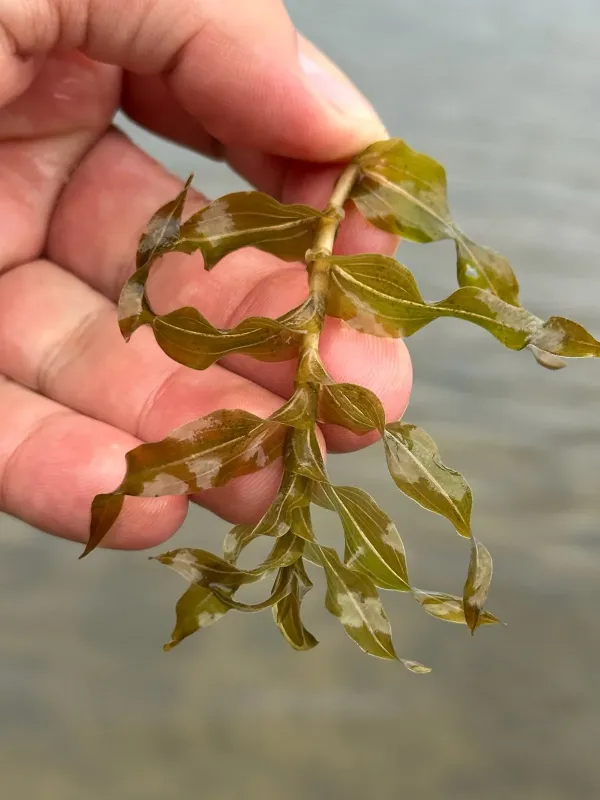
It can be identified by its wide, lance-shaped leaves with heart-shaped bases that clasp the stem, making the foliage appear to emerge directly from the plant axis without a petiole.
The stems are typically robust and highly branched, allowing the plant to form thick mats beneath the water surface, often reaching lengths of up to two meters or more.
The plant features a complex rhizome system that anchors it securely in the substrate and enables it to persist through winter months in frozen or dormant conditions.
During the summer, it produces flower spikes that emerge above the water, facilitating pollination, followed by the development of small, hardy seeds.
Where it grows
This species is commonly found in a variety of freshwater habitats, including lakes, ponds, and slow-moving rivers, but it thrives particularly well in irrigation canals.
It prefers areas with soft, silty, or sandy substrates where there is adequate nutrient availability to support its aggressive vegetative growth.
In agricultural settings, it frequently colonizes man-made water distribution systems where water flow is restricted, allowing the plant to establish dense populations.
Richardson's pondweed is highly tolerant of varying water levels, making it a persistent resident in littoral zones and seasonally flooded areas near agricultural fields.
The plant's ability to propagate via rhizome fragments allows it to spread rapidly downstream, colonizing new sections of irrigation networks annually.
Harm it causes
The primary concern is the physical obstruction of water flow in irrigation and drainage channels, which can significantly reduce the delivery efficiency of water for crops.
Dense mats of this pondweed promote heavy siltation and sediment accumulation, which can permanently alter the hydraulic profile of the canal system over time.
The weed growth interferes with the operation of pumps, intakes, and gates, often requiring costly downtime and mechanical removal to restore system functionality.
Accumulated biomass can lead to water quality degradation as large amounts of decaying organic matter deplete dissolved oxygen levels during the fall season.
Large colonies create stagnant water pockets that serve as breeding grounds for mosquitoes and other pests, posing potential health risks to the agricultural area.
How to control
Mechanical harvesting using aquatic weed cutters or rakes is the most immediate way to clear large volumes of biomass from critical irrigation pathways.
Dewatering channels during the off-season allows the rhizomes to dry out and die, significantly suppressing the population before the next irrigation cycle.
Chemical control using approved aquatic-safe herbicides is effective when applied in accordance with regional regulations, targeting the plant during active growth.
Biological control methods include the introduction of herbivorous fish species, such as grass carp, which can naturally graze down the pondweed population.
- Regular inspection of hydraulic structures to detect early colonization.
- Preventative screening to stop the movement of rhizome fragments.
- Maintenance of adequate water flow to discourage pondweed establishment.
Taxonomy
- Latin name
- Potamogeton richardsonii
- Family
- Рдестовые
- EPPO code
- PTMRI