
Berchtold's pondweed
Potamogeton pusillus
Description
How to tell it apart
Berchtold's pondweed (Potamogeton pusillus) is a perennial submerged aquatic plant belonging to the Potamogetonaceae family. It is classified as an aquatic weed species that spreads through both vegetative propagation and seeds.
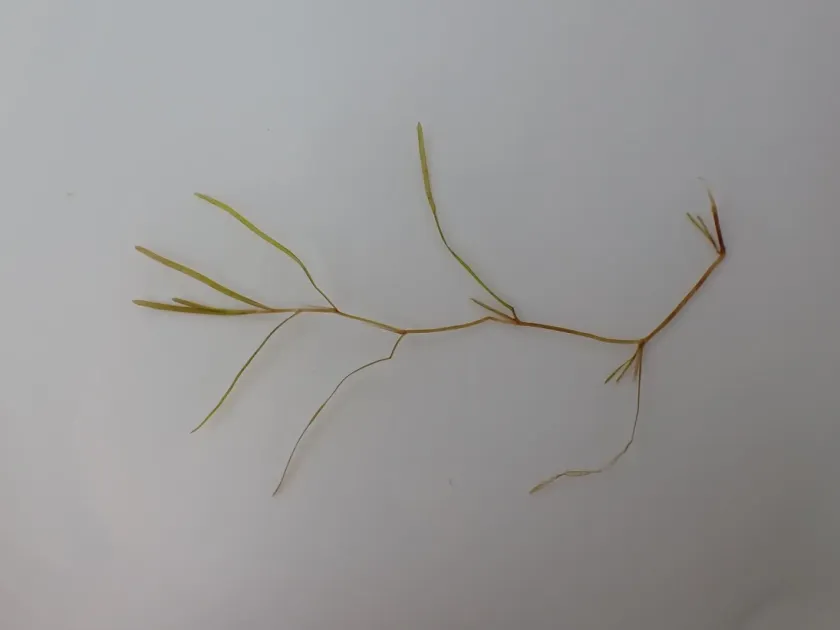
The stems are slender, thread-like, and highly branched, reaching lengths of up to one meter. A key identification feature is the narrow, linear leaves that lack stipules and often exhibit a reddish or olive-green hue.
Its root system is relatively weak, yet it successfully establishes itself in the silt of shallow waters and channels. The plant forms winter buds, known as turions, at the tips of its shoots, which ensure its survival through cold seasons.
Flowering occurs during the summer months, producing small spike-like inflorescences above the water surface. The seeds are dispersed by water currents, allowing for rapid colonization of new aquatic environments.
This species thrives in still or slow-moving waters and is often found in mineral-rich, moderately polluted aquatic habitats. In irrigation settings, it forms dense mats that can completely obscure the water channel bottom.
Where it grows
The primary habitat of Berchtold's pondweed includes shallow freshwater bodies, ponds, oxbow lakes, and slow-moving rivers. It is frequently problematic in irrigation channels and drainage ditches.
In rice fields maintained under constant flooding, this species acts as a persistent weed. It is capable of rapidly colonizing the fields, outcompeting rice crops for sunlight and available nutrients.
Spread is facilitated by the movement of fragmented stem parts through water currents during irrigation. The optimal water depth for active growth ranges from 20 to 80 centimeters.
The plant adapts well to various types of bottom substrates, including both silty and sandy soils. It often coexists with other aquatic macrophyte communities in diverse aquatic systems.
In regions with extensive irrigation infrastructure, its presence is often a biological indicator of slowed water flow and high nutrient accumulation, which fuels its aggressive growth.
Harm it causes
The primary damage caused by this pondweed is the reduction of the carrying capacity of irrigation channels. Overgrowth in these channels leads to decreased water flow rates, causing siltation and overflows.
In rice production, dense pondweed populations suppress the growth of young rice seedlings by providing significant shading during early development, leading to reduced stand density and yield.
The biological activity of the plant contributes to the rapid depletion of dissolved oxygen in the water. At night, this can trigger localized hypoxic events, harming aquatic fauna.
The clogging of intake gates, pump stations, and filtration systems by drifting plant fragments causes frequent equipment failures. Removing this biomass requires high labor and maintenance costs.
The presence of dense pondweed mats interferes with essential field operations and creates ideal breeding sites for certain water-borne insect pests and mollusks that impact crop health.
How to control
A highly effective cultural control method is the periodic drainage and drying of irrigation channels during the summer. Desiccation of the substrate leads to the rapid death of vegetative structures.
Mechanical removal using boat-mounted aquatic mowers is a common method for clearing clogged channels. However, this is labor-intensive and requires frequent repeat treatments for effective management.
In large-scale irrigation systems, chemical control using approved aquatic herbicides is employed. Targeted contact herbicides can suppress growth during peak periods without significant harm to the environment.
Biological control involves the introduction of herbivorous fish species, such as grass carp. These fish are highly efficient at consuming pondweed biomass, maintaining water clarity and channel flow.
Preventive management includes strict control of water flow regimes and timely sediment removal to prevent nutrient buildup. Filtration systems at the entry of the irrigation network help prevent further spread.
Taxonomy
- Latin name
- Potamogeton pusillus
- Family
- Рдестовые
- EPPO code
- PTMPU