
White-stemmed pondweed
Potamogeton praelongus
Description
How to tell it apart
White-stemmed pondweed (Potamogeton praelongus) is a perennial aquatic plant belonging to the Potamogetonaceae family. It is a strictly submerged hydrophyte that roots firmly in the bottom substrate of various water bodies.
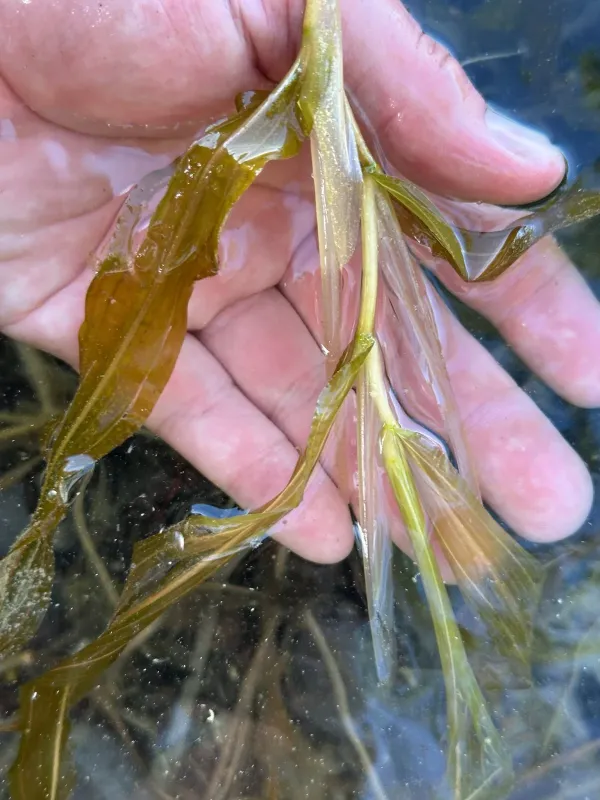
The plant is characterized by long, slender, and frequently branching stems. Its leaves are distinct, elongated, and lanceolate, often reaching up to 20 cm in length, with a translucent texture and a prominent keel-like structure at the base.
Unlike many other species in the genus, this plant does not produce floating leaves. All parts of the plant remain entirely submerged throughout its life cycle, making it highly adapted to deep-water conditions.
Propagation occurs primarily through vegetative means, using specialized wintering buds known as turions and rhizome fragments. This reproductive strategy allows the species to persist in colder climates.
During the summer, the plant produces greenish, inconspicuous flowers organized in spike-like inflorescences that emerge slightly above the water surface to facilitate wind-assisted pollination.
Where it grows
The species naturally occurs in deep, cool, and relatively clear freshwater environments, including lakes and rivers. In an agricultural context, it is a significant nuisance in managed irrigation networks.
It thrives in stagnant or slow-moving water, making irrigation channels, drainage ditches, and water storage ponds ideal colonization sites. Its ability to grow in deep water allows it to occupy space where other plants cannot survive.
White-stemmed pondweed is particularly problematic in areas with intensive agriculture where water is diverted through large-scale channel systems. It colonizes the bottom layers, quickly building up significant biomass.
The spread of this weed is largely driven by the flow of water, which transports broken pieces of stems and rhizomes downstream. This leads to the rapid infestation of previously clean segments of the irrigation system.
It prefers sediments that are nutrient-rich, often found in runoff zones from cultivated fields, which further accelerates its growth and colonization rate.
Harm it causes
The primary agricultural impact of white-stemmed pondweed is the obstruction of irrigation canals and water delivery systems. Its dense growth significantly reduces the hydraulic capacity of the channels.
By slowing down water velocity, the plant promotes the rapid sedimentation of silt and debris on the canal bed. This requires frequent and expensive dredging operations to maintain proper water flow.
In regions relying on pumped water, the presence of these weeds leads to the frequent clogging of intake screens and filters, causing mechanical strain and potential failure of irrigation pumps.
The excessive plant biomass can deplete dissolved oxygen levels as it decays, which may harm the quality of irrigation water and create secondary ecological problems within the agricultural infrastructure.
The presence of dense weed mats negatively affects the scheduling of irrigation for crops, often resulting in water deficits during critical growth stages and subsequent yield losses.
How to control
Mechanical control, such as dredging or using aquatic weed harvesters, is the most common method for managing white-stemmed pondweed. This should be performed during the non-irrigation season.
Water level manipulation is a highly effective cultural practice. Lowering the water level in channels to expose the bottom to freezing temperatures or desiccation helps to destroy the rhizome population.
Chemical control can be utilized with specific aquatic-approved herbicides. However, this requires strict adherence to regulations and the temporary shutdown of water supply to prevent the spread of chemicals.
Installation of physical barriers or debris screens at strategic points in the canal system helps to prevent the movement of weed fragments and reduces the rate of new infestations.
An integrated approach involving winter drawdown, regular mechanical cleaning, and the use of barriers provides the most sustainable long-term solution for keeping irrigation systems clear of this weed.
Taxonomy
- Latin name
- Potamogeton praelongus
- Family
- Рдестовые
- EPPO code
- PTMPR