
Bog pondweed
Potamogeton polygonifolius
Description
How to tell it apart
Bog pondweed (Potamogeton polygonifolius) is a perennial aquatic plant belonging to the Potamogetonaceae family, commonly found in shallow water habitats.
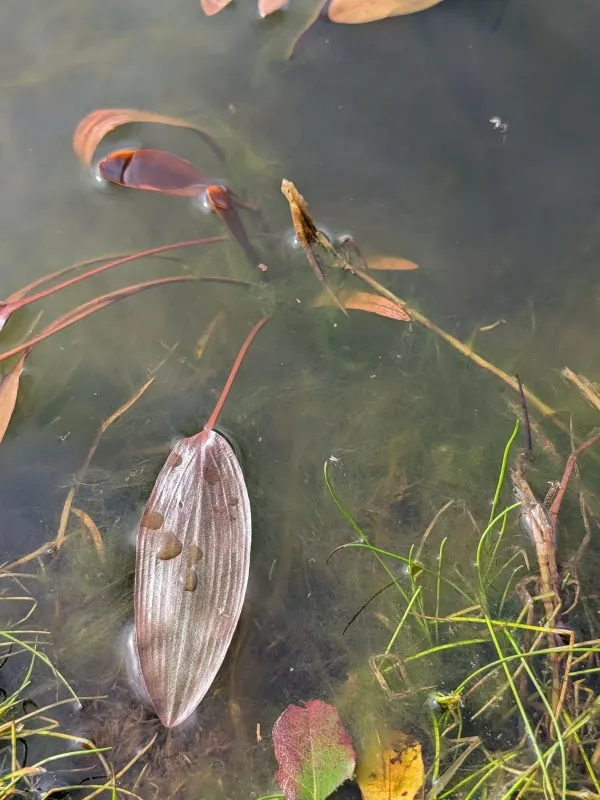
The plant is distinguished by two distinct types of leaves: submerged leaves are narrow and lanceolate, while floating leaves are broad and leathery, resembling buckwheat foliage.
It possesses a robust, creeping rhizome system that allows the plant to anchor firmly in the sediment and survive in changing water levels.
Reproduction is achieved both vegetatively through rhizome fragments and sexually through seeds that are easily dispersed by water currents.
During the flowering period, small flowers emerge in spike-like inflorescences held above the water surface, making the infestation clearly visible.
Where it grows
This species primarily thrives in shallow stagnant or slow-flowing waters, drainage ditches, and waterlogged areas within agricultural fields.
It is commonly encountered in regions with developed drainage networks, where it occupies the channels and inhibits the natural water flow.
Bog pondweed favors acidic, nutrient-poor, or slightly peaty soils and is often an indicator of high water tables and poor drainage conditions.
It frequently colonizes irrigation ditches and flood-prone agricultural zones, rapidly spreading during periods of high rainfall or irrigation activity.
Human activity, such as ditch dredging, often facilitates the dispersal of the plant as rhizome parts are moved and deposited in new locations.
Harm it causes
The primary economic harm caused by bog pondweed is the obstruction of drainage and irrigation channels, which disrupts water management on farms.
Accumulation of biomass restricts water velocity, leading to siltation and potential flooding of productive fields, which negatively impacts crop yields.
In rice paddies, the weed competes directly with the crop for space, nutrients, and sunlight, significantly reducing the final harvest potential.
High densities of the weed increase the cost of maintenance for irrigation infrastructure, as mechanical clearing becomes difficult and expensive.
The weed also provides a habitat for various aquatic pests and pathogens that may compromise the health of surrounding agricultural crops.
How to control
Mechanical dredging of irrigation ditches is the most effective way to remove both the biomass and the underlying rhizome system.
Regular mowing of the surface growth before seed set can significantly reduce the weed's reproductive capacity and weaken the rhizomes over time.
Systemic aquatic herbicides can be used for control, provided they are applied according to environmental regulations to prevent water contamination.
Draining irrigation channels during the off-season can effectively dehydrate the rhizomes, leading to the suppression of the pondweed population.
Biological control methods, such as the introduction of herbivorous fish species, can help manage the growth of aquatic plants in controlled water bodies.
Taxonomy
- Latin name
- Potamogeton polygonifolius
- Family
- Рдестовые
- EPPO code
- PTMOG