
Perfoliate pondweed
Potamogeton perfoliatus
Description
How to tell it apart
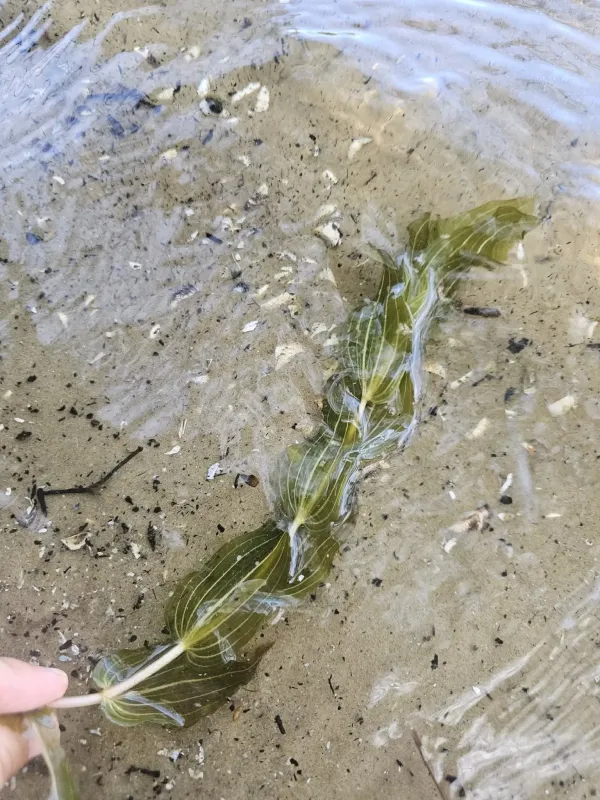
Perfoliate pondweed (Potamogeton perfoliatus) is a perennial aquatic plant belonging to the Potamogetonaceae family. It is easily recognized by its translucent, broad, heart-shaped leaves that clasp the stem at the base.
The stems are typically branching and can grow up to 2 meters in length. Depending on the depth and water quality, the leaves can appear either ovate or lanceolate, often with wavy, crinkled margins.
Small, spike-like inflorescences rise above the water surface during the flowering period. The plant spreads primarily through a creeping, extensive rhizome system that anchors it firmly in the bottom substrate.
Seeds are produced as small drupelets, but vegetative reproduction is the primary method of spread, as stem fragments easily re-root after being broken off by water currents or mechanical activities.
This species forms dense, submerged mats that significantly reduce the visible water surface, often filling the entire water column in stagnant or slow-moving freshwater bodies.
Where it grows
Perfoliate pondweed is found throughout the Northern Hemisphere in various aquatic habitats, including lakes, ponds, slow-moving rivers, and man-made irrigation canals.
In agricultural settings, it is a significant weed in irrigation networks and paddy fields. It thrives in silt-rich soils that provide an abundance of nutrients for its rapid growth.
The plant is highly adaptable to varying water depths, from shallow littoral zones to depths of several meters, making it persistent in deep irrigation infrastructure.
Optimal growth conditions include warm, nutrient-rich water. During the summer, its rapid biomass production can quickly obstruct water flow, leading to localized flooding or downstream irrigation shortages.
It prefers quiet waters but can withstand moderate currents, which often facilitate the transport of plant segments to new sections of irrigation systems, colonizing them rapidly.
Harm it causes
The primary concern for agriculture is the obstruction of water flow in irrigation canals. Dense patches act as filters, catching debris and silt, which drastically reduces the channel's capacity to deliver water to crops.
Increased siltation caused by the plant's resistance to water flow necessitates frequent and expensive dredging operations to maintain the design specifications of irrigation channels.
In rice paddies, the presence of perfoliate pondweed creates competition for nutrients and sunlight. Its physical density makes essential field operations, such as water leveling or harvesting, difficult to perform.
The large surface area of the leaves contributes to higher rates of evapotranspiration, which is detrimental to water conservation efforts in arid or drought-prone farming regions.
Furthermore, the massive seasonal senescence of the pondweed can cause significant water quality degradation, leading to anaerobic conditions and potential harm to beneficial aquatic fauna.
How to control
Mechanical control involves the use of specialized underwater mowers or dredgers to remove large masses of biomass. This is typically performed prior to the start of the irrigation season to ensure full flow capacity.
A more sustainable management practice includes the periodic dewatering or drainage of irrigation channels during the off-season. Drying the substrate kills the rhizomes and inhibits growth in the following season.
Chemical control can be implemented using aquatic-approved herbicides. These must be applied with extreme caution to minimize the impact on non-target aquatic organisms and water quality standards.
Biological control, such as stocking irrigation canals with grass carp (Ctenopharyngodon idella), has proven effective. These fish consume the vegetation, keeping channels clear without the need for synthetic chemicals.
- Mechanical mowing and biomass removal
- Off-season channel dewatering/drying
- Selective application of aquatic herbicides
- Biological control using grass carp
- Monitoring of channel flow and vegetation density
Taxonomy
- Latin name
- Potamogeton perfoliatus
- Family
- Рдестовые
- EPPO code
- PTMPF