
Octandrous pondweed
Potamogeton octandrus
Description
How to tell it apart
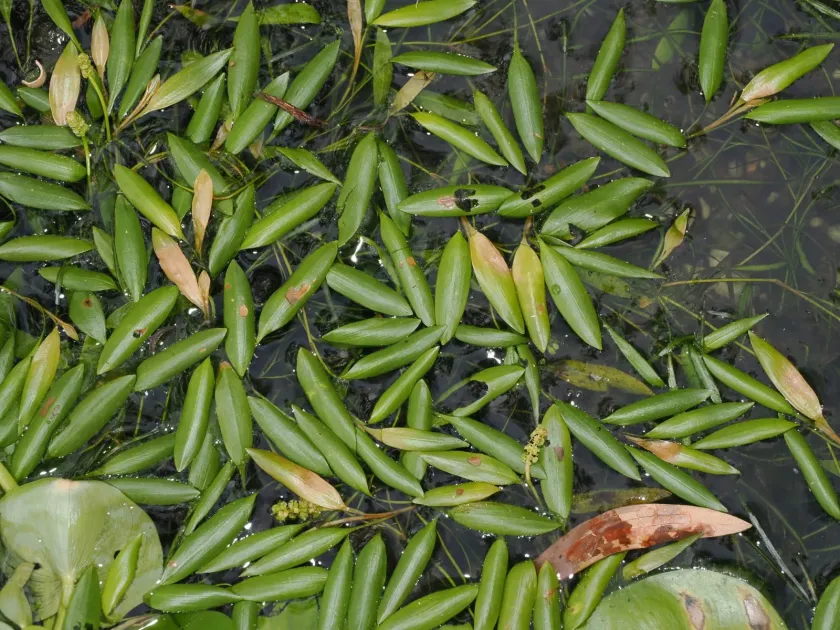
Potamogeton octandrus, commonly known as octandrous pondweed, is a perennial aquatic plant belonging to the Potamogetonaceae family.
The plant is characterized by thin, branched stems that remain fully submerged in water, often forming dense underwater colonies.
Its leaves are narrow, linear to lanceolate, and arranged alternatively along the submerged stems, which is a distinguishing feature of the species.
During the flowering stage, the plant produces small spikes that rise just above the water surface to facilitate pollination.
The root system consists of a creeping rhizome that anchors the plant firmly in the mud, allowing it to survive in various aquatic environments.
Where it grows
This species is primarily found in stagnant or slowly moving freshwater bodies, including irrigation canals and flooded rice paddies.
It thrives in shallow, nutrient-rich environments, making it a persistent weed in agricultural areas where water management is centralized.
The plant is highly adaptable to the flooded conditions of rice cultivation and can rapidly spread across fields through vegetative fragmentation.
It prefers areas with high light penetration in the water column, often becoming a dominant species in fields with insufficient canopy cover.
In irrigation systems, it can quickly colonize the entire length of channels, especially if water flow is slow or stagnant for prolonged periods.
Harm it causes
The primary damage caused by Potamogeton octandrus is the intense competition with rice crops for light, nutrients, and physical space.
The formation of dense mats prevents sunlight from reaching the rice seedlings, significantly reducing their growth rate and overall crop yield.
It acts as a nutrient sink, absorbing fertilizers applied to the rice crop and preventing the crop from accessing essential minerals.
By impeding water circulation in rice paddies, the weed creates micro-environments that may favor the development of pathogens and pests.
Furthermore, the presence of this weed hampers harvesting processes and clogs irrigation machinery, increasing overall production costs for farmers.
How to control
Effective management begins with proper field leveling and maintenance of water depth, which can help limit the expansion of the pondweed.
Cultural practices, such as deep plowing and crop rotation with non-aquatic species, are essential for reducing the rhizome bank in the soil.
Maintaining a consistent and appropriate water management schedule is critical to preventing the weed from establishing a strong hold in the paddies.
Chemical control involving selective herbicides is often necessary for large-scale infestations where mechanical control is insufficient or impractical.
Regular monitoring of irrigation canals and early intervention before the weed reaches the flowering stage are vital to prevent seed dispersal and further spreading.
Taxonomy
- Latin name
- Potamogeton octandrus
- Family
- Рдестовые
- EPPO code
- PTMOT