
Blunt-leaved pondweed
Potamogeton obtusifolius
Description
How to tell it apart
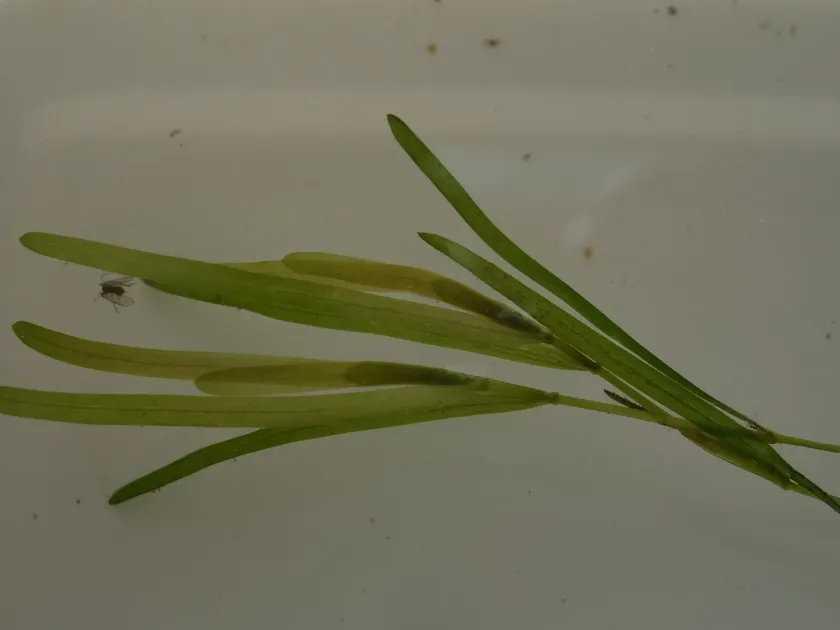
Blunt-leaved pondweed (Potamogeton obtusifolius) is a perennial submerged aquatic plant belonging to the Potamogetonaceae family. It is characterized by slender, branched stems that are notably flattened, helping it stay flexible in water currents.
The leaves are linear, measuring 4–10 cm in length and up to 4 mm in width. They are blunt at the apex, which is a key diagnostic feature distinguishing this species from other narrow-leaved pondweeds.
A distinctive anatomical feature is the presence of prominent transverse veins visible when the leaf is held against the light. These veins form a recognizable pattern that aids in correct botanical identification.
During the winter, the plant produces turions, which are specialized dormant buds. These vegetative structures are essential for the plant's survival during harsh conditions and enable rapid vegetative reproduction in spring.
The inflorescences are short, spike-like structures borne on long peduncles. While the flowers are inconspicuous, the seed production and subsequent dispersal by water contribute to the weed's invasive nature in managed waterways.
Where it grows
This species primarily inhabits still or slow-flowing waters, such as ponds, lakes, and ditches. It prefers nutrient-rich, silty substrates that provide stable conditions for its weak root system.
In an agricultural context, it is a significant weed in irrigation and drainage canals. It thrives in stagnant or low-velocity water environments where sedimentation is high and light penetration is sufficient.
Blunt-leaved pondweed is widely distributed across temperate regions of the Northern Hemisphere. It can colonize various types of artificial water bodies, including reservoirs and irrigation networks serving crop fields.
The plant is highly adaptive to different water qualities, though it shows a preference for areas with higher organic matter content. It can colonize new areas quickly due to the downstream transport of its vegetative fragments.
Maintaining clear waterways is difficult when this species is present, as it quickly occupies the full depth of the water column in areas with low flow, creating dense submerged meadows.
Harm it causes
The primary economic harm caused by this weed is the restriction of water flow in irrigation canals. Dense growth obstructs the transport of water, leading to potential shortages for downstream agricultural crops.
The plant acts as a biological filter that traps sediments, leading to rapid siltation. This necessitates frequent and costly mechanical dredging to maintain the functional design capacity of the canal system.
In flooded crops like rice, this pondweed competes for nutrients and light, potentially reducing crop yield. Furthermore, its presence makes routine maintenance and water distribution management significantly more difficult.
Large-scale decay of the plant biomass at the end of the growing season consumes significant amounts of dissolved oxygen. This can lead to hypoxic conditions, harming aquatic fauna and degrading water quality.
The thick vegetation also provides a breeding ground for various pests and creates a habitat that can interfere with the operation of pumps and other irrigation infrastructure, increasing maintenance costs.
How to control
Mechanical control is the most common management strategy. This involves the use of specialized aquatic weed cutters to remove vegetation, ideally before the development of turions to minimize future regrowth.
Dewatering or drying out irrigation canals during the winter or off-season is highly effective. Exposing the bottom to frost or desiccation kills the root system and dormant turions, significantly reducing infestation.
Chemical control can be achieved through the application of aquatic-labeled herbicides. These treatments require careful planning to prevent runoff into non-target areas and to comply with strict environmental safety regulations.
Biological control methods, such as the introduction of grass carp (Ctenopharyngodon idella), can be very effective in closed or semi-closed systems, significantly reducing the biomass of the weed without chemicals.
Integrated pest management is recommended, combining regular mechanical maintenance with the optimization of water flow velocities. Proper design and care of canal slopes can also discourage the plant's colonization.
Taxonomy
- Latin name
- Potamogeton obtusifolius
- Family
- Рдестовые
- EPPO code
- PTMOB