
Potamogeton maackianus
Potamogeton maackianus
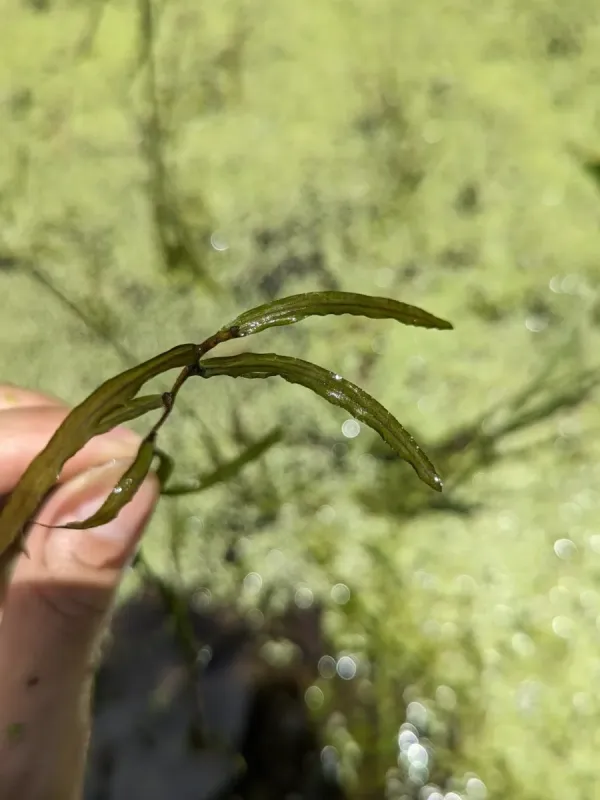
Description
How to tell it apart
Potamogeton maackianus is a submerged perennial aquatic plant belonging to the Potamogetonaceae family. It is known for its dense, branching growth pattern that fills water columns.
The leaves are characteristically narrow, linear, and arranged alternately along the stem without stalks. The plant's morphology can vary based on water depth and flow intensity.
Spike-like inflorescences may emerge slightly above the water surface during the flowering period, but the majority of the vegetation remains fully submerged at all times.
The root system consists of creeping rhizomes that firmly anchor the plant into the substrate, facilitating rapid horizontal spread across the bottom of water bodies.
Propagation occurs through seeds and vegetative fragmentation, where small pieces of stems or rhizomes can establish new colonies in other parts of the waterway.
Where it grows
This species is native to East Asia and thrives in freshwater habitats, including lakes, ponds, slow-moving rivers, and specifically man-made irrigation canals.
It prefers silty or sandy-silty substrates in depths ranging from a few centimeters to three meters, where light penetration is sufficient for photosynthesis.
In agricultural settings, Potamogeton maackianus is a significant problem in irrigation systems and drainage ditches, where it can rapidly overwhelm the available water space.
The plant demonstrates high ecological plasticity, allowing it to adapt to varying levels of nutrients and different types of water movement in its environment.
It can withstand periods of temporary drought, often remaining dormant in the mud until water levels rise again, allowing for immediate seasonal regrowth.
Harm it causes
The primary agricultural impact of Potamogeton maackianus is the clogging of irrigation and drainage infrastructure, which severely restricts water flow and reduces delivery efficiency.
Excessive growth of this weed leads to significant accumulation of organic matter, which accelerates the siltation process and shortens the lifespan of reservoir basins.
The dense biomass frequently causes mechanical damage to pumping equipment, clogging water intake screens and forcing frequent maintenance or emergency shutdowns.
It acts as a host for various water-borne pests and plant pathogens, which can be distributed to crop fields through the irrigation water supply, posing a risk to field crops.
The plant alters the water chemistry by depleting dissolved oxygen levels, which harms fish populations and beneficial organisms in aquaculture ponds linked to irrigation networks.
How to control
Mechanical control involves the physical removal of the plant material using specialized aquatic weed harvesters or manual clearance methods during the active growing season.
Winter drainage of irrigation canals is a highly effective agronomic practice, as it exposes the rhizomes to freezing temperatures, effectively reducing the population for the next season.
Chemical control can be implemented using aquatic-approved herbicides, provided they are applied with precision to minimize environmental impact on non-target vegetation.
Biological control, specifically the stocking of ponds or channels with herbivorous fish like grass carp, can effectively manage biomass without the need for synthetic chemicals.
- Conducting routine inspections of irrigation grids during the spring.
- Installing intake filters to prevent fragments from clogging pumps.
- Integrating mechanical harvesting with follow-up cultural control practices.
Taxonomy
- Latin name
- Potamogeton maackianus
- Family
- Рдестовые
- EPPO code
- PTMMC