
Illinois pondweed
Potamogeton illinoensis
Description
How to tell it apart
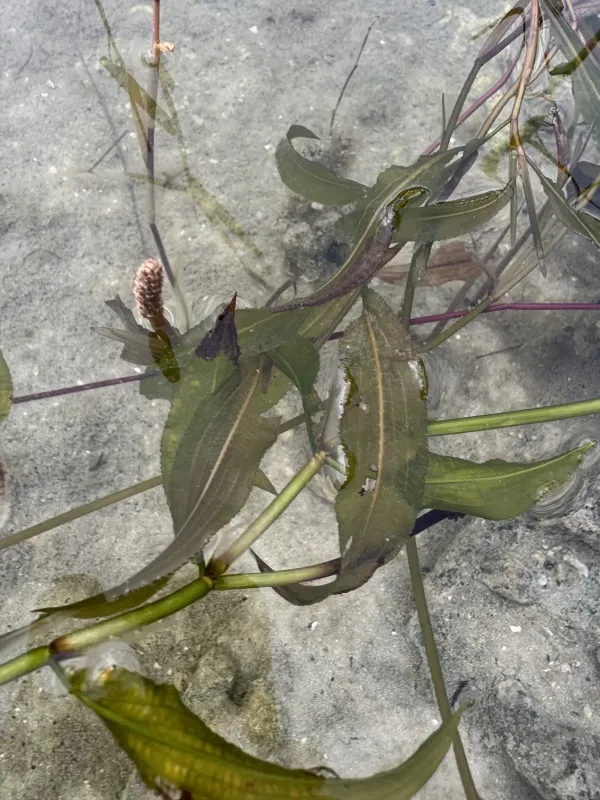
Illinois pondweed (Potamogeton illinoensis) is a member of the Potamogetonaceae family. It is a perennial aquatic herb known for its persistent submerged and floating growth habit.
The plant is characterized by a significant difference between its submerged leaves, which are lance-shaped and thin, and its floating leaves, which are usually leathery, elliptic, and petioled.
Its stems are branched and elongated, growing from a robust system of rhizomes that firmly anchor the plant into the substrate of rivers, lakes, and canals.
During the blooming season, the plant produces dense spikes of tiny flowers that rise above the water surface, facilitating wind-based pollination.
Because of its variable morphology, it can be confused with other pondweed species, but its specific leaf structure and density often serve as key identification markers for botanists.
Where it grows
This species thrives in slow-moving or stagnant waters, including ponds, lakes, irrigation channels, and drainage ditches where water movement is minimal.
It prefers nutrient-rich, silty bottoms where it can easily establish its rhizome network, creating extensive underwater colonies that cover large surface areas.
In agricultural settings, Illinois pondweed is particularly problematic in rice paddies and irrigation infrastructure, where it capitalizes on the controlled water environment to proliferate.
The spread of the plant is facilitated by vegetative reproduction, where small fragments of the stem or rhizome can take root elsewhere if transported by water currents or equipment.
It is capable of surviving in various depths and light conditions, making it a highly adaptable weed that colonizes new water bodies quite rapidly.
Harm it causes
The primary impact of Illinois pondweed is the obstruction of irrigation and drainage canals, which limits water flow and leads to reduced efficiency in water delivery systems.
By slowing down water velocity, the plant encourages sedimentation, causing channels to silt up faster and requiring more frequent and costly maintenance dredging.
In fishery management, the dense mats of vegetation hinder fish harvesting, interfere with boat navigation, and can cause oxygen depletion, harming aquatic life.
The plant competes with beneficial algae and submerged plants for nutrients and sunlight, potentially disrupting the overall ecological balance of the water body.
Decaying plant matter at the end of the season adds significant organic load to the water, which can degrade water quality and contribute to foul odors and microbial growth.
How to control
Mechanical control involves the use of aquatic weed harvesters or rakes to physically remove the biomass from channels and prevent immediate regrowth.
Biological control, specifically the stocking of grass carp, is a widely used and effective method for keeping populations of Illinois pondweed in check within contained water bodies.
Chemical control with aquatic-approved herbicides can be implemented for localized infestations, though this requires careful timing and regulatory compliance to protect the surrounding environment.
Water level management, such as drawdowns during the winter to allow for freezing or drying of the canal beds, effectively kills rhizomes and reduces future germination.
Integrated pest management strategies focus on preventing nutrient runoff into water bodies, which limits the growth potential of the weeds and minimizes the need for drastic interventions.
Taxonomy
- Latin name
- Potamogeton illinoensis
- Family
- Рдестовые
- EPPO code
- PTMIL