
Various-leaved pondweed
Potamogeton gramineus
Description
How to tell it apart
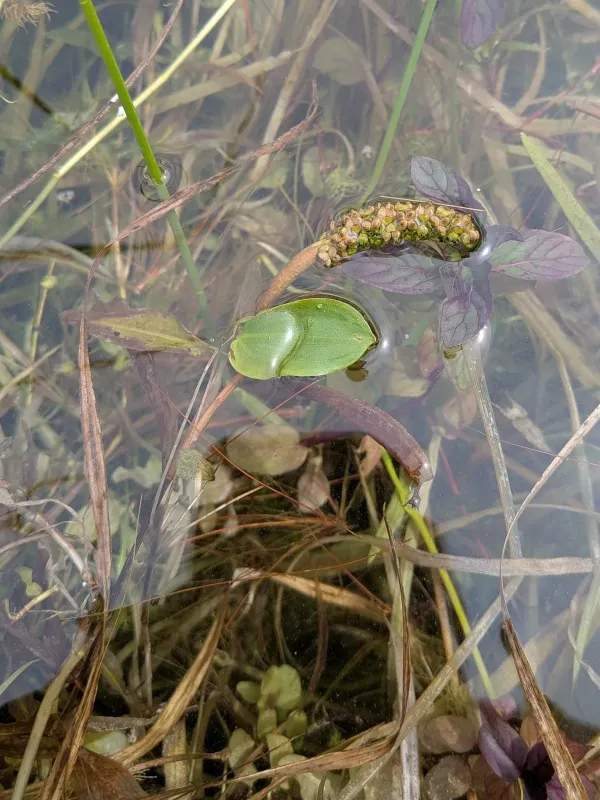
The various-leaved pondweed (Potamogeton gramineus) belongs to the Potamogetonaceae family. It is a perennial aquatic plant known for its high phenotypic plasticity and variable leaf structure.
The plant features two types of leaves: submerged leaves are narrow, lanceolate, and grass-like, while floating leaves are elliptical, leathery, and often shiny.
It possesses a strong rhizome system that anchors it firmly in the substrate, allowing the plant to survive harsh winter conditions and regenerate rapidly during the growing season.
The stems are highly branched and can grow into dense mats that occupy significant volume within the water column, effectively slowing down water flow in channels.
Reproduction is primarily vegetative, through rhizomes and turions (wintering buds), which ensures the plant's survival even if the main plant body is damaged or removed.
Where it grows
Various-leaved pondweed thrives in still or slow-moving water, including lakes, ponds, and irrigation canals, where it forms dense, pervasive colonies.
In agricultural settings, it is considered a problematic weed in irrigation and drainage networks, where it exploits the nutrient-rich sediments often found in agricultural runoff.
The plant prefers areas with muddy or sandy bottoms where it can easily extend its rhizomes and establish dominance over other aquatic flora.
Its presence is a clear indicator of eutrophication, as the plant responds well to increased nitrogen and phosphorus levels often present in farming regions.
It can rapidly colonize irrigation infrastructure, where it disrupts water distribution and leads to the clogging of sluices and pumps.
Harm it causes
The primary harm is the disruption of water flow in irrigation systems, which can lead to inefficient water distribution and crop failure due to drought or flooding.
Dense vegetation promotes sedimentation, leading to the rapid silting of canals and necessitating expensive and frequent mechanical dredging operations.
In aquaculture, excessive pondweed growth reduces the efficiency of fish stocking and harvesting, and it can lower water quality by causing oxygen depletion at night.
The plant provides shelter for various pests and pathogens, potentially increasing the risk of diseases spreading through the irrigation system to agricultural fields.
Overall, the presence of this weed increases operational costs for water authorities and farmers who must manage the maintenance of these aquatic environments.
How to control
Mechanical control using aquatic weed harvesters is the most effective approach for large-scale operations, focusing on removing biomass before the plant sets seeds or tubers.
A preventative agronomic practice involves increasing water flow velocity in canals, which significantly inhibits the establishment and colonization of this species.
Chemical control is possible through the use of aquatic-approved herbicides, provided they comply with local environmental safety regulations and water usage policies.
Biological control, such as introducing grass carp (Ctenopharyngodon idella), can be highly effective in controlling biomass levels in ponds and contained water systems.
- Periodic dredging and maintenance of channel depth.
- Installation of physical screens to prevent vegetative spread.
- Integrated pest management utilizing multiple control strategies.
Taxonomy
- Latin name
- Potamogeton gramineus
- Family
- Рдестовые
- EPPO code
- PTMGR