
Fries's pondweed
Potamogeton friesii
Description
How to tell it apart
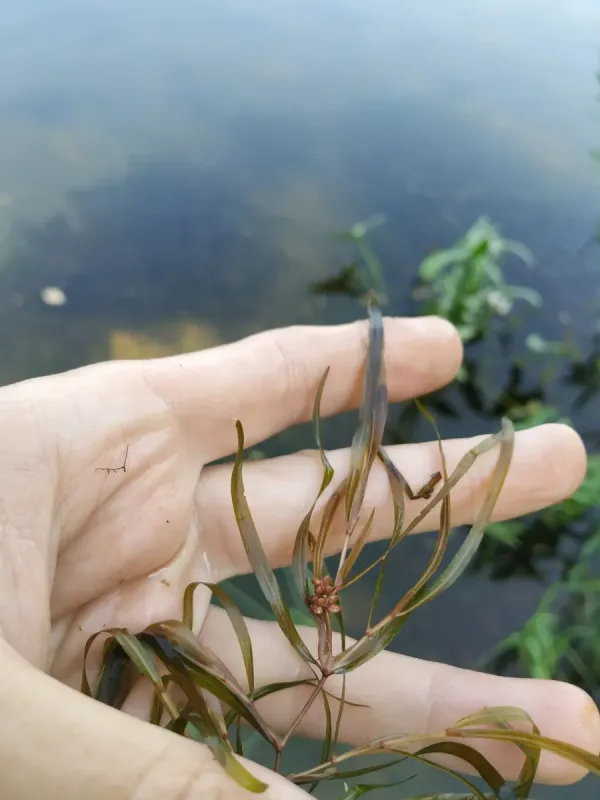
Fries's pondweed (Potamogeton friesii) is a perennial aquatic plant belonging to the Potamogetonaceae family. It is a submerged species without floating leaves.
The stems are slender, branched, and compressed. The leaves are linear, narrow, and typically feature three prominent veins with small glands at the stipule base.
This species is distinguished by its specific leaf tip morphology and the arrangement of its stipules, which help in precise taxonomic identification.
The plant propagates via seeds and vegetatively through turions — specialized winter buds that detach and settle in the sediment to overwinter.
In favorable conditions, it forms dense colonies that occupy the entire water column, significantly altering the habitat of shallow aquatic systems.
Where it grows
It prefers still or slow-moving water, including lakes, ponds, and drainage ditches. It is highly adapted to areas with stagnant or calm water environments.
In agricultural settings, this weed is a major concern in rice paddies and irrigation canals, where standing water persists throughout the growing season.
The species thrives in silted substrates that provide ample nutrients, common in fertile agricultural basins used for paddy cultivation.
Water movement within irrigation networks serves as a vector for spreading the plant's vegetative propagules to previously unaffected fields.
Environmental conditions in rice-growing regions are optimal for the rapid colonization and establishment of Fries's pondweed populations.
Harm it causes
Fries's pondweed causes significant economic losses in rice production by competing for nutrients, sunlight, and physical space within the paddy fields.
Dense mats of the plant obstruct water flow, causing uneven water depth and preventing the uniform application of fertilizers and pesticides.
The presence of this weed lowers water temperature and light penetration, which can delay the germination and tillering phases of the rice crop.
Excessive biomass clogs irrigation and drainage systems, leading to maintenance issues and potentially flooding surrounding infrastructure.
The weed also creates favorable micro-habitats for various aquatic pests and pathogens that can subsequently damage the primary agricultural crops.
How to control
Integrated weed management includes precision land leveling and periodic drying of rice paddies to dehydrate the vegetative parts of the plant.
Deep tillage between seasons is recommended to bury and desiccate the wintering turions, preventing regrowth in the following cycle.
Chemical control involves the application of selective herbicides registered for use in rice ecosystems, carefully timed to coincide with the weed's vulnerable stage.
Preventive measures include the installation of screens and filters in water supply systems to block the passage of vegetative fragments.
- Mechanical cleaning of irrigation canals.
- Water level manipulation to suppress early-season weed growth.
- Crop rotation with non-aquatic species to interrupt the pondweed cycle.
Taxonomy
- Latin name
- Potamogeton friesii
- Family
- Рдестовые
- EPPO code
- PTMFR