
Leafy pondweed
Potamogeton foliosus
Description
How to tell it apart
Leafy pondweed (Potamogeton foliosus) is a submerged perennial aquatic plant belonging to the Potamogetonaceae family and the rhizomatous weed biogroup.
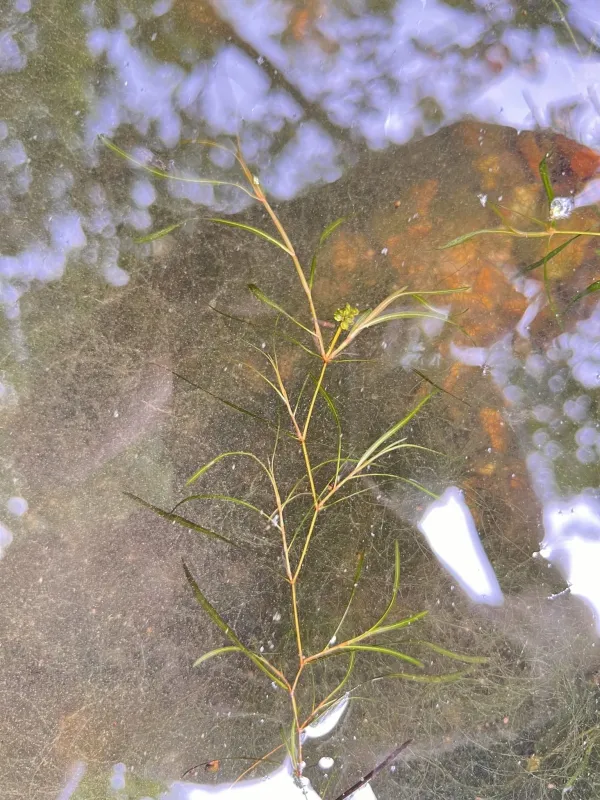
The plant features thin, highly branched stems that can grow up to 1 meter in length, often forming dense mats within shallow water bodies.
Its leaves are narrow, linear, and arranged alternately along the stem, usually displaying a distinct light green coloration.
Reproduction occurs through both seeds and vegetative means, specifically via fragmentation of stems or rhizomes, making it difficult to eradicate completely.
During the flowering season, the plant develops short spikes that may emerge above the water surface to facilitate cross-pollination by wind.
Where it grows
This species primarily thrives in stagnant or slow-moving freshwater environments, including irrigation ditches, ponds, and flooded rice fields.
It prefers silty or sandy substrates that are rich in organic nutrients, allowing it to establish itself rapidly in controlled agricultural water systems.
In rice paddies, leafy pondweed is considered a significant weed because the stable water environment provides an ideal niche for its aggressive expansion.
The plant has a wide geographical distribution, particularly in temperate regions, where it frequently invades artificial water networks.
Its ability to withstand varying depths allows it to colonize both the edges and the deeper sections of agricultural reservoirs and canals.
Harm it causes
Leafy pondweed creates dense underwater vegetation that physically interferes with the growth and development of young rice seedlings.
The canopy formed by the weed shades the water surface, leading to decreased water temperatures that can delay the maturation of the crop.
The plant acts as a nutrient sink, depleting minerals and oxygen from the water, which directly competes with the nutritional needs of the cultivated crops.
In irrigation systems, the rapid accumulation of biomass significantly reduces flow capacity, leading to clogging and maintenance challenges for farmers.
These underwater thickets also provide a habitat for various pests and pathogens, increasing the overall disease pressure on the surrounding fields.
How to control
Effective agrotechnical control involves draining the fields during the fallow period to dehydrate the rhizomes, effectively killing the plant roots.
Preventive maintenance of irrigation canals, such as periodic dredging and cleaning, is essential to stop the spread of vegetative propagules.
Chemical control is often necessary and involves the application of specialized aquatic herbicides that target submerged weeds without harming the crop.
Integrated pest management strategies should focus on water level manipulation to expose the plant to drying conditions while protecting the main crop.
- Strategic draining of rice paddies.
- Application of selective aquatic herbicides.
- Regular monitoring of water channels.
Taxonomy
- Latin name
- Potamogeton foliosus
- Family
- Рдестовые
- EPPO code
- PTMFO