
Hairy willowherb
Epilobium hirsutum
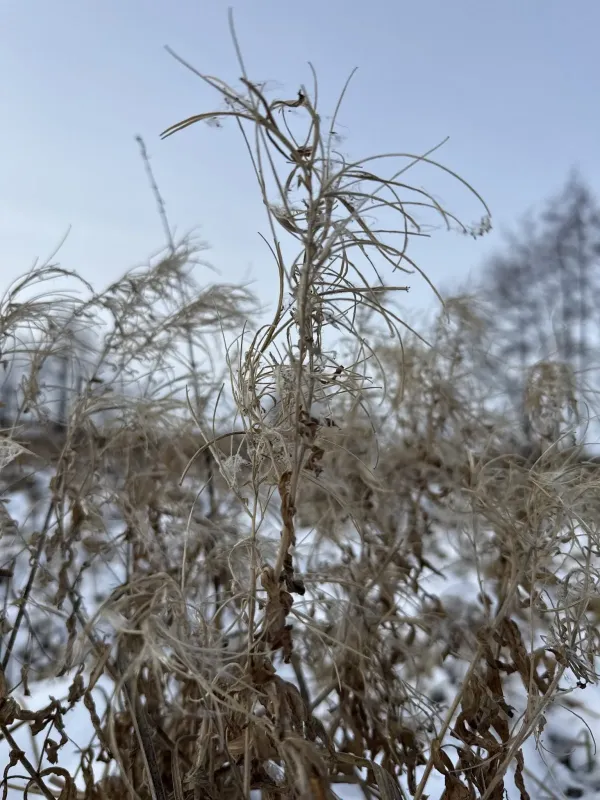
Description
How to tell it apart
Hairy willowherb belongs to the Onagraceae family. It is a perennial herbaceous plant with a strong creeping rhizome that can reach a height of 150 centimeters.
The stems are erect and densely covered with soft hairs, which explains its common and specific name. The leaves are opposite, oblong-lanceolate, sessile or semi-clasping, with finely serrated edges.
The flowers are large, up to 2 centimeters in diameter, bright pink or purple, and arranged in loose racemes. The flowering period lasts from June to September.
The fruit is a narrow capsule that splits open upon ripening to release numerous seeds equipped with fluffy tufts, known as pappi.
The plant has a high capacity for vegetative propagation due to the development of an extensive root system capable of penetrating the soil to a significant depth.
Where it grows
The primary habitats for this species are pond and river banks, ditches, marshes, and damp meadows. Hairy willowherb prefers moist, nutrient-rich soils.
In agricultural practice, it becomes a serious weed during land reclamation, the development of drained wetlands, and in floodplains.
It is often found in fields with a disturbed hydrological regime, where waterlogging encourages the active growth of this moisture-loving perennial.
The weed rapidly colonizes waterlogged sections of row crop fields, especially those bordering irrigation canals.
High ecological plasticity allows the species to easily adapt to changing moisture conditions, making it a dangerous competitor in flood-prone areas.
Harm it causes
The harmfulness of Hairy willowherb lies in its ability to quickly occupy large areas due to its aggressive vegetative propagation.
The plant competes actively with crops for nutrients and sunlight, often overtopping many field crops due to its significant height.
Because of its powerful root system, the weed severely depletes soil moisture and nutrient reserves, leading to reduced yields in cereal and industrial crops.
Infestation of fields with willowherb hinders mechanized harvesting operations, as the thick, woody stems clog the machinery's working components.
In perennial forage grass stands, Hairy willowherb can completely outcompete useful species, leading to the degradation of pastures and loss of hay quality.
How to control
Control is based on an integrated approach, combining agrotechnical methods and the use of selective herbicides on actively growing plants.
Deep plowing with moldboard inversion is an effective agrotechnical practice that helps destroy the rhizome system and limit the spread of the weed.
Strict adherence to drainage and irrigation management is essential, as lowering the water table makes conditions less favorable for willowherb development.
Chemical control involves applying systemic glyphosate-based herbicides in fallow fields or on stubble, which allows for the destruction of the weed along with its roots.
- Regular mowing before flowering prevents mass seed dispersal by wind.
- Implementing crop rotation with competitive crops helps reduce the weed population density.
- Localized spot application of herbicides in infected patches prevents the spread across the entire field.
Taxonomy
- Latin name
- Epilobium hirsutum
- Family
- Кипрейные
- EPPO code
- EPIHI