
Fleischer's willowherb
Epilobium fleischeri
Description
How to tell it apart
Fleischer's willowherb (Epilobium fleischeri) is a perennial herbaceous plant belonging to the Onagraceae family. As a weed, it is recognized for its strong, rhizomatous growth habit.
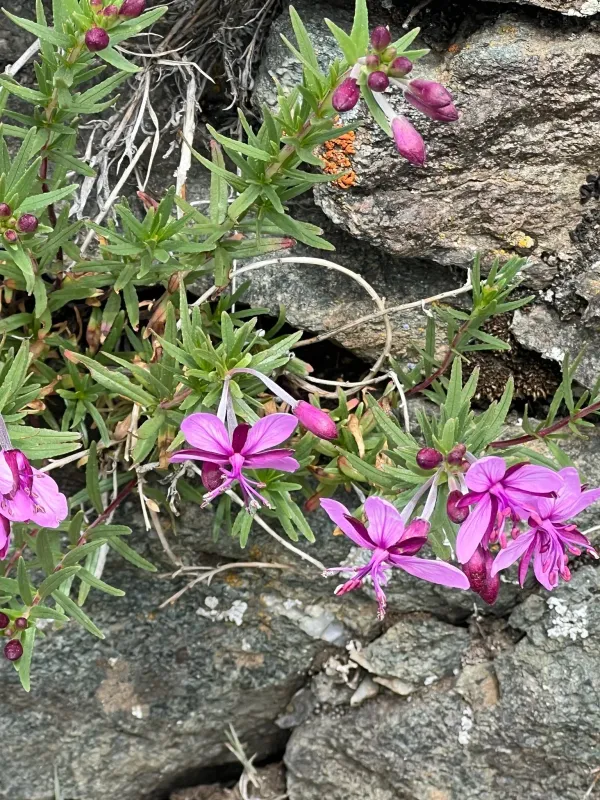
The plant typically grows to a height of 10 to 40 cm, featuring erect stems that are often branched. The leaves are lanceolate, arranged alternately, and possess a finely serrated margin.
Its distinctive flowers are bright purple-pink, measuring 1–2 cm in diameter. The petals have a characteristic notch at the apex, which is a key diagnostic feature for species identification.
The underground root system is robust and capable of extensive vegetative regeneration. This makes the weed highly persistent and difficult to eradicate once established in a field.
The plant produces elongated seed pods containing numerous seeds equipped with tufts of hair (pappus). These allow the seeds to be dispersed over long distances by wind gusts.
Where it grows
Fleischer's willowherb is primarily an alpine species, naturally inhabiting gravelly slopes, river banks, and scree in mountainous regions. It thrives in well-aerated, rocky soils.
In agricultural environments, it is often found in disturbed areas, field margins, or near drainage ditches. It prefers moist but well-drained substrates, which are common in mountainous farming areas.
The weed acts as a colonizer on disturbed soils, quickly establishing dense patches. Its ability to withstand cold temperatures allows it to outcompete native grasses and crops in cooler climates.
Infestation in fields usually occurs through wind-blown seeds or by rhizome fragments being transported during soil cultivation. Once established, it can spread rapidly across a field.
The plant shows high ecological plasticity, meaning it can adapt to various soil types and moisture levels found in agricultural landscapes, making it a persistent nuisance.
Harm it causes
The economic impact of Fleischer's willowherb is most significant in pastures and hay fields. It lowers the quality of fodder, as livestock often avoid eating it due to its tough texture.
As a competitor, it consumes high levels of soil moisture and nutrients, directly depriving desired crops of these essential resources. This stunts the growth of neighboring plants.
The dense foliage of the weed creates significant shade, hindering the photosynthesis of lower-growing crops. This leads to reduced biomass and yield in the affected agricultural areas.
Furthermore, the plant's root system is resistant to damage. Mechanical cultivation often results in the fragmentation of rhizomes, which can trigger further spreading of the weed.
The presence of Fleischer's willowherb can also create a favorable microclimate for certain crop pests and diseases, increasing the need for additional chemical interventions in the field.
How to control
Successful management requires a combination of strategies. Deep mechanical cultivation (plowing) is recommended to exhaust the plant's energy stores by repeatedly cutting the roots.
Crop rotation incorporating vigorous, fast-growing crops helps create competition, limiting the light available to the weed. Maintaining a healthy crop cover is vital for suppression.
Chemical control using systemic herbicides, such as glyphosate-based products, is effective when applied during the active vegetative growth phase, specifically before the flowering stage.
Manual removal of individual plants is only feasible on a small scale. It is critical to extract the entire root system to prevent regeneration from dormant buds located on rhizomes.
- Perform deep plowing to break down the root network.
- Apply herbicides during the peak growth season before flowering.
- Maintain clean field borders to prevent seed re-entry.
- Monitor fields for new infestations in early spring.
- Use competitive planting to shade out young weeds.
Taxonomy
- Latin name
- Epilobium fleischeri
- Family
- Кипрейные
- EPPO code
- EPIFL