
Alpine willowherb
Epilobium alsinifolium
Description
How to tell it apart
Alpine willowherb (Epilobium alsinifolium) is a perennial herbaceous plant belonging to the Onagraceae family. It is distinct from other willowherb species due to its specific morphological characteristics and preference for aquatic environments.
The stems of the plant are generally smooth, often branching at the base, reaching heights of 30–40 cm. The leaves are ovate or elliptical in shape, arranged oppositely, and usually possess entire or slightly dentate margins.
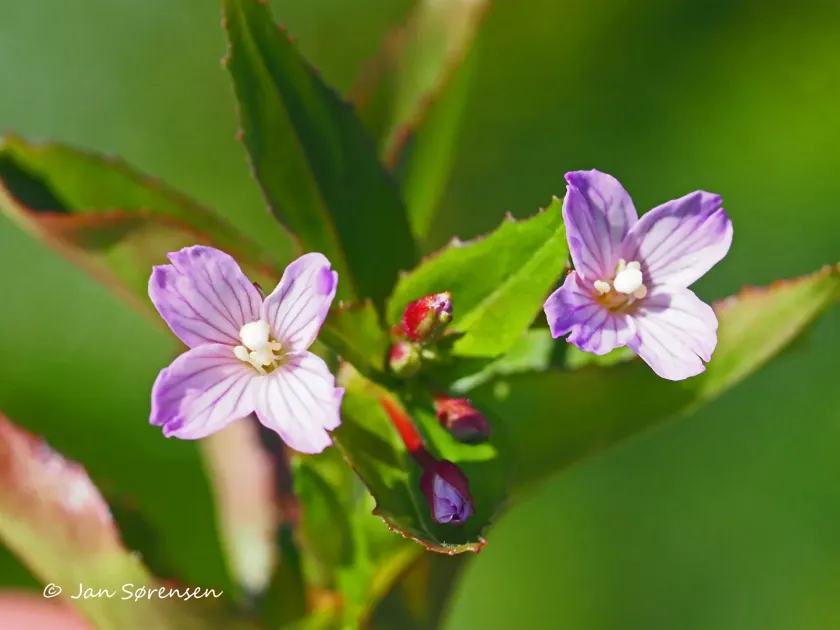
The flowers are characterized by a vibrant pink or purple hue, consisting of four petals that are notably notched at the apex. The drooping nature of the buds serves as a key diagnostic feature for field identification.
Its root system is characterized by creeping rhizomes, which allow the plant to colonize damp soils rapidly. This vegetative growth habit makes the plant particularly persistent in favorable soil conditions.
During the flowering stage, the plant exhibits a clustered growth habit, making it relatively easy to identify in moist agricultural zones, riparian areas, and low-lying parts of fields.
Where it grows
Alpine willowherb thrives in cold, moist environments. It is frequently found in high-altitude regions, along stream banks, and in waterlogged areas of agricultural land that lack proper drainage.
In farming ecosystems, the plant typically invades areas where standing water persists. Poorly drained fields or irrigation channels are prime locations for the establishment of large populations of this weed.
The species demonstrates high resilience to cold temperatures, allowing it to survive in northern climates and regions with high soil moisture content throughout the growing season.
In perennial grass pastures, Alpine willowherb can establish itself easily because the mowing cycles do not interfere with its deep-seated rhizome network, allowing it to recover quickly after harvest.
Soil acidity and high organic matter content in wet spots further facilitate its spread. Identifying these environmental indicators is essential for determining the scope of potential weed pressure.
Harm it causes
The primary agricultural impact of Alpine willowherb is its ability to compete aggressively for space, light, and nutrients. Its dense foliage shades out developing crop seedlings, reducing their overall vigor.
By absorbing significant amounts of nitrogen and phosphorus, the weed depletes soil resources, which leads to lower crop yields in infested areas, particularly in cereals and forage crops.
The presence of the weed in forage harvests is undesirable as it reduces the quality and palatability of the feed. While not toxic, its tough, fibrous stem structure is poorly utilized by livestock.
Vegetative propagation makes it difficult to manage; fragmenting the rhizomes during tillage often inadvertently encourages the growth of new plants, leading to a denser infestation in the following season.
The cost of managing this weed is compounded by the need for repeated chemical applications or intensive mechanical interventions, which increases the overall expenditure for the farm enterprise.
How to control
The most effective long-term control strategy is the management of soil hydrology. Implementing proper drainage systems removes the moisture-rich conditions that allow the weed to outcompete crops.
Agrotechnical practices such as deep tillage with a moldboard plow help to expose and exhaust the rhizome system. This is best performed in late summer or autumn to prevent regrowth.
Chemical control involving systemic herbicides, specifically those based on glyphosate, is effective when applied post-harvest or on fallow ground to ensure the chemical is translocated to the root system.
In active crops, selective herbicides that target broad-leaved perennial weeds can be used, provided they are applied during the active growth stage and comply with current crop protection regulations.
- Improve land drainage to remove standing water.
- Use deep tillage to disrupt the rhizome network.
- Apply systemic herbicides to actively growing plants.
- Rotate crops to break the weed's colonization cycle.
Taxonomy
- Latin name
- Epilobium alsinifolium
- Family
- Кипрейные
- EPPO code
- EPIAF