
Fireweed
Chamaenerion
Description
How to tell it apart
Fireweed (Chamaenerion angustifolium) is a robust perennial herb belonging to the Onagraceae family, known for its rapid spread via rhizomes.
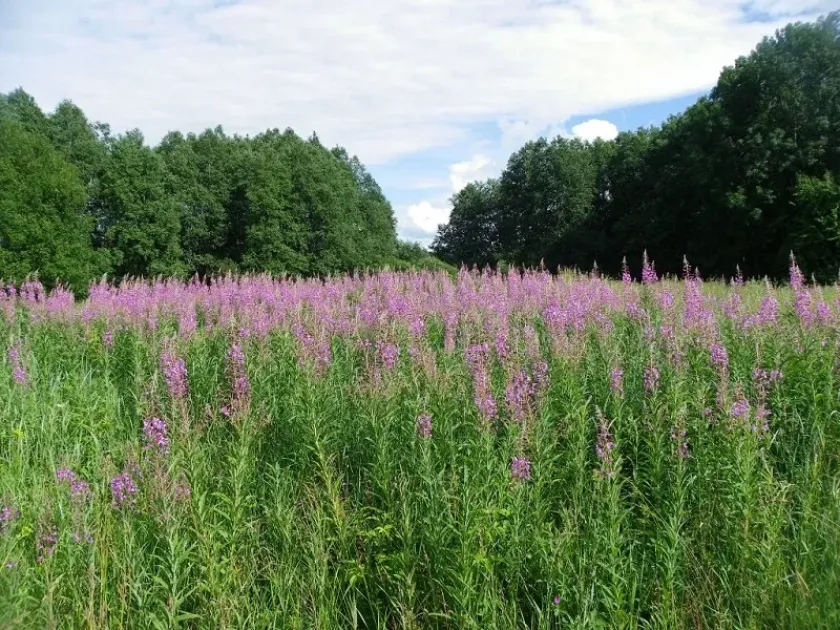
The plant features a tall, unbranched stem reaching up to 1.5 meters, covered in numerous narrow, willow-like leaves arranged alternately.
Its most recognizable feature is the elongated terminal raceme of vibrant purple or pink flowers, which bloom throughout the mid-to-late summer.
Seeds are enclosed in small, thin pods that burst upon maturity, releasing thousands of seeds with silky tufts that allow for extensive wind dispersal.
The root system is composed of aggressive, far-spreading rhizomes that can survive deep in the soil and regenerate quickly even if partially damaged.
Where it grows
Fireweed is commonly found in disturbed areas such as forest clearings, burnt landscapes, roadsides, and abandoned agricultural fields.
In farming contexts, it often invades new clearings or fields that have remained uncultivated for several years, becoming a dominant plant species.
The plant is highly adaptable to various soil types, ranging from nutrient-poor to moist soils, though it thrives best in open, sunlit environments.
Due to its light, wind-borne seeds, fireweed can easily colonize agricultural land adjacent to woodland areas, creating dense, persistent patches.
It is particularly problematic in perennial crop systems, orchards, and forest plantations where it competes directly for available space.
Harm it causes
Fireweed exerts significant pressure on crops by competing for essential moisture, soil nutrients, and sunlight, leading to suppressed growth.
Dense stands of fireweed create a humid microclimate at the soil surface, which can encourage the development of fungal diseases among neighboring crops.
The extensive root network of the plant makes the soil difficult to prepare for planting, significantly increasing costs for mechanical cultivation.
When fireweed establishes itself in fields, it interferes with harvesting machinery and can contaminate crop yields with its light, fluffy seeds.
In orchards and timber plantations, fireweed acts as an invasive competitor, shading out younger plants and consuming nutrients meant for crop establishment.
How to control
Mechanical control measures include deep plowing and regular discing to fragment the rhizomes and encourage them to dry out on the surface.
Consistent mowing of the foliage before flowering is crucial to deplete the energy stored within the underground rhizome system over multiple seasons.
Herbicidal control using systemic products is highly effective for large infestations on non-cropped land or as a site-preparation technique.
Integrated weed management, such as the use of competitive cover crops, can help shade out emerging fireweed shoots and reduce its colonization rate.
For sustainable control, it is recommended to combine mechanical clearing with targeted herbicide applications to ensure the complete death of deep rhizomes.
Taxonomy
- Latin name
- Chamaenerion
- Family
- Кипрейные
- EPPO code
- CHASS