
Epilobium brachycarpum
Epilobium brachycarpum
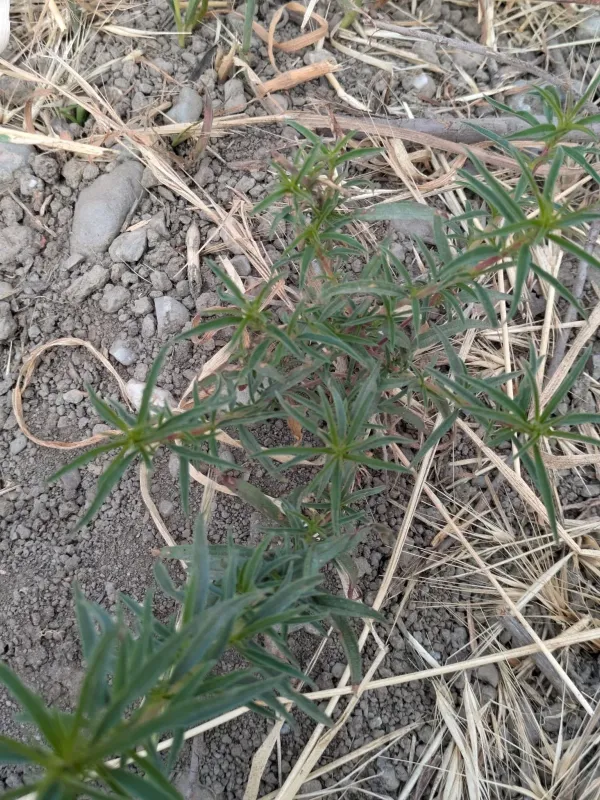
Description
How to tell it apart
Epilobium brachycarpum, commonly known as tall willowherb or autumn willowherb, is an annual herb belonging to the Onagraceae family. It is recognized by its erect, branching stem which can grow up to 100 cm in height.
The leaves are narrow, lanceolate, and arranged alternately along the stem. They are typically glabrous or covered with fine, pressed hairs, giving the plant a distinct appearance.
The flowers are small, featuring pale pink to white petals, and are arranged in loose racemes. The plant blooms during the late summer and early autumn months.
Its fruits consist of capsules borne on long stalks. Upon maturation, these capsules open to release numerous seeds equipped with silky hairs, which facilitates effective wind dispersal.
The plant features a relatively shallow, fibrous root system that allows it to establish quickly on disturbed substrates where competition from perennials is minimal.
Where it grows
Native to North America, this species has become a widespread invasive weed in many parts of the world, including various regions in Europe and Asia.
It thrives in disturbed habitats such as roadsides, railway embankments, abandoned fields, construction sites, and areas recently cleared by fire.
In agricultural settings, it frequently invades open-canopy crops and fields where soil management practices have left gaps in the protective vegetation cover.
Epilobium brachycarpum prefers well-drained, sandy, or stony soils and is highly adapted to sites with low organic matter content.
Its rapid colonization ability makes it a persistent nuisance in areas where soil integrity has been disrupted by mechanical cultivation or environmental factors.
Harm it causes
The primary damage caused by this weed is intense competition with crops for essential resources including sunlight, soil moisture, and mineral nutrients during the early vegetative stages.
High infestations of Epilobium brachycarpum can significantly reduce the establishment and overall yield of field crops by crowding out healthy seedlings.
During harvesting, the tough, branching stems of the plant can clog combines and other agricultural machinery, leading to increased labor costs and operational downtime.
The weed acts as an alternative host for various pests and pathogens that can eventually transfer to commercially valuable agricultural commodities.
The massive production of wind-borne seeds ensures that a single infestation can rapidly spread to surrounding fields, increasing the long-term cost of weed control.
How to control
Effective management begins with integrated approaches that combine physical cultivation with chemical strategies tailored to the crop life cycle.
Agronomic practices such as crop rotation, competitive seeding rates, and proper fertilization help crops outcompete the weed for available space and light.
Mechanical control through tillage is effective if performed before the plant reaches its flowering stage, preventing the development of viable seed stocks.
- Use of pre-planting non-selective herbicides to clear heavily infested fields.
- Application of selective post-emergence herbicides compatible with the targeted crop.
- Routine mowing of fence lines and non-crop areas to prevent the spread of wind-blown seeds into the field.
Long-term success depends on consistent monitoring and early intervention to eliminate isolated patches of the weed before they become established populations.
Taxonomy
- Latin name
- Epilobium brachycarpum
- Family
- Кипрейные
- EPPO code
- EPIPC