
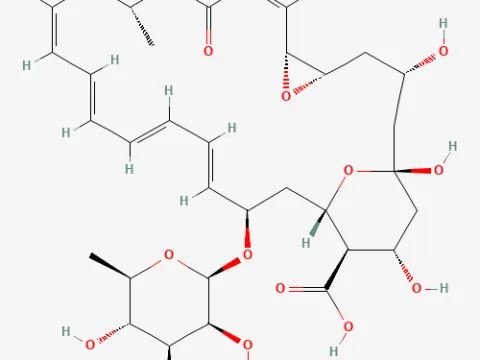
Natamycin
Natamycin, also known as pimaricin, is a polyene macrolide antibiotic produced by Streptomyces natalensis. It is primarily used in agriculture as a highly effective biological fungicide.
What the section contains
Natamycin
The mechanism of action involves binding to sterols, specifically ergosterol, in the cell membranes of fungi. This binding creates pores that disrupt membrane integrity, leading to the leakage of cellular content and ultimately the death of the fungal cell.
Natamycin is highly selective, focusing on fungal pathogens while exhibiting low toxicity towards plants and higher organisms, making it an ideal candidate for integrated pest management systems.
The development of resistance to natamycin in fungi is relatively rare because its mode of action targets essential structural components of the cell membrane rather than specific metabolic pathways.
As a biological agent, it fits well into organic farming practices, where synthetic pesticides are restricted, providing a safe and effective alternative for disease control.
Natamycin is highly effective against a wide array of mold and yeast species that threaten agricultural productivity both in the field and during post-harvest storage.
It is specifically active against key pathogens such as Aspergillus, Penicillium, and Fusarium, which are notorious for causing decay in fruits, vegetables, and seeds.
The compound is widely used to prevent post-harvest spoilage, helping to extend the shelf life of perishable produce by inhibiting the development of surface fungal growth.
In addition to post-harvest applications, it is utilized as a seed treatment to prevent soil-borne fungal infections and protect seedlings during the crucial stages of germination.
Its efficacy in controlling surface infections makes it an essential tool for maintaining the quality and marketability of produce in various agricultural sectors.
Application rates for natamycin are determined based on the target crop, the method of application, and the specific pressure of the fungal pathogen in the environment.
When used as a post-harvest treatment, it is typically applied via spraying or dipping, ensuring a uniform protective coating over the fruit or vegetable surface.
For seed treatment, precise dosage is required to ensure that the entire seed surface is coated effectively, protecting the seed from early fungal colonization in the soil.
Timing is critical: applications should coincide with periods of high risk, such as pre-storage cleaning or just before planting in high-moisture soil conditions.
It is important to follow the label specifications regarding dilution, as this ensures the most economical and effective use of the biological active ingredient.
Natamycin is sensitive to ultraviolet (UV) light and elevated temperatures, which can lead to the degradation of the molecule if exposed for extended periods.
In open field conditions, its efficacy may be reduced by environmental factors such as rainfall, which can wash the product off the foliage or fruit surfaces.
Standard personal protective equipment should be used during the preparation and application of natamycin products to avoid unnecessary contact, despite the compound's low hazard profile.
Storage conditions are essential; products must be kept in cool, dark, and dry locations to maintain the biological stability of the active ingredient.
Compatibility with other pesticides should be checked prior to tank mixing, as strong chemical interactions might deactivate the natamycin and negate its biological effectiveness.